
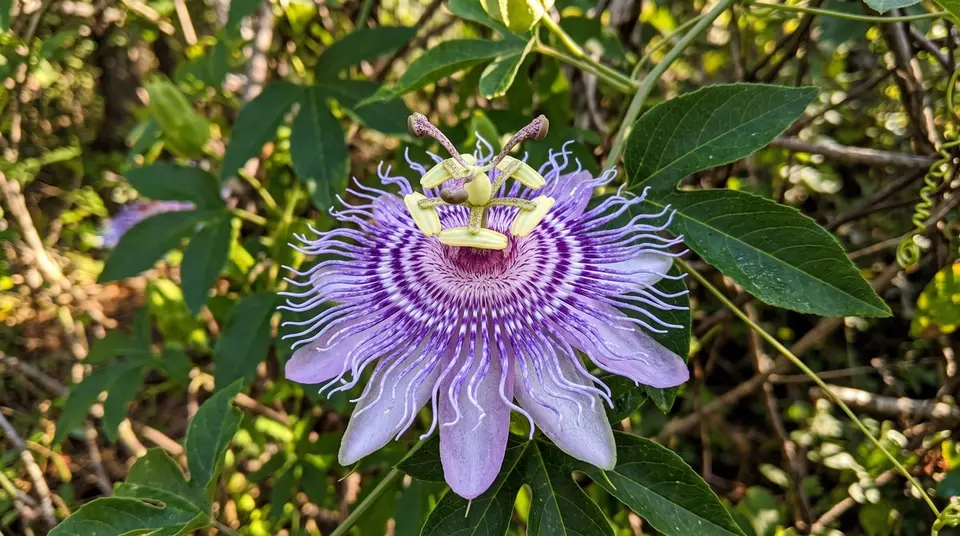
Purple Passionflower
Passiflora incarnata

- Sun
- Full Sun, Part Shade
- Water
- Moderate
- Mature size
- 8–20 ft long vines depending on support and growing conditions.
- Best for
- Pollinator Plant, Edible Fruit, Medicinal Interest, Trellis vine
Planting & care
- Growth habit
- Fast-growing tendril-climbing perennial vine with spreading underground rhizomes.
- Typical bloom
- May–Sep
- Cold hardy to
- Zones 6–10
- Soil
- Adaptable to sandy, loamy, rocky, or clay soils if drainage is reasonable. Performs best in moderately fertile, well-drained soil.
Where to plant
Full sun to part shade — flowering is best in full sun, though it tolerates afternoon shade. It's adaptable to sandy, loamy, rocky, or clay soil as long as drainage is reasonable.
Watering
Moderate. Water regularly the first season to establish roots. Once established, it's fairly drought tolerant, though it blooms and fruits better with consistent moisture.
Cutting back
Cut back to the ground in late February or early March before new growth emerges. It can also be trimmed through the season to control spread. Note: it spreads by underground rhizomes and can pop up several feet from the parent plant, so plan accordingly or use a root barrier if space is limited.
About Purple Passionflower
If you want a Texas native that stops people in their tracks, Purple Passionflower is it. The flower looks like it came from a tropical rainforest — an intricate, 3-inch bloom layered with purple and white filaments surrounding a sculptural center unlike anything else in the native plant world. Anyone who's never seen it does a double-take.
Deeply three-lobed, glossy leaves and quick-gripping tendrils let the vine climb fast, twining rapidly through warm weather onto any fence, trellis, or arbor within reach. Flowers open one at a time, each lasting just a day, but a well-established plant produces them in continuous succession all summer.
The flower is only part of the story. Purple Passionflower is the primary larval host for Gulf Fritillary butterflies in Texas, so planting it doesn't just add beauty to a garden, it completes a wildlife cycle. In late summer, the vine produces egg-shaped "maypop" fruit with a tropical, tart-sweet flavor that surprises and delights anyone who tries it.
It grows fast, handles North Texas heat without complaint, and comes back reliably from the roots after hard freezes. For a fence, trellis, or arbor that needs to be covered quickly and beautifully, nothing native performs quite like this one.
Where it's native
Purple Passionflower occurs naturally in 5 Texas ecoregions — Pineywoods, Post Oak Savannah, Blackland Prairies, Cross Timbers and Prairies, Gulf Prairies and Marshes. Plants grown from local ecotypes are best adapted to our soils and climate here in the Blackland Prairies.
- 1Trans-Pecos
- 2High Plains
- 3Rolling Plains
- 4Edwards Plateau
- 5Cross Timbers and Prairies
- 6South Texas Plains
- 7Blackland Prairies
- 8Post Oak Savannah
- 9Gulf Prairies and Marshes
- 10Pineywoods
Plants it grows well with
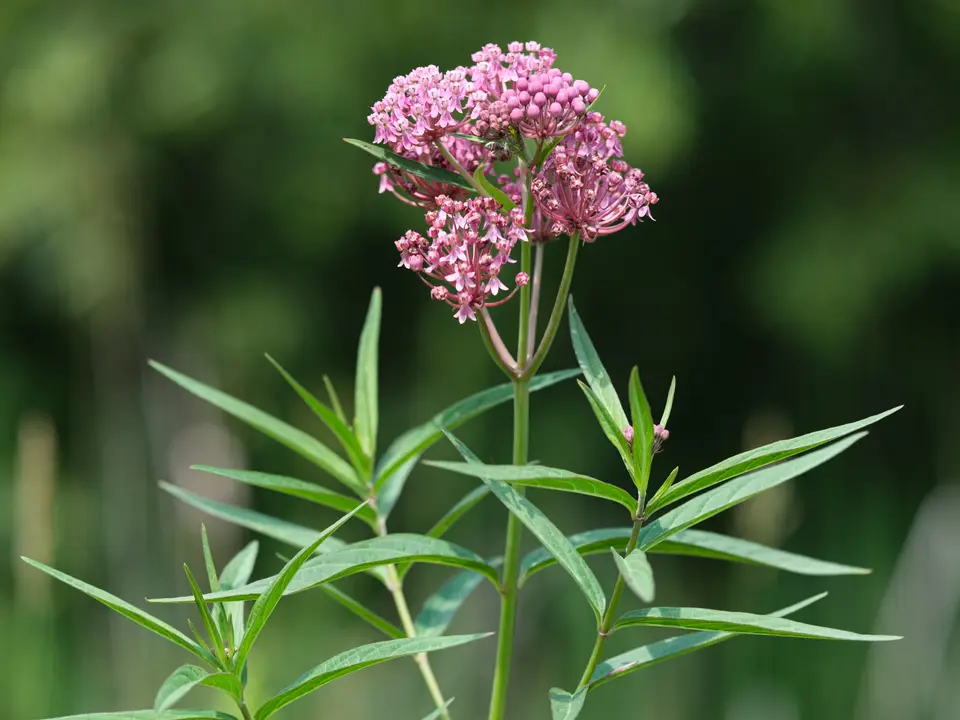
Swamp Milkweed
Swamp Milkweed is a moisture-loving native perennial with fragrant pink blooms and essential value as a monarch butterfly host plant.
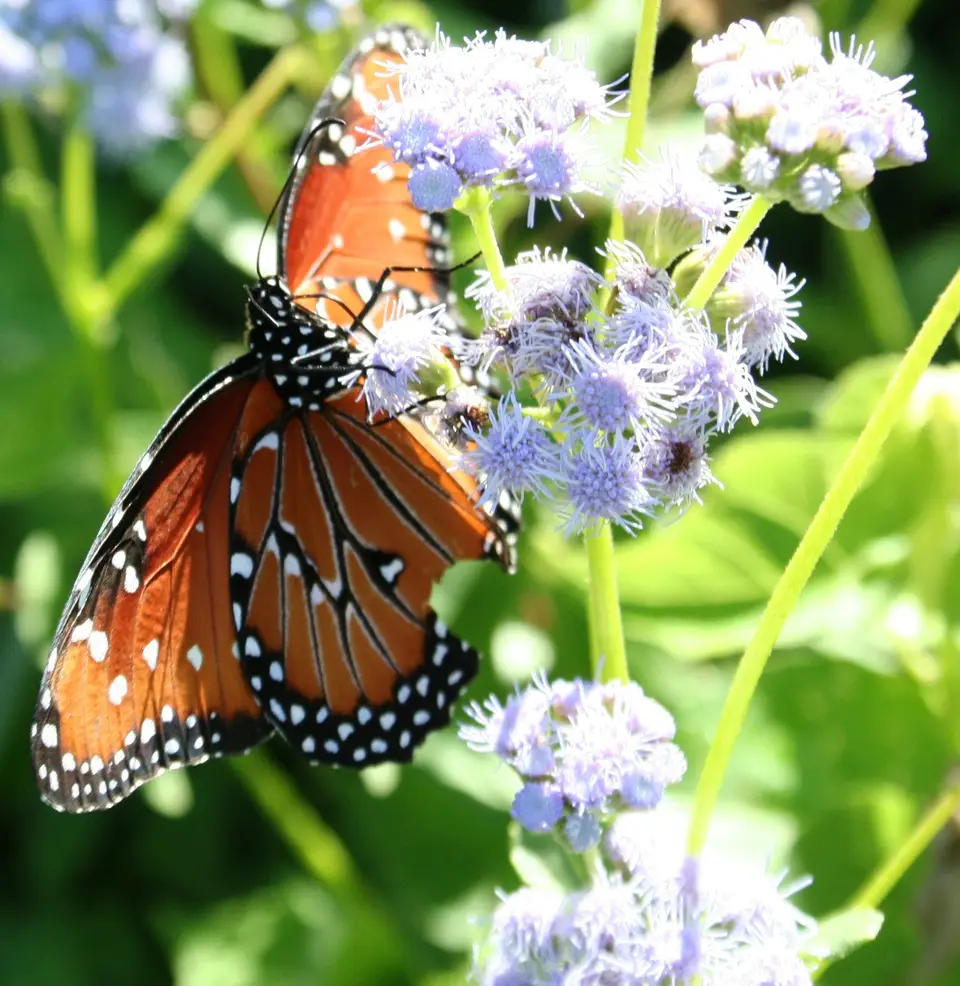
Blue Mistflower
A native perennial that erupts into clouds of soft blue-purple blooms just as fall pollinator activity peaks.
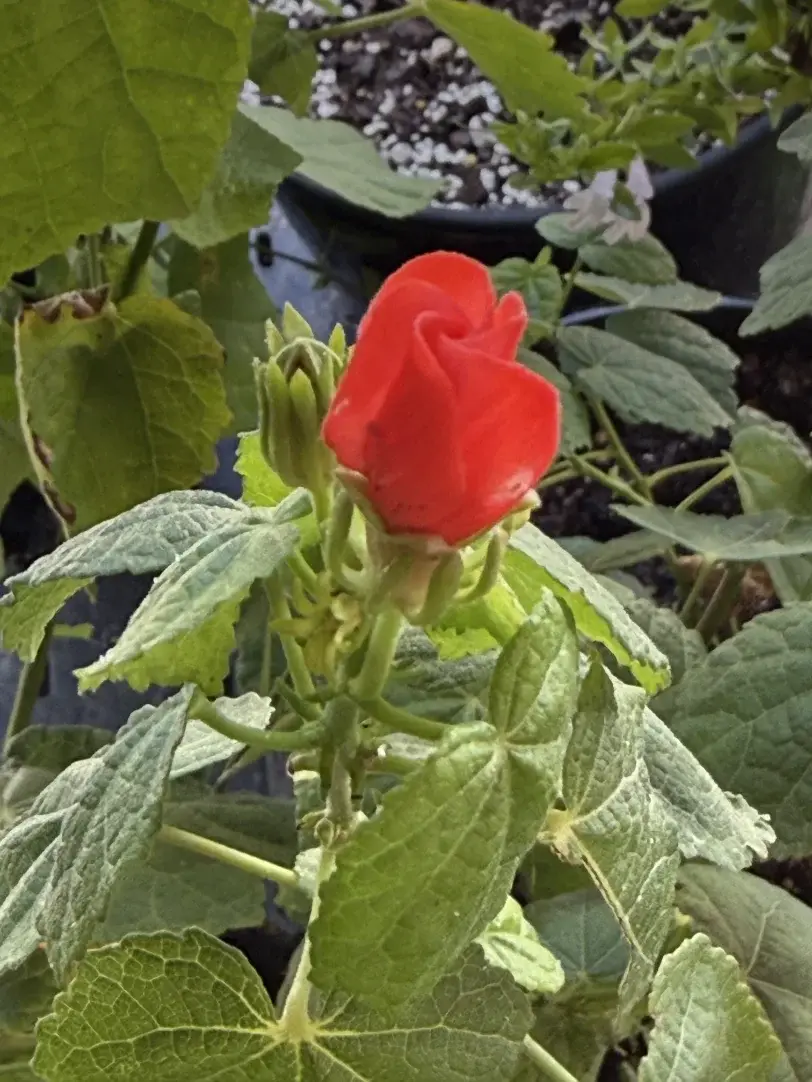
Turk’s Cap
A shade-loving native perennial with distinctive spiraled red blooms that flower nonstop from late spring through fall.
American Beautyberry
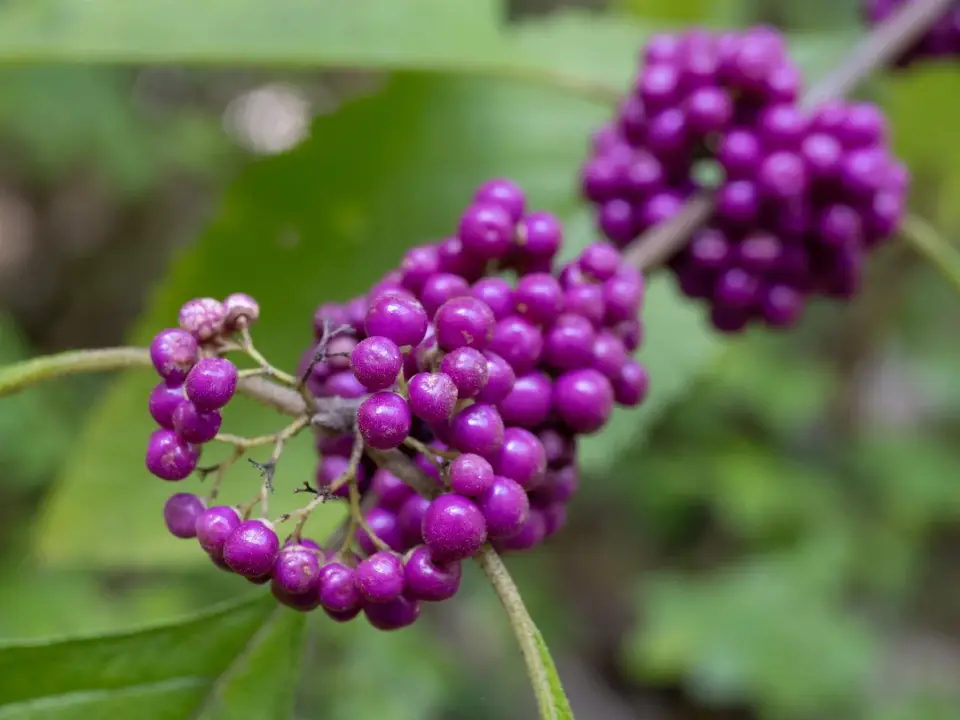
A native shrub famous for the clusters of electric-purple berries that wrap around its stems every fall.