Turk’s Cap
Malvaviscus arboreus var. drummondii
- Sun
- Part Shade, Shade
- Water
- Moderate, Prefers moist well drained soil
- Mature size
- 3–6 ft tall × 3–5 ft wide
- Best for
- Shade garden, Woodland Edge, Low maintenance
Planting & care
- Growth habit
- Spreading, bushy, semi-woody perennial
- Typical bloom
- May–Nov
- Cold hardy to
- Zones 7–9
- Soil
- Adaptable; prefers well-drained soils but tolerates clay well
Where to plant
Part shade to full shade — this is one of the few flowering natives that blooms heavily even in deep shade. It tolerates morning sun but should be protected from hot afternoon western exposure.
Watering
Water regularly the first season to establish. Once rooted in, it tolerates dry spells but blooms best with occasional deep watering during extended drought.
Cutting back
Cut back by half to two-thirds in late winter before new growth starts. It responds vigorously to hard pruning, which encourages fresh, compact, heavily-blooming growth.
About Turk’s Cap
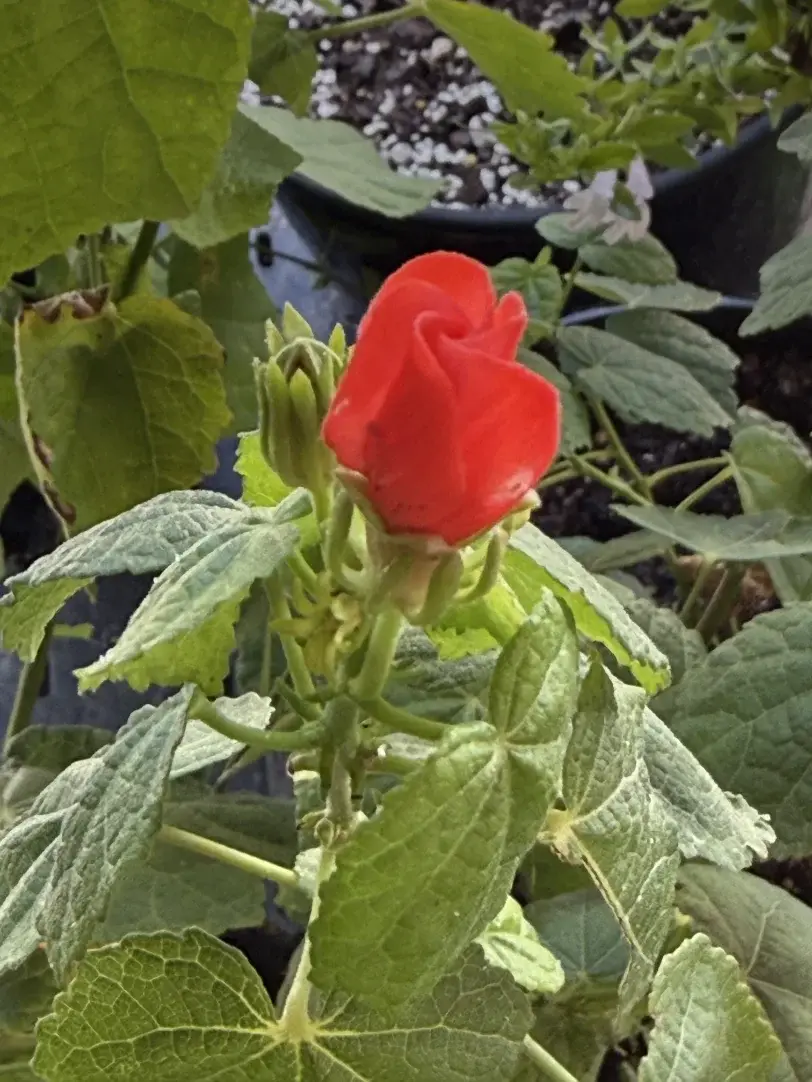
Turk's Cap is one of the few native perennials that truly thrives in shade, producing a long, steady parade of bright red flowers from late May all the way through November — one of the longest bloom seasons of any Texas native. The blooms never fully open; instead, the petals spiral upward around the flower's center in a shape that resembles a small red turban, giving the plant its name.
Hummingbirds treat it as a season-long destination, and the flowers also draw butterflies and native bees throughout the bloom window. In fall, small red berries follow the flowers — edible, mildly sweet, and a favorite of mockingbirds, cardinals, and other songbirds. It's a plant that keeps working for wildlife from spring through winter.
Turk's Cap grows into a full, leafy, spreading mound with large, soft, heart-shaped leaves that give it real presence even between bloom flushes. It dies back to the ground after a hard freeze and returns reliably from the roots each spring, often coming back fuller and more floriferous every year.
For the shaded corners of a yard where most flowering plants struggle, Turk's Cap fills the gap beautifully — delivering months of hummingbird activity, wildlife interest, and lush foliage in exactly the spot that's hardest to plant.
Where it's native
Turk’s Cap occurs naturally in 5 Texas ecoregions — Post Oak Savannah, Blackland Prairies, Cross Timbers and Prairies, South Texas Plains, Gulf Prairies and Marshes. Plants grown from local ecotypes are best adapted to our soils and climate here in the Blackland Prairies.
- 1Trans-Pecos
- 2High Plains
- 3Rolling Plains
- 4Edwards Plateau
- 5Cross Timbers and Prairies
- 6South Texas Plains
- 7Blackland Prairies
- 8Post Oak Savannah
- 9Gulf Prairies and Marshes
- 10Pineywoods