American Beautyberry
Callicarpa americana

Gallon — $16 (5 available) · 5 Gallon — $46 (1 available)
- Sun
- Part Shade, Full Sun
- Water
- Prefers moist well drained soil, Drought tolerant once established
- Mature size
- 4-6 ft tall x 4-6 ft wide
- Best for
- Birds eat berries, Wildlife cover / habitat, Low maintenance, Natural hedge
About these sizes
- Gallon
- Our standard size: a 1-gallon nursery pot, about 6–7 inches across.
- 5 Gallon
- A larger, more established plant — more size and root system from day one.
Pay at the nursery, plus 6.75% sales tax. Send your request and we'll confirm availability and your pickup time within 24 hours, then hold your plants. How it works
Planting & care
- Growth habit
- Loose arching multi-stem shrub
- Typical bloom
- May–Jul
- Cold hardy to
- Zones 6–10
- Soil
- Adaptable. Clay tolerant. PH 5.5 - 7.5
Where to plant
Full sun to part shade — berries color most vividly with more sun. Adaptable to clay, loam, or sandy soil as long as it isn't waterlogged.
Watering
Water regularly while it's getting established, then back off — it tolerates short dry spells once its roots are in. Avoid keeping containers soggy.
Cutting back
Cut back hard in late winter before new growth starts. Berries form on new wood, so this pruning improves both shape and the fall berry display.
About American Beautyberry
American Beautyberry spends spring and summer as a pleasant, unassuming green backdrop shrub, its arching branches and broad, softly textured leaves filling out a border without demanding attention. Small clusters of pink to lavender flowers appear along the stems in early summer — easy to miss, but a steady draw for small pollinators.
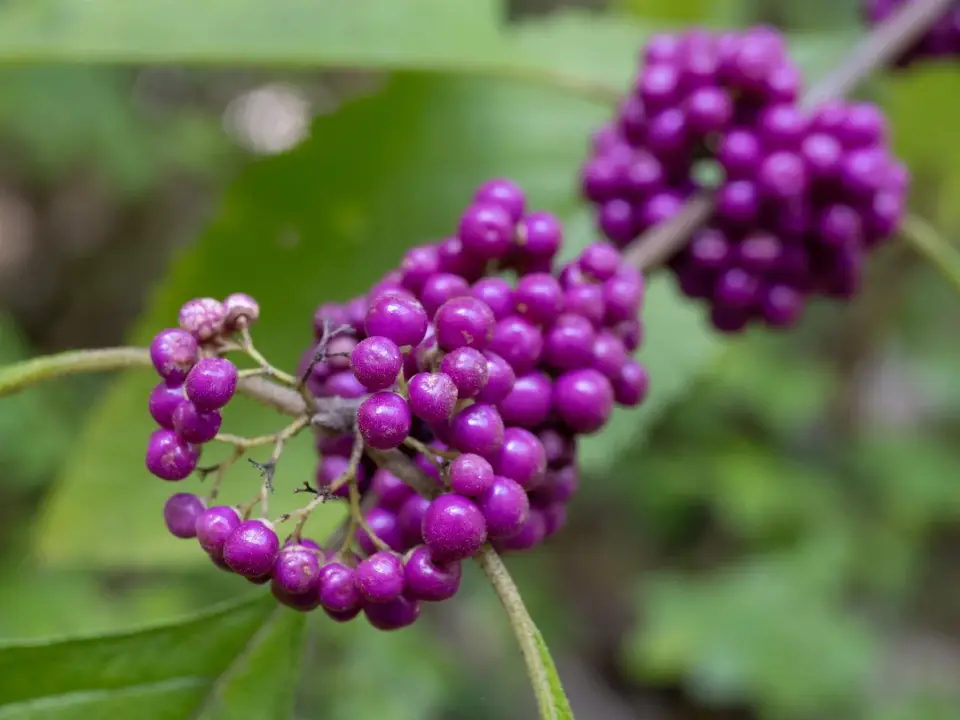
Then October arrives, and the plant steals the show. Clusters of electric-purple berries wrap tightly around each stem at every leaf node, in a display unlike anything else in a native garden. Nothing else looks quite like it, and the birds notice almost as fast as the neighbors do — mockingbirds, robins, and catbirds show up within days of the berries ripening, often stripping the branches clean before winter sets in.
It's an easy, forgiving shrub that handles Texas heat and clay soil without complaint, growing into a loose, graceful, arching form that suits a woodland edge or informal border far better than a clipped hedge line. It comes back reliably from the ground after hard winters, often more vigorous the following year.
A hard prune in late winter only improves the show, since berries form on new wood. For anyone who wants real fall color and wildlife action from a plant that asks for very little, American Beautyberry is one of the strongest native shrubs available.
Where it's native
American Beautyberry occurs naturally in 4 Texas ecoregions — Pineywoods, Post Oak Savannah, Gulf Prairies and Marshes, Blackland Prairies. Plants grown from local ecotypes are best adapted to our soils and climate here in the Blackland Prairies.
- 1Trans-Pecos
- 2High Plains
- 3Rolling Plains
- 4Edwards Plateau
- 5Cross Timbers and Prairies
- 6South Texas Plains
- 7Blackland Prairies
- 8Post Oak Savannah
- 9Gulf Prairies and Marshes
- 10Pineywoods