
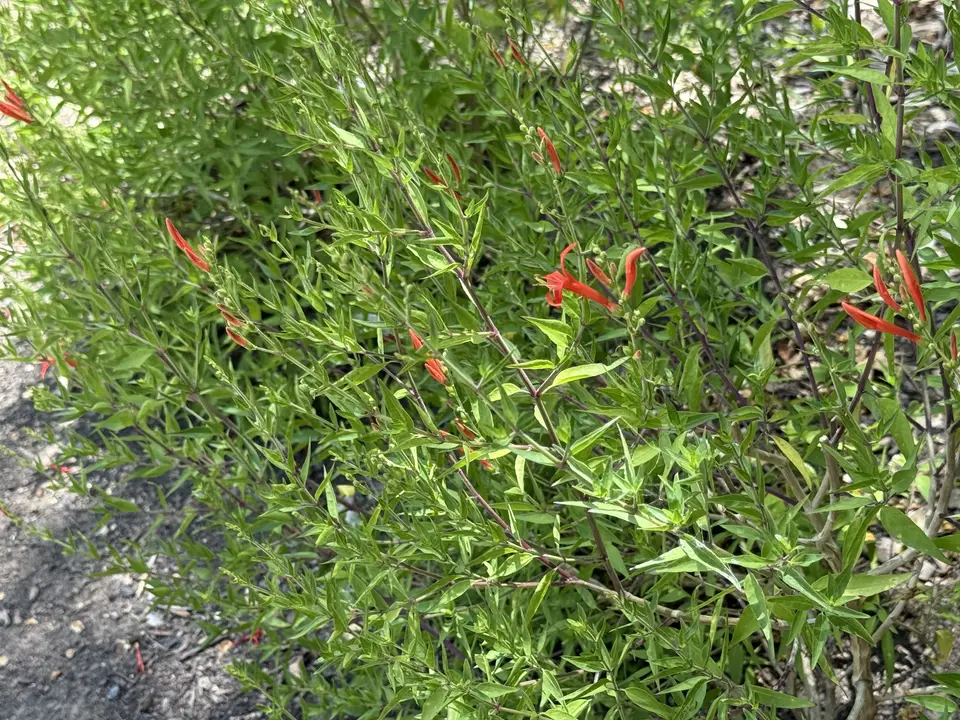
Flame Acanthus
Anisacanthus wrightii

Benny's Gold — Gallon — $10 (15 available) · Red — Gallon — $12 (18 available)
- Sun
- Full Sun, Part Shade
- Water
- Low, Moderate
- Mature size
- 3–5 ft tall × 3–5 ft wide
- Best for
- Pollinator Plant, Drought-tolerant Landscaping, Hummingbird attractor
About this size
- Gallon
- Our standard size: a 1-gallon nursery pot, about 6–7 inches across.
Pay at the nursery, plus 6.75% sales tax. Send your request and we'll confirm availability and your pickup time within 24 hours, then hold your plants. How it works
Planting & care
- Growth habit
- Loose, airy, multi-stem shrub; slightly leggy without pruning
- Typical bloom
- May–Oct
- Cold hardy to
- Zones 7–10
- Soil
- Well-drained soils; thrives in poor, rocky, sandy, or clay soils if drainage is adequate
Where to plant
Full sun to part shade, with the best bloom density and most compact habit in full sun. It's adaptable to rocky, sandy, or clay soil as long as drainage is decent — that's the one non-negotiable.
Watering
Low once established. Water regularly the first season to build deep roots. After that, rainfall is usually enough across most of Texas.
Cutting back
Cut back hard — by half to two-thirds — in late January or February before new growth starts. It blooms on new wood, so don't be timid about the cutback; a fuller pinch after the first spring flush makes for an even bushier plant.
About Flame Acanthus
If you want a Texas native that turns a yard into a hummingbird destination from late spring straight through fall, Flame Acanthus is the plant. This tough, multi-stem shrub pushes out long, narrow, tubular flowers in a brilliant shade of orange-red that hummingbirds key in on from a distance. It blooms on new growth all season long, meaning the more it grows, the more it flowers.
Narrow, lance-shaped leaves give the shrub a fine, airy texture, and the loose, open branching structure fills in nicely with regular pruning, forming a full mound rather than a stiff, formal shape. Even after a hard freeze knocks the tops back, the woody base persists through winter, ready to push fresh growth in spring.
Native to Central, West, and South Texas, it's built for the conditions that wear other plants down — extreme heat, dry alkaline soil, and the long stretches between rain that define a Texas summer. Once established, it's essentially self-sufficient: no supplemental fertilizer, minimal water, and a single hard cutback in late winter to keep it tidy.
The timing is what makes it special — its heaviest bloom flushes hit in midsummer and again in early fall, exactly when hummingbirds are moving through on migration. It's the kind of plant that sells itself the first time someone watches a hummingbird work it over.
Where it's native
Flame Acanthus occurs naturally in 3 Texas ecoregions — Edwards Plateau, South Texas Plains, Trans-Pecos. Plants grown from local ecotypes are best adapted to our soils and climate here in the blackland prairie and post oak savannah.
- 1Trans-Pecos
- 2High Plains
- 3Rolling Plains
- 4Edwards Plateau
- 5Cross Timbers and Prairies
- 6South Texas Plains
- 7Blackland Prairies
- 8Post Oak Savannah
- 9Gulf Prairies and Marshes
- 10Pineywoods
Plants it grows well with
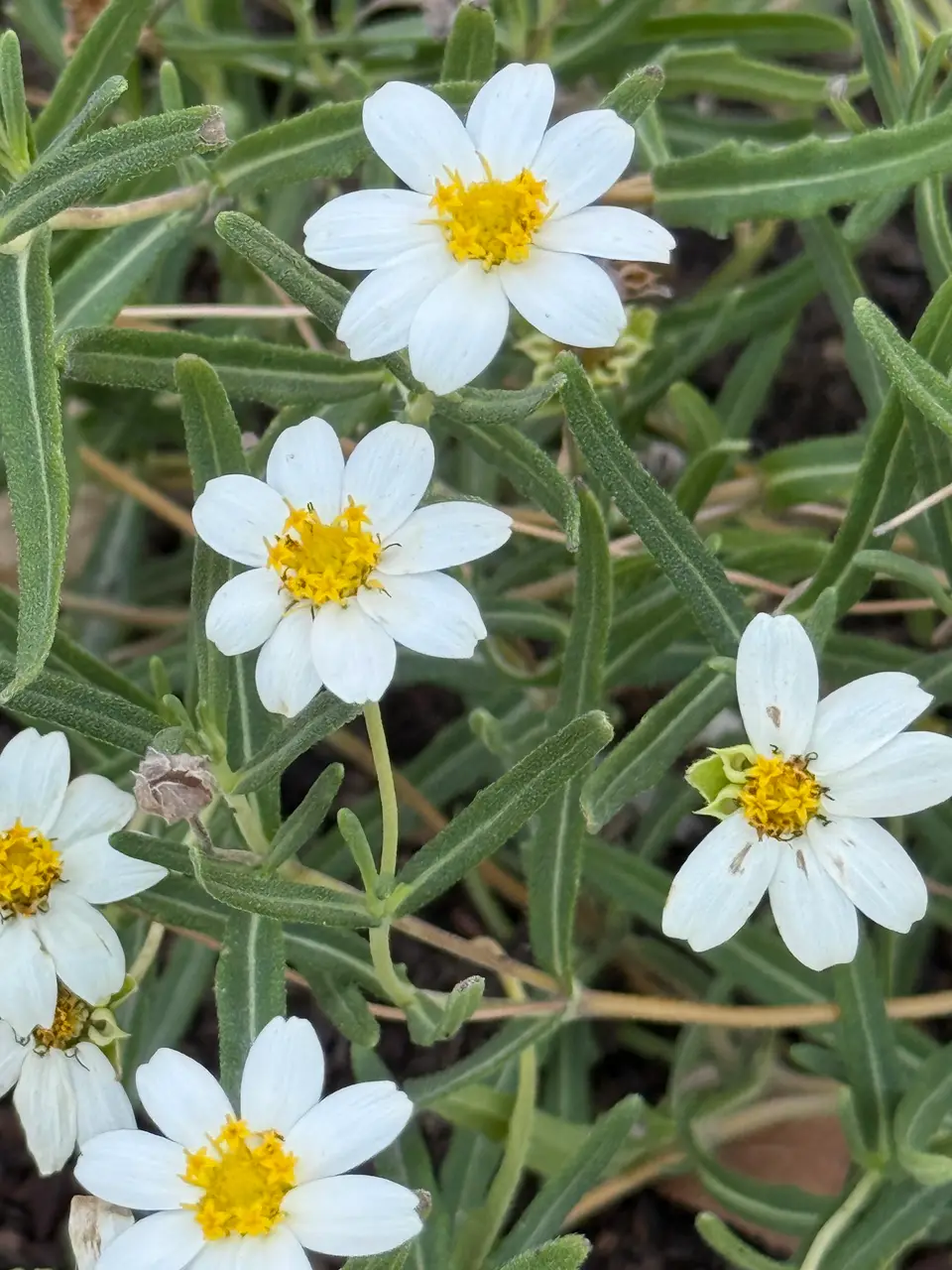
Blackfoot Daisy
A drought-proof native perennial with cheerful white, daisy-like blooms from spring through frost.
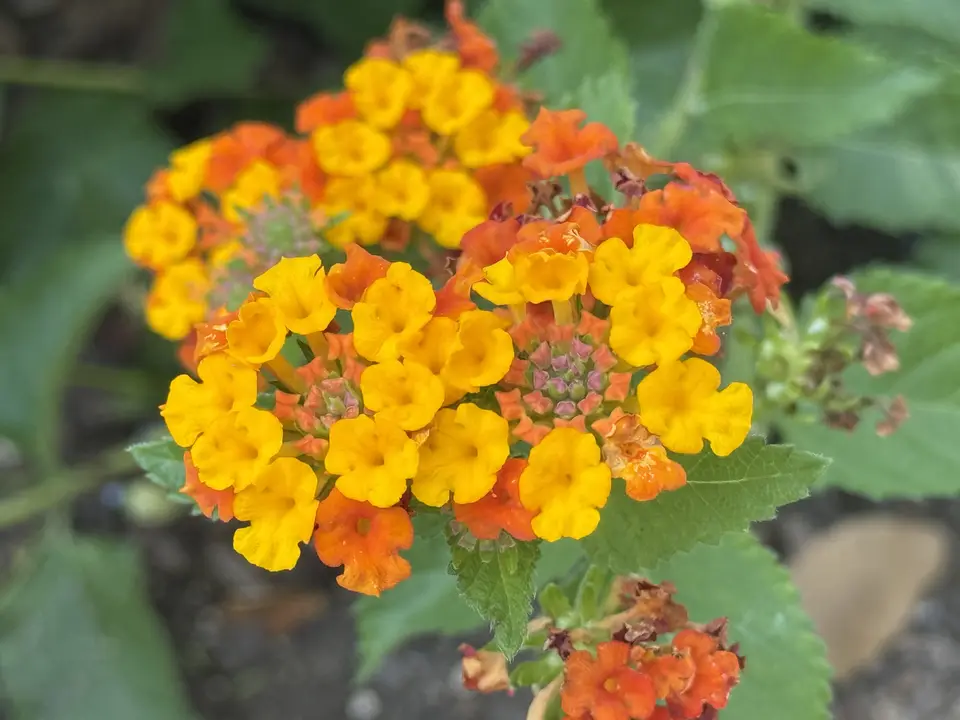
Texas Lantana
A tough, long-blooming native shrub with multi-colored flower clusters that draw butterflies from May through frost.
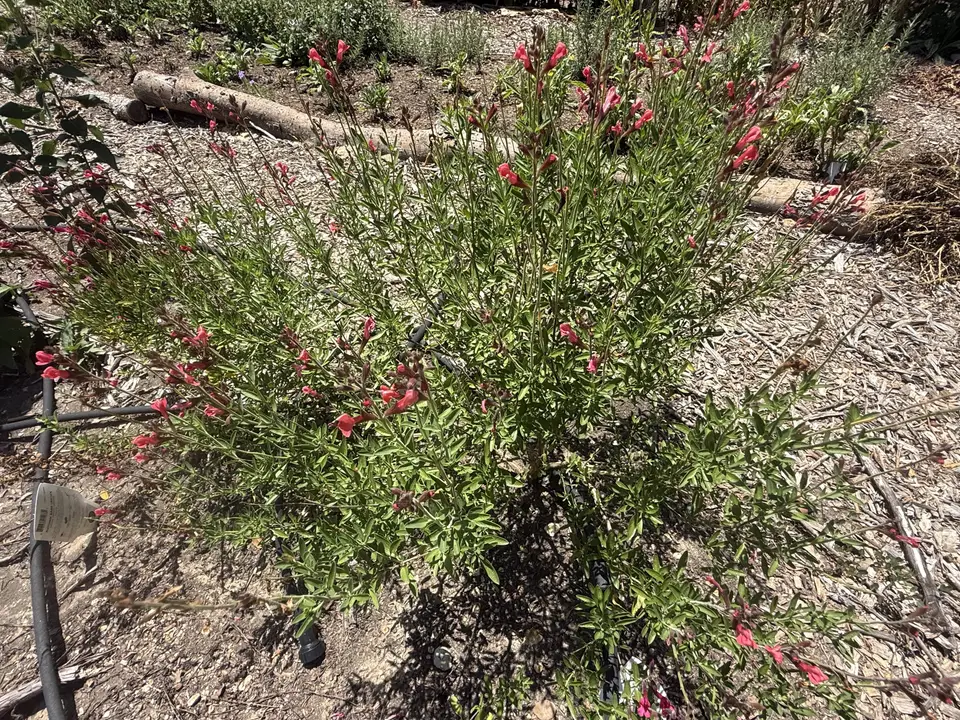
Autumn Sage
A compact, drought-tolerant native shrub that blooms nearly year-round in reds, corals, pinks, and whites.
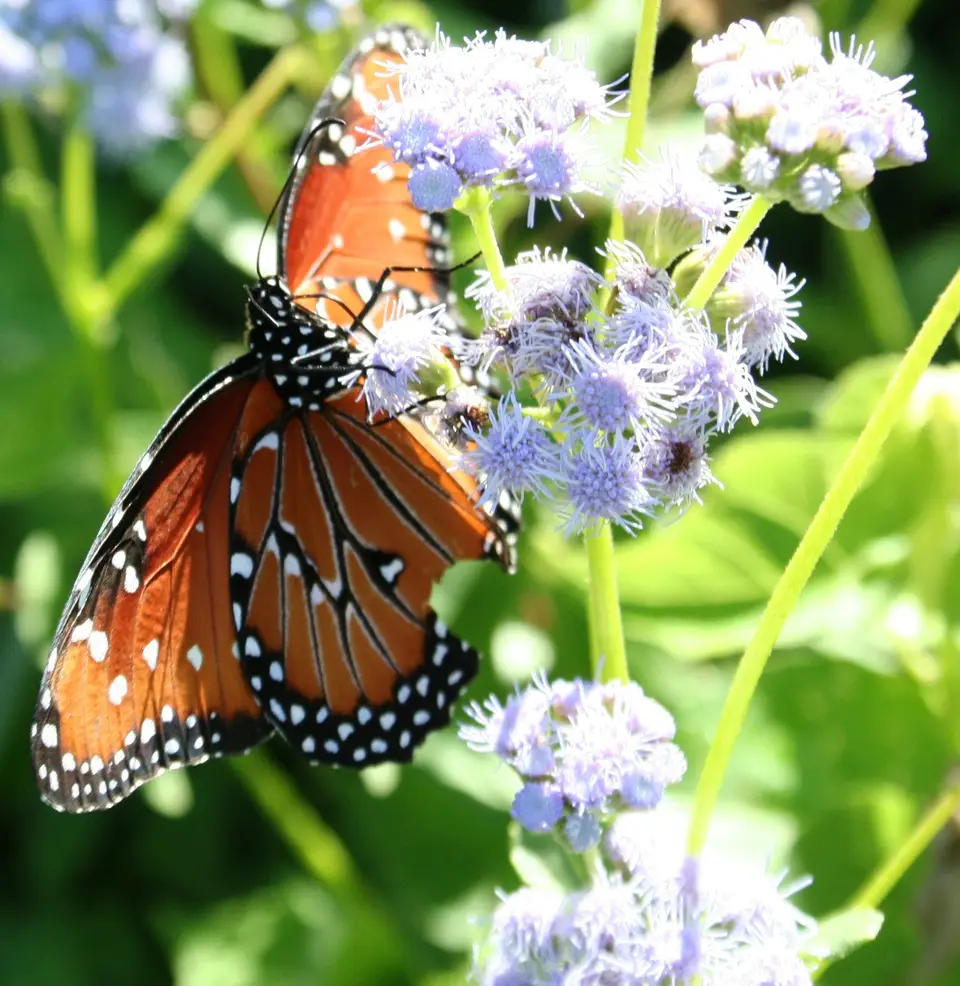
Blue Mistflower
A native perennial that erupts into clouds of soft blue-purple blooms just as fall pollinator activity peaks.