Blackfoot Daisy
Melampodium leucanthum
- Sun
- Full Sun
- Water
- Low, Drought tolerant once established
- Mature size
- 12-18” tall x 18-24” wide
- Best for
- Drought-tolerant Landscaping, Native ecosystem plant
Planting & care
- Growth habit
- Low, mounding, spreading
- Typical bloom
- Apr–Oct
- Cold hardy to
- Zones 5–10
- Soil
- Well-drained soils; thrives in rocky, sandy, or decomposed granite; struggles in heavy clay unless amended
Where to plant
Full sun — at least 6–8 hours daily for the best flowering and most compact form. Well-drained soil is the one true requirement; rocky, sandy, or decomposed granite soils are ideal, and heavy clay should be amended for drainage.
Watering
Water lightly the first season to build a strong root system. After that, supplemental water is rarely needed — standing water or poor drainage is the biggest risk to this plant.
Cutting back
Light trimming through the season keeps it branching and blooming. Cut back by about a third in late February before new growth starts, and deadhead spent flowers to stretch the bloom season through summer heat.
About Blackfoot Daisy
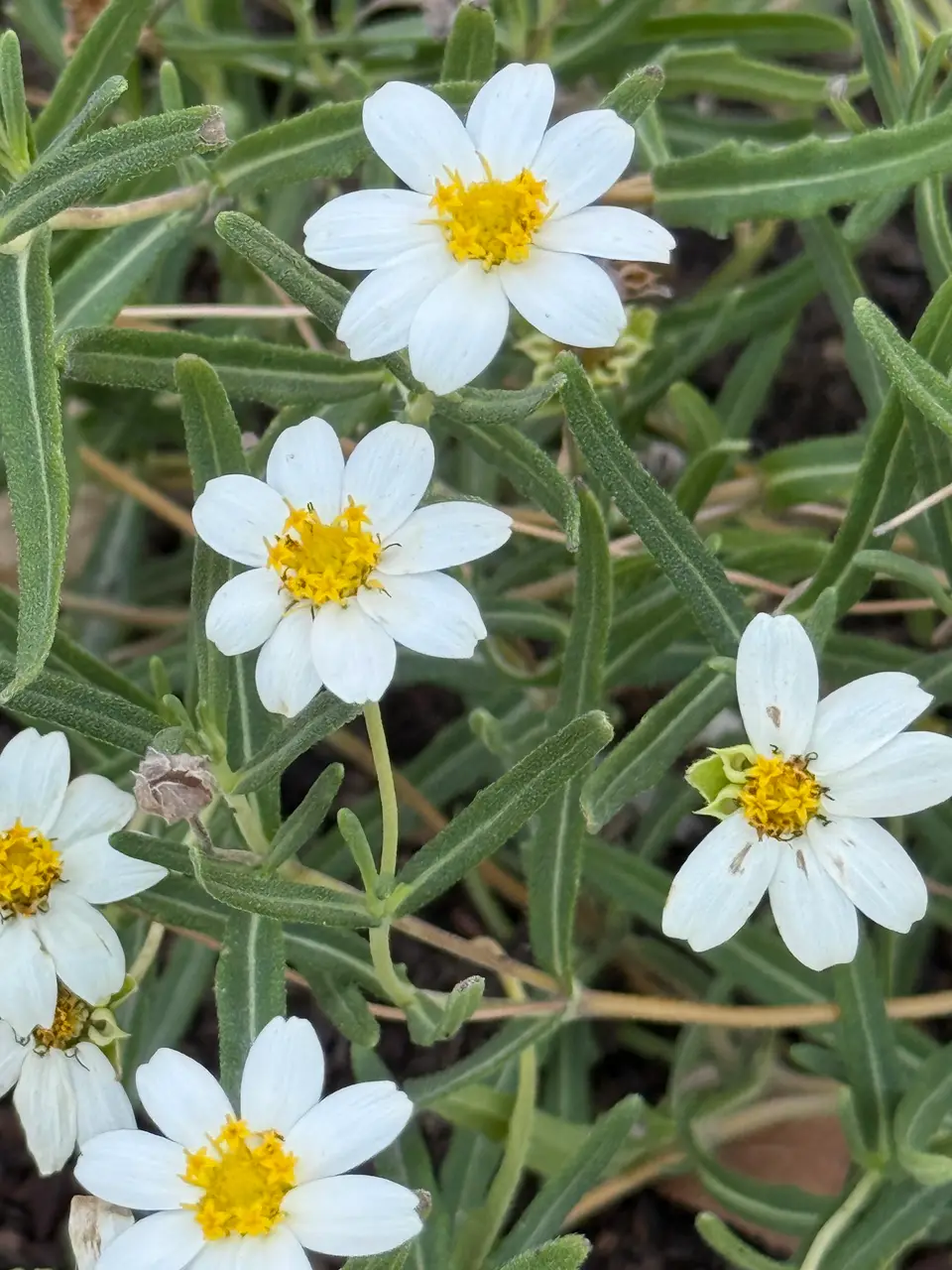
Blackfoot Daisy blooms from April all the way to first frost, forming a tidy, low, spreading mound of narrow, silvery-green foliage covered in small white flowers with golden centers. The flowers are held just above the foliage in a dense, continuous show, and the fine-textured, slightly gray leaves give the whole plant a soft, cool look even in the height of summer heat.
Look closely at the base of each flower and you'll spot the small black, foot-shaped bracts that give the plant its common name — a subtle detail most people never notice until it's pointed out. It's about as close to indestructible as a plant gets in the right conditions; heat and drought that wear other plants down barely slow it.
Native to the rocky hillsides and limestone outcrops of Texas and the Southwest, it asks for almost nothing once established: no fertilizer, minimal water, just occasional light trimming to keep it full and blooming. Bees and butterflies visit steadily through its long season, making the most of one of the most dependable nectar sources in a dry summer landscape.
At 12 to 18 inches tall, it's a natural fit for the front of a border, a rock garden, a pollinator bed, or a sunny container — a small, tough plant that quietly outperforms far showier neighbors over the course of a full growing season.
Where it's native
Blackfoot Daisy occurs naturally in 4 Texas ecoregions — Edwards Plateau, Trans-Pecos, Rolling Plains, South Texas Plains. Plants grown from local ecotypes are best adapted to our soils and climate here in the blackland prairie and post oak savannah.
- 1Trans-Pecos
- 2High Plains
- 3Rolling Plains
- 4Edwards Plateau
- 5Cross Timbers and Prairies
- 6South Texas Plains
- 7Blackland Prairies
- 8Post Oak Savannah
- 9Gulf Prairies and Marshes
- 10Pineywoods
Plants it grows well with
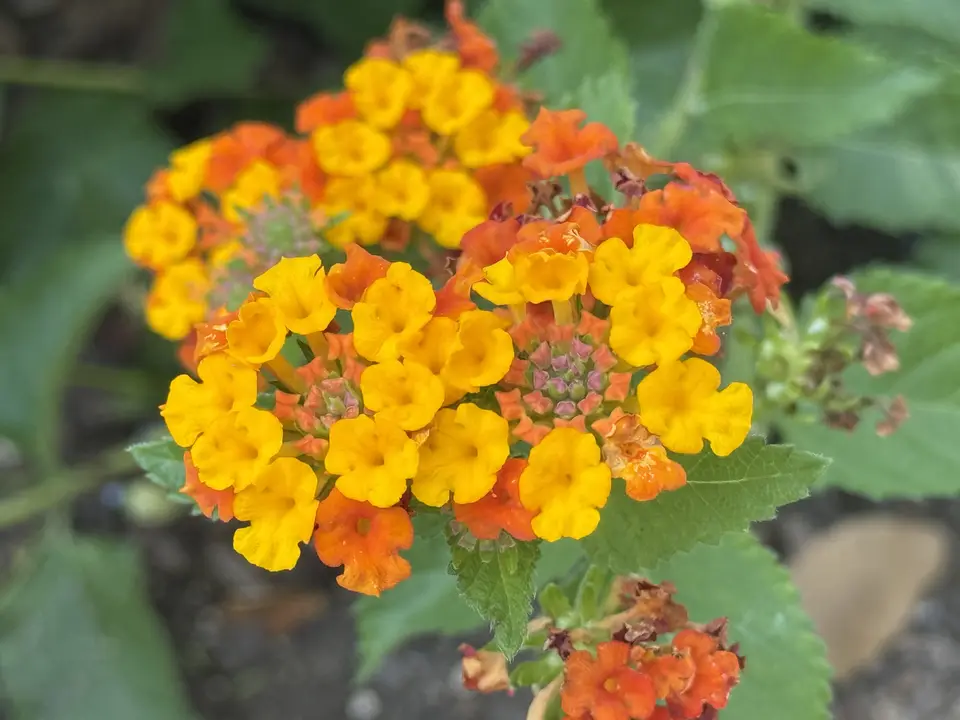
Texas Lantana
A tough, long-blooming native shrub with multi-colored flower clusters that draw butterflies from May through frost.
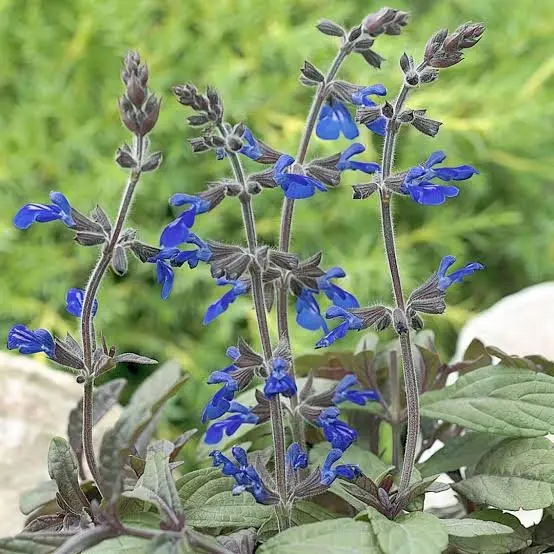
Bicolor Salvia
Bicolor salvia is a low, spreading sage with dark green leaves and deep blue-violet flowers from spring through fall. Bees and hummingbirds visit the blooms, and deer generally leave it alone.
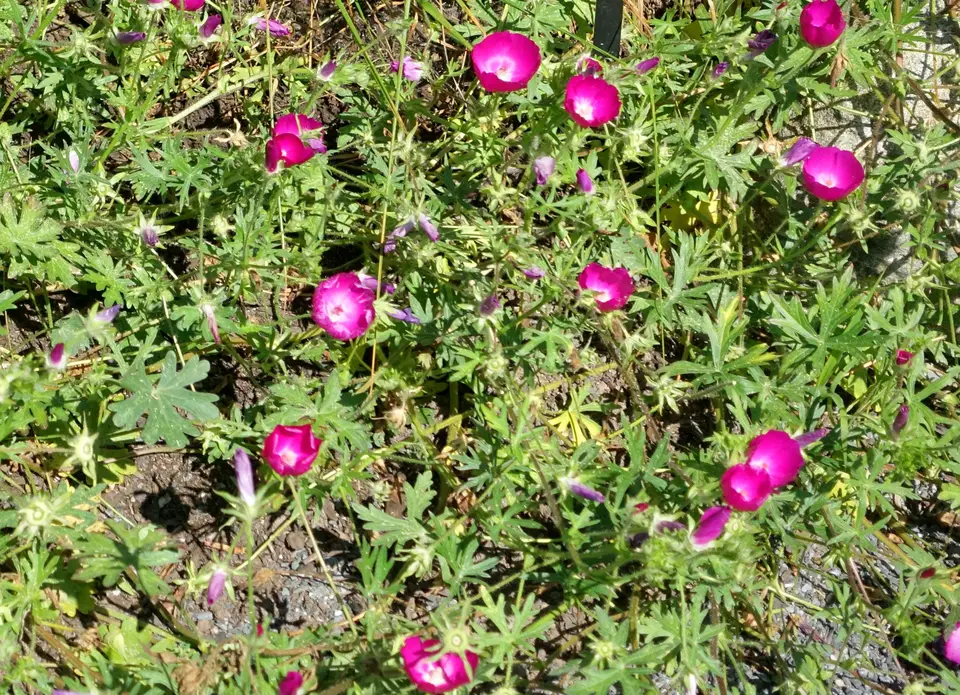
Winecup (Perennial)
A fast-spreading native groundcover with vivid magenta cup-shaped blooms every spring.