Bicolor Salvia
Salvia sinaloensis
- Sun
- Full Sun, Part Shade
- Water
- Drought tolerant once established, Moderate
- Mature size
- 1-2 ft tall x 2-3 ft wide
- Best for
- Groundcover, Hummingbird attractor, Pollinator Plant, Drought-tolerant Landscaping
Gallon — $10
About this size
- Gallon
- Our standard size: a 1-gallon nursery pot, about 6–7 inches across.
Pay at the nursery, plus 6.75% sales tax. Send your request and we'll confirm availability and your pickup time within 24 hours, then hold your plants. How it works
Planting & care
- Growth habit
- Low, spreading, mounding groundcover that roots where stems touch soil
- Typical bloom
- Apr–Oct
- Cold hardy to
- Zones 8–10
- Soil
- Well-drained; adapts to clay, limestone, and sandy soils; avoid constantly wet conditions
Where to plant
Full sun to part shade, in well-drained soil. It spreads by rooting stems, so give it room along a bed edge, on a slope, or beneath taller shrubs. Afternoon shade keeps the foliage fresher in the hottest part of summer.
Watering
Water regularly the first summer to establish. After that it tolerates dry spells well, and the foliage stays fullest with an occasional deep watering. Avoid constantly wet soil, which invites rot.
Cutting back
A hard cutback in late winter, after the last freeze, clears frost-damaged stems and renews growth. Shear lightly in midsummer to tidy the mound and encourage more blooms.
Winter care
In colder North Texas winters the top growth may die back to the ground. A layer of mulch over the crown helps it return in spring.
About Bicolor Salvia
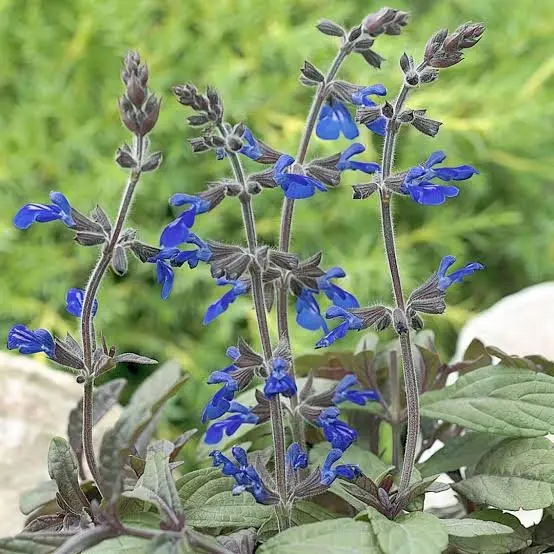
Bicolor salvia is the sage for people who want blue flowers and a groundcover in the same plant. It forms a low, spreading mound of dark green leaves, and the stems root wherever they touch soil, so a single plant knits itself into a dense mat that shades out weeds and holds a slope.
The name comes from the leaves, which are a deep green on top with a purple cast underneath, and from the flowers, which open in whorls up the stems in a rich blue-violet. Bloom begins in spring and keeps coming through summer and into fall, and bees and hummingbirds work the flowers for as long as they last. Crush a leaf and you get the sharp herbal scent that keeps deer from taking more than a taste.
It is a heat-tolerant plant that handles dry spells without complaint, and it fits in places that are hard to fill, such as the base of a taller shrub, a sunny bank, or the edge of a walkway. It looks good tucked against autumn sage or mealy blue sage, where the different flower colors and heights layer well.
It comes from Sinaloa in western Mexico, so it is not a Texas native, but it has proven itself in Texas heat and clay. Where the top growth freezes back in a hard winter, it returns from the roots in spring, ready to spread again.