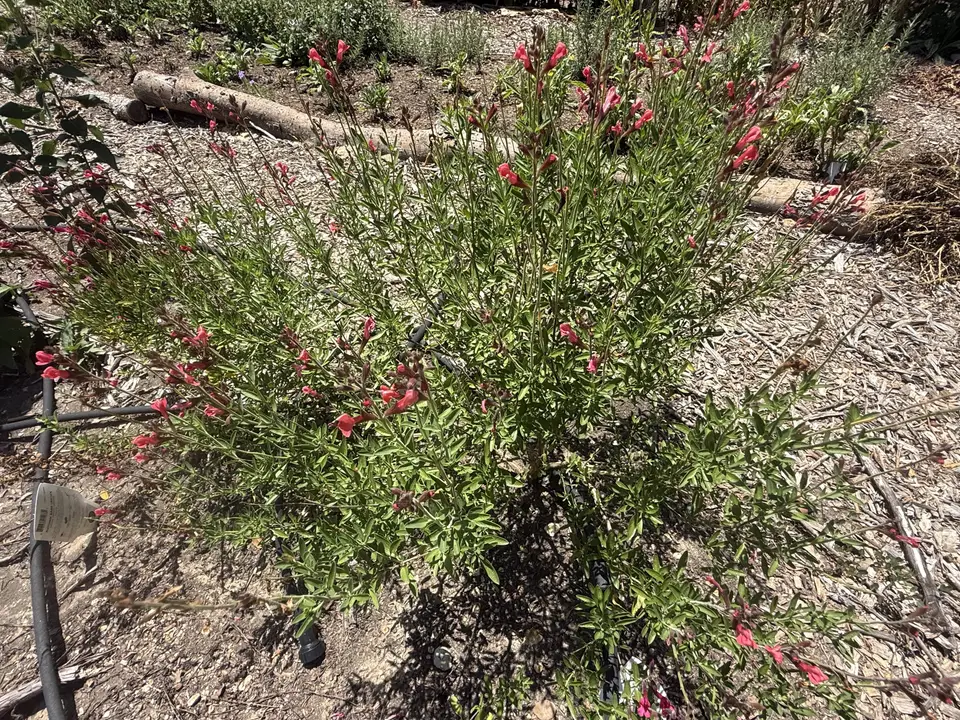
Autumn Sage
Salvia greggii
Lipstick — Gallon — $10 (2 available) · Red — Gallon — $10 (4 available) · White — Gallon — $10 (25 available) · Pink — Gallon — $10 (8 available)
- Sun
- Full Sun
- Water
- Low, Drought tolerant once established
- Mature size
- 2-3 ft tall x 2-3 ft wide
- Best for
- Pollinator Plant, Native ecosystem plant, Hummingbird attractor, Drought-tolerant Landscaping
About this size
- Gallon
- Our standard size: a 1-gallon nursery pot, about 6–7 inches across.
Pay at the nursery, plus 6.75% sales tax. Send your request and we'll confirm availability and your pickup time within 24 hours, then hold your plants. How it works
Planting & care
- Growth habit
- Compact bushy woody base with soft flowering stems
- Typical bloom
- Mar–Nov
- Cold hardy to
- Zones 7–9
- Soil
- Well-drained (critical); thrives in rocky, sandy, or amended clay
Where to plant
Full sun with well-drained soil — drainage is the one thing this plant won't compromise on. Rocky, sandy, or well-amended clay all work; standing water will kill the roots.
Watering
Water regularly through the first growing season. Once established, it's drought tolerant and does best watered deeply, then allowed to dry out between waterings.
Cutting back
Tip-prune through the growing season to keep it bushy and blooming. Cut back hard in late February before new growth starts, and avoid heavy pruning in summer heat or right before frost.
About Autumn Sage
Autumn Sage puts out wave after wave of tubular flowers from March through November — one of the longest bloom windows of any Texas native — in colors ranging from fire-engine red to coral, pink, white, and purple depending on the variety. Hummingbirds find it within days of planting, and rarely leave once they do.
The small, slightly sticky leaves carry a faint resinous scent, and the plant's compact, semi-woody structure gives it a tidy, mounded shape that holds up well even during the heaviest bloom flushes. Native to the Chihuahuan Desert of West Texas, it's built to run almost entirely on rainfall once established, asking only for full sun and good drainage.
It stays compact at 2 to 3 feet in every direction, which makes it as useful in a container or at the edge of a bed as it is massed along a fence line or planted in a rock garden. Because it blooms most heavily in spring and again in fall — with a lighter but steady show through summer — it fills the gaps left by plants with shorter or more seasonal bloom windows.
Cut it back in late winter and it comes back fuller every spring — a plant that rewards almost no effort with nearly nonstop color and constant hummingbird traffic for the better part of the year.
Where it's native
Autumn Sage occurs naturally in 3 Texas ecoregions — Trans-Pecos, Edwards Plateau, South Texas Plains. Plants grown from local ecotypes are best adapted to our soils and climate here in the blackland prairie and post oak savannah.
- 1Trans-Pecos
- 2High Plains
- 3Rolling Plains
- 4Edwards Plateau
- 5Cross Timbers and Prairies
- 6South Texas Plains
- 7Blackland Prairies
- 8Post Oak Savannah
- 9Gulf Prairies and Marshes
- 10Pineywoods
Plants it grows well with
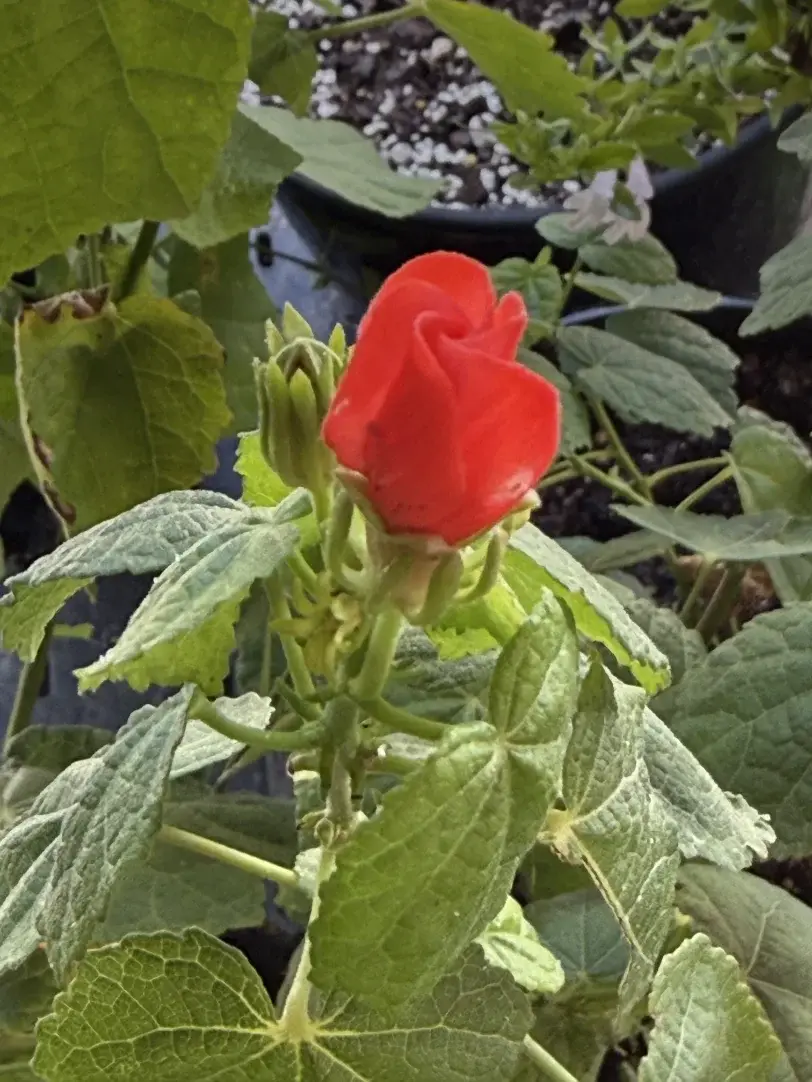
Turk’s Cap
A shade-loving native perennial with distinctive spiraled red blooms that flower nonstop from late spring through fall.
Flame Acanthus
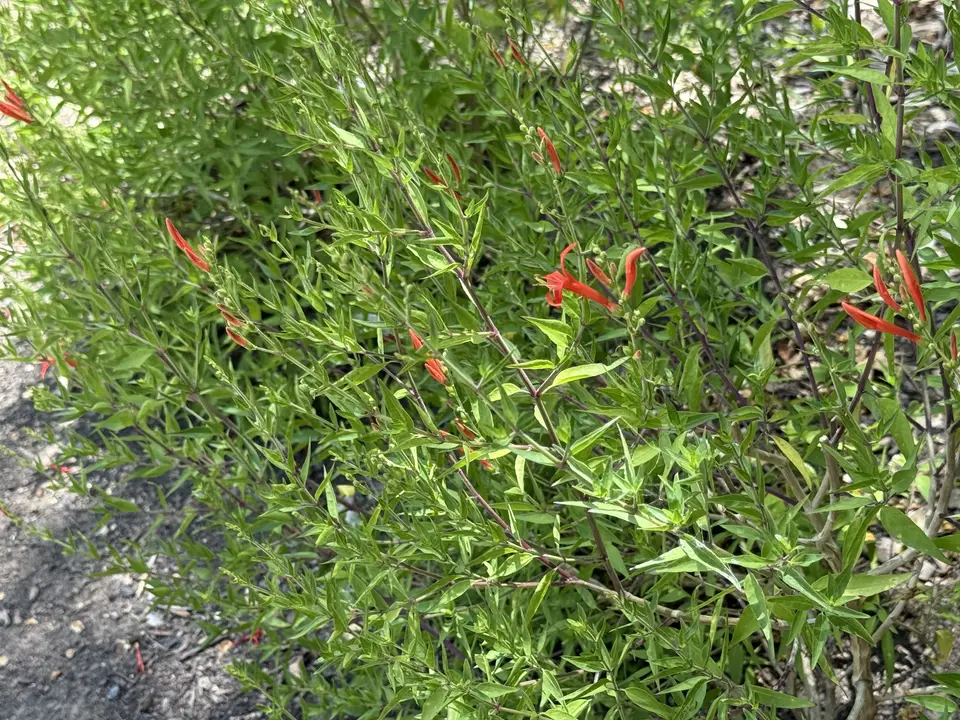
A Texas native hummingbird magnet with brilliant orange-red tubular blooms from late spring through fall.
Bicolor Salvia
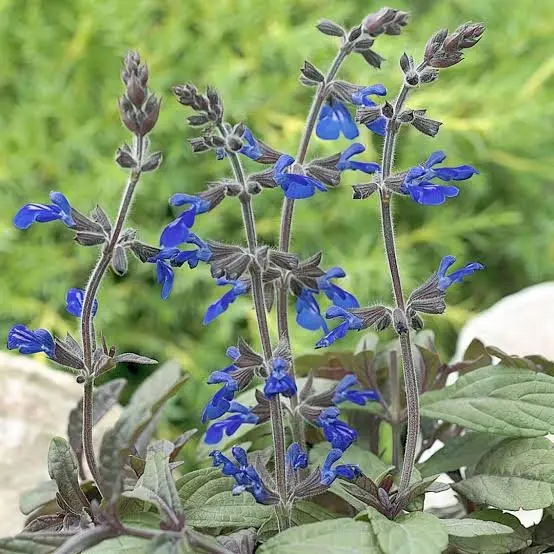
Bicolor salvia is a low, spreading sage with dark green leaves and deep blue-violet flowers from spring through fall. Bees and hummingbirds visit the blooms, and deer generally leave it alone.