
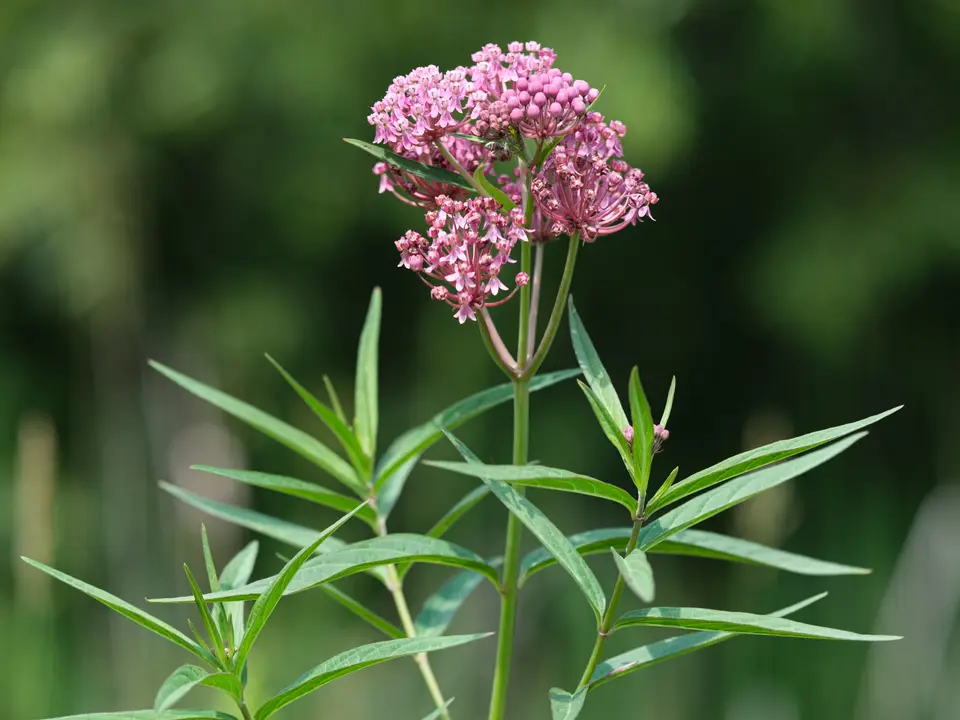
Swamp Milkweed
Asclepias incarnata

- Sun
- Full Sun, Part Shade
- Water
- High, Prefers moist well drained soil
- Mature size
- 3–4 ft tall, 2–3 ft wide
- Best for
- Monarch host plant, Pollinator Plant, Wildlife cover / habitat, Native ecosystem plant
3 Gallon — $30 — only 5 left
About this size
- 3 Gallon
- A larger, more established plant — more size and root system from day one.
Pay at the nursery, plus 6.75% sales tax. Send your request and we'll confirm availability and your pickup time within 24 hours, then hold your plants. How it works
Planting & care
- Growth habit
- Upright, clump-forming; stems mostly unbranched below the flower clusters
- Typical bloom
- Jun–Sep
- Cold hardy to
- Zones 3–9
- Soil
- Adaptable to heavy clay, loam, or humus-rich soils; performs best with consistent moisture. Good choice for rain gardens, low spots, and pond margins. Soil pH 5.5–7.0 (slightly acidic to neutral preferred, but adaptable).
Where to plant
Full sun to light part shade for the best bloom and most compact growth. Adaptable to clay, loam, or humus-rich soil — consistent moisture matters more than soil type.
Watering
Keep soil consistently moist — this milkweed does not like to dry out. Ideal for low spots, rain gardens, or areas near downspouts, and tolerates brief standing water.
Cutting back
Cut stems back to 2–3 inches above ground in late winter before new growth starts. Deadhead spent blooms if you want to limit self-seeding. It's normal for nothing to show above ground until late spring.
About Swamp Milkweed
For the spot in a yard that stays a little too wet for most plants, the corner where water pools after a storm, Swamp Milkweed was made for it. This Texas native turns that problem section into one of the prettiest and most valuable patches in the garden. From June through September, it sends up clusters of fragrant, rosy-pink blooms that draw a steady stream of monarch butterflies, bees, and other pollinators all season long.
It's one of the essential host plants for monarch caterpillars — without milkweed, there's no next generation of monarchs. Unlike its drought-loving cousins, this milkweed actually prefers consistently moist soil, making it the perfect answer for rain gardens, pond edges, and stubbornly damp corners of the yard.
It grows into a tidy, upright clump 3 to 4 feet tall, dies back to the ground each winter, and returns reliably every spring.
Plant it once, water it during dry spells, and watch it become a monarch nursery and hummingbird moth magnet right outside the window.
Where it's native
Swamp Milkweed occurs naturally in 4 Texas ecoregions — Pineywoods, Post Oak Savannah, Blackland Prairies, Gulf Prairies and Marshes. Plants grown from local ecotypes are best adapted to our soils and climate here in the Blackland Prairies.
- 1Trans-Pecos
- 2High Plains
- 3Rolling Plains
- 4Edwards Plateau
- 5Cross Timbers and Prairies
- 6South Texas Plains
- 7Blackland Prairies
- 8Post Oak Savannah
- 9Gulf Prairies and Marshes
- 10Pineywoods