
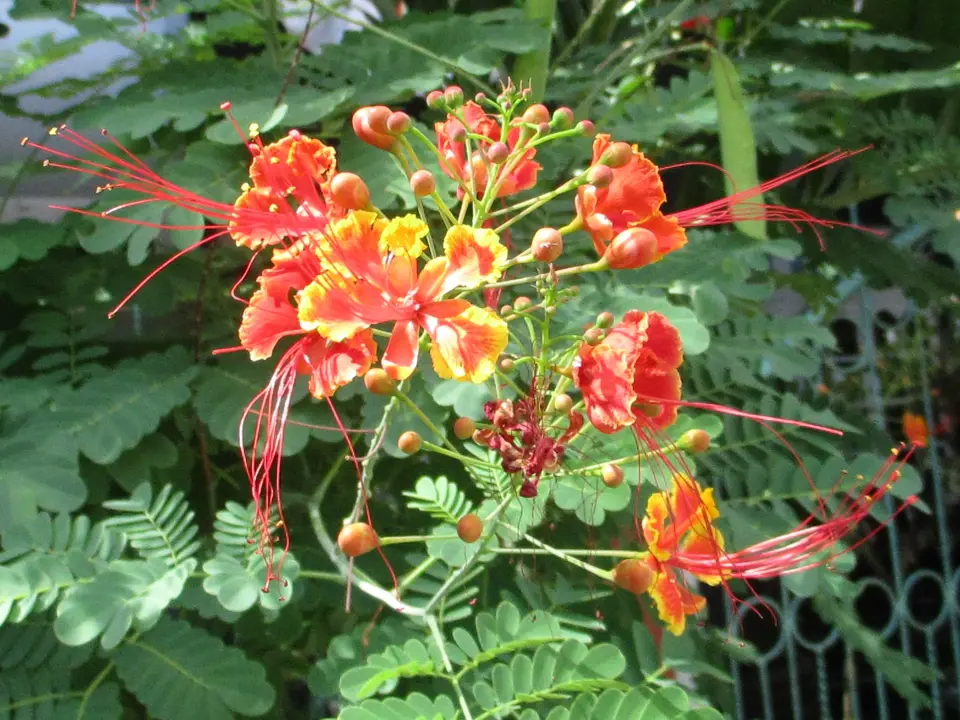
Pride of Barbados
Caesalpinia pulcherrima
Patio Tub — $150 (2 available) · 5 Gallon — $60 (3 available)
- Sun
- Full Sun
- Water
- Moderate, Drought tolerant once established
- Mature size
- 6–10 ft tall and wide in warm climates; typically 3–6 ft regrowth per season in North Texas as a die-back perennial
- Best for
- Hummingbird attractor, Pollinator Plant, Drought-tolerant Landscaping
About these sizes
- Patio Tub
- A large, mature specimen in a big container — instant size for a focal spot.
- 5 Gallon
- A larger, more established plant — more size and root system from day one.
Pay at the nursery, plus 6.75% sales tax. Send your request and we'll confirm availability and your pickup time within 24 hours, then hold your plants. How it works
Planting & care
- Growth habit
- Large, upright, multi-stemmed shrub with arching branches and feathery, bipinnate compound leaves; stems carry small thorns
- Typical bloom
- Jun–Oct
- Cold hardy to
- Zones 8–10
- Soil
- Adaptable — tolerates poor, rocky, or sandy soil; well-drained essential; does not tolerate wet feet
Where to plant
Full sun — essential for strong bloom production. Adaptable to poor, rocky, or sandy soil; good drainage is a must, avoid wet, heavy sites.
Watering
Moderate while establishing; drought tolerant once rooted in.
Pruning
Cut back hard after a freeze kills the top growth, or in late winter to shape and rejuvenate. Watch for small thorns when handling.
Cold note
Marginal in North Texas winters — may die back to the root and return in a mild year, or be lost in a hard freeze. Heavy mulch or growing in a large, movable container helps improve winter odds.
About Pride of Barbados
For a plant that looks tropical, blooms nonstop through the worst of the summer heat, and stops traffic while doing it, Pride of Barbados delivers. Ruffled clusters of orange-red and gold flowers with long, dramatic red stamens rise above soft, fern-like foliage from June clear through the first frost, one of the most reliably in-bloom plants for a Texas garden.
It thrives in the exact conditions that wear other plants down: blazing sun, reflected heat off pavement, poor rocky soil. Hummingbirds and swallowtail butterflies treat it like a magnet all summer long.
In milder winters it can die back and return from the root; in a harder freeze it may need replanting the following spring, which makes it a great large container specimen that can be moved to a protected spot for winter.
For anyone chasing that big, bold, tropical look without giving up Texas toughness, this is the plant.
Plants it grows well with
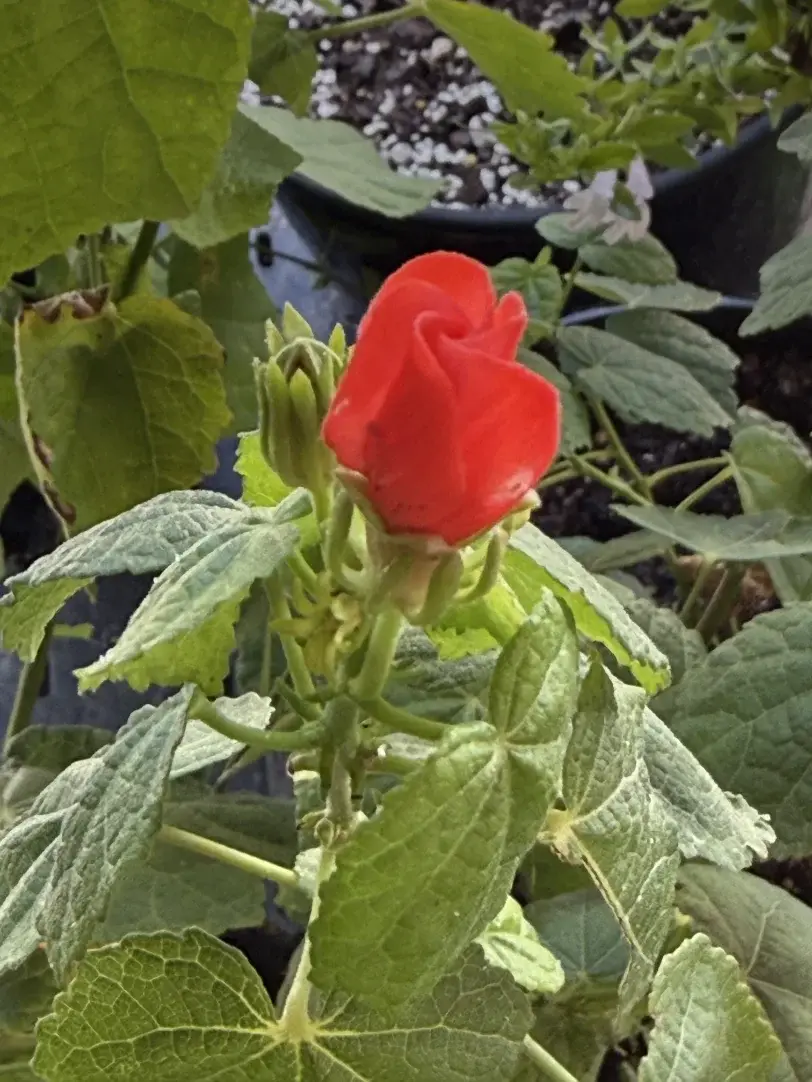
Turk’s Cap
A shade-loving native perennial with distinctive spiraled red blooms that flower nonstop from late spring through fall.
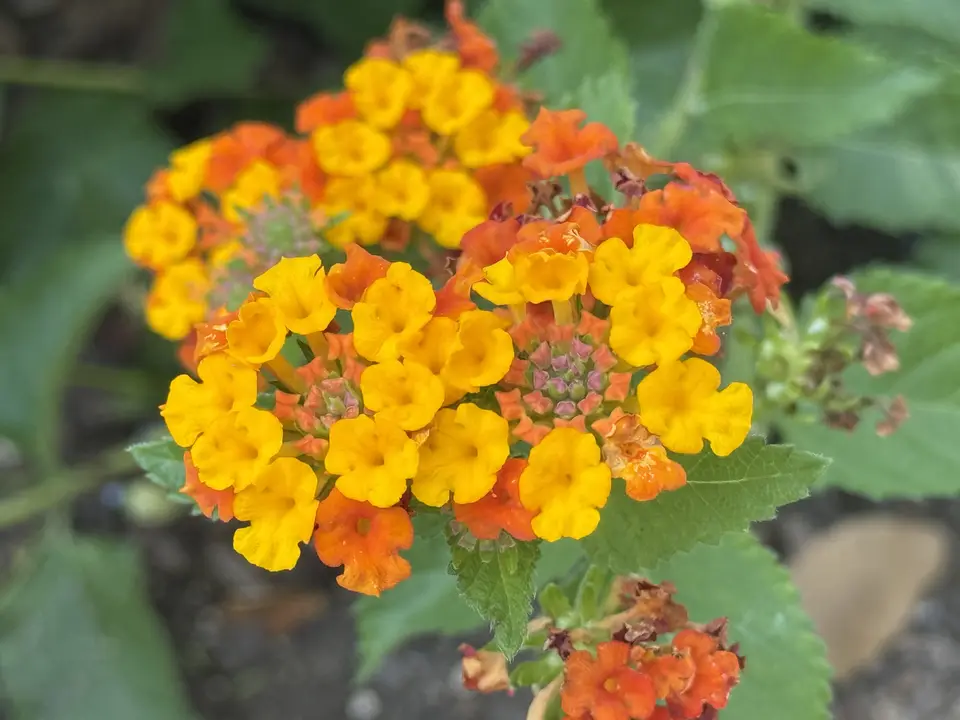
Texas Lantana
A tough, long-blooming native shrub with multi-colored flower clusters that draw butterflies from May through frost.
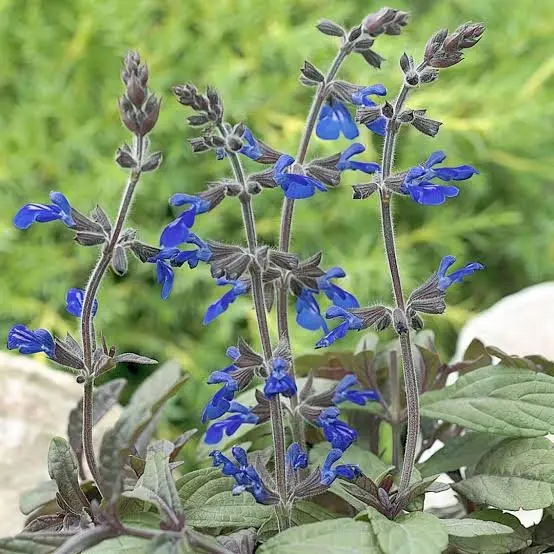
Bicolor Salvia
Bicolor salvia is a low, spreading sage with dark green leaves and deep blue-violet flowers from spring through fall. Bees and hummingbirds visit the blooms, and deer generally leave it alone.
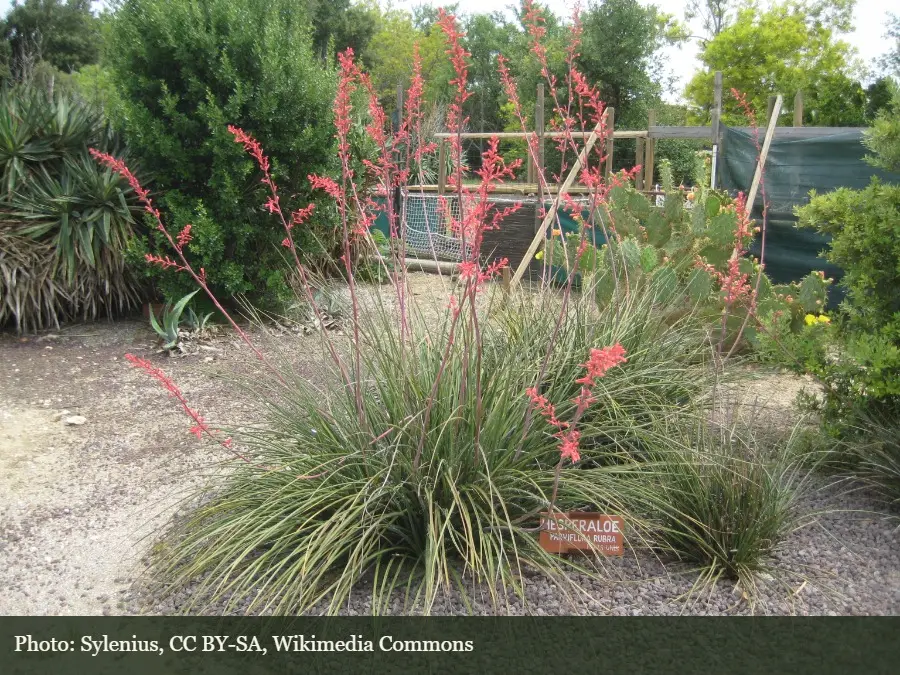
Red Yucca
A soft-leaved, drought-proof native accent plant with towering coral-red blooms that hummingbirds visit all season.