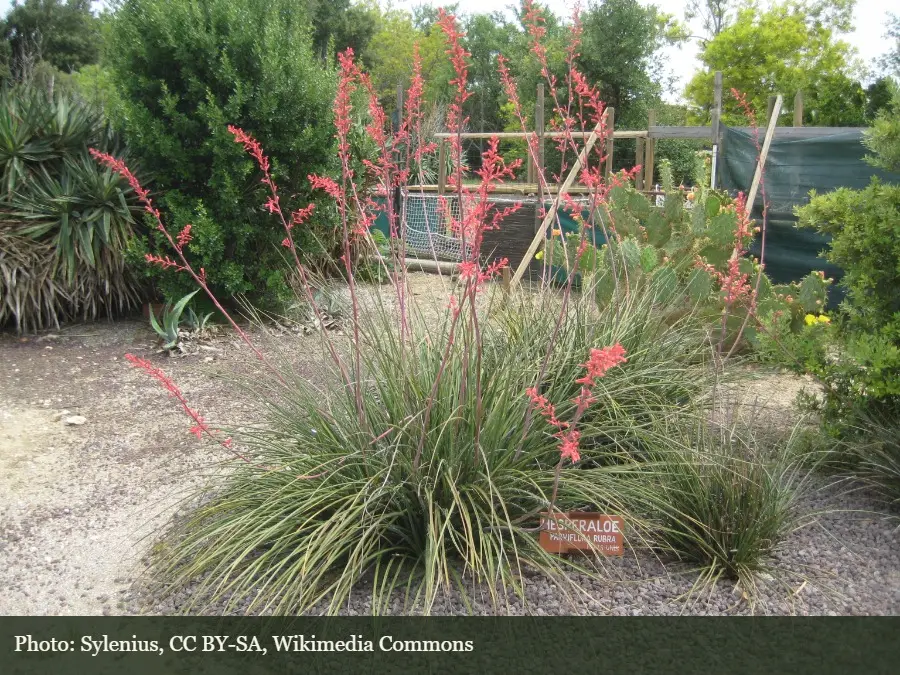
Red Yucca
Hesperaloe parviflora
- Sun
- Full Sun, Part Shade
- Water
- Low, Drought tolerant once established
- Mature size
- 2–3 ft tall (foliage), 4–6 ft with flower spikes; 3–4 ft wide
- Best for
- Drought-tolerant Landscaping, Pollinator Plant
Tree Pot — $18
About this size
- Tree Pot
- A tall, narrow pot that lets a young tree or shrub grow a deep root before it goes in the ground.
Pay at the nursery, plus 6.75% sales tax. Send your request and we'll confirm availability and your pickup time within 24 hours, then hold your plants. How it works
Planting & care
- Growth habit
- Clumping, grass-like rosette with tall flowering stalks
- Typical bloom
- May–Oct
- Cold hardy to
- Zones 5–10
- Soil
- Well-drained soils; tolerates clay if amended or planted high
Where to plant
Full sun to part shade, with the best performance, tightest form, and most flower spikes in full sun. Well-drained soil is essential; it tolerates rocky, sandy, or amended clay, but never a heavy, moisture-retaining mix.
Watering
Low once established. Water regularly the first season to encourage deep roots; after that, rainfall is sufficient across most of Texas. Never let standing water sit around the crown.
Cutting back
Remove spent flower stalks at the base after bloom, and pull or trim dead leaves from the outer rosette as needed. No hard pruning required.
About Red Yucca
If you want one plant that delivers architectural beauty, hummingbird traffic, and zero-drama performance from May straight through fall, Red Yucca is it. This North Texas native sends up towering coral-red flower spikes in late spring and keeps them coming through summer, drawing hummingbirds on repeat visits all season long. Despite the name, it's not a true yucca — the foliage is soft, flexible, and safe to plant anywhere families, children, and pets are present.
Arching, blue-green leaves with fine white filaments along the margins form a tidy, grass-like rosette that stays evergreen and looks polished twelve months a year, making this one of the few Texas natives that pulls its weight even when it isn't in bloom.
Native to the Trans-Pecos region of Texas, it's built for the conditions that push most ornamentals to the edge: extreme heat, rocky or clay soil, alkaline pH, and weeks without rainfall. Once established, it needs almost nothing — no supplemental fertilizer, minimal water, and a quick cleanup of spent flower stalks once or twice a season.
It works in traditional landscapes, modern xeriscapes, HOA plantings, and commercial installs alike. Plant it once and it returns year after year, spreading slowly into a graceful clump that only improves with age.
Where it's native
Red Yucca occurs naturally in 3 Texas ecoregions — South Texas Plains, Trans-Pecos, Edwards Plateau. Plants grown from local ecotypes are best adapted to our soils and climate here in the blackland prairie and post oak savannah.
- 1Trans-Pecos
- 2High Plains
- 3Rolling Plains
- 4Edwards Plateau
- 5Cross Timbers and Prairies
- 6South Texas Plains
- 7Blackland Prairies
- 8Post Oak Savannah
- 9Gulf Prairies and Marshes
- 10Pineywoods
Plants it grows well with
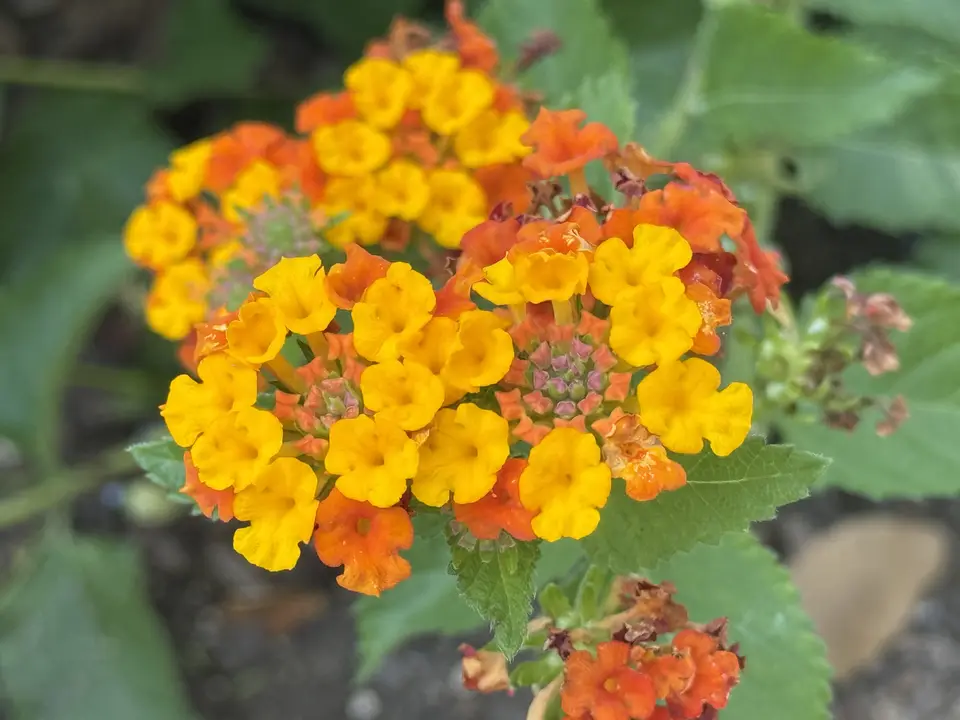
Texas Lantana
A tough, long-blooming native shrub with multi-colored flower clusters that draw butterflies from May through frost.
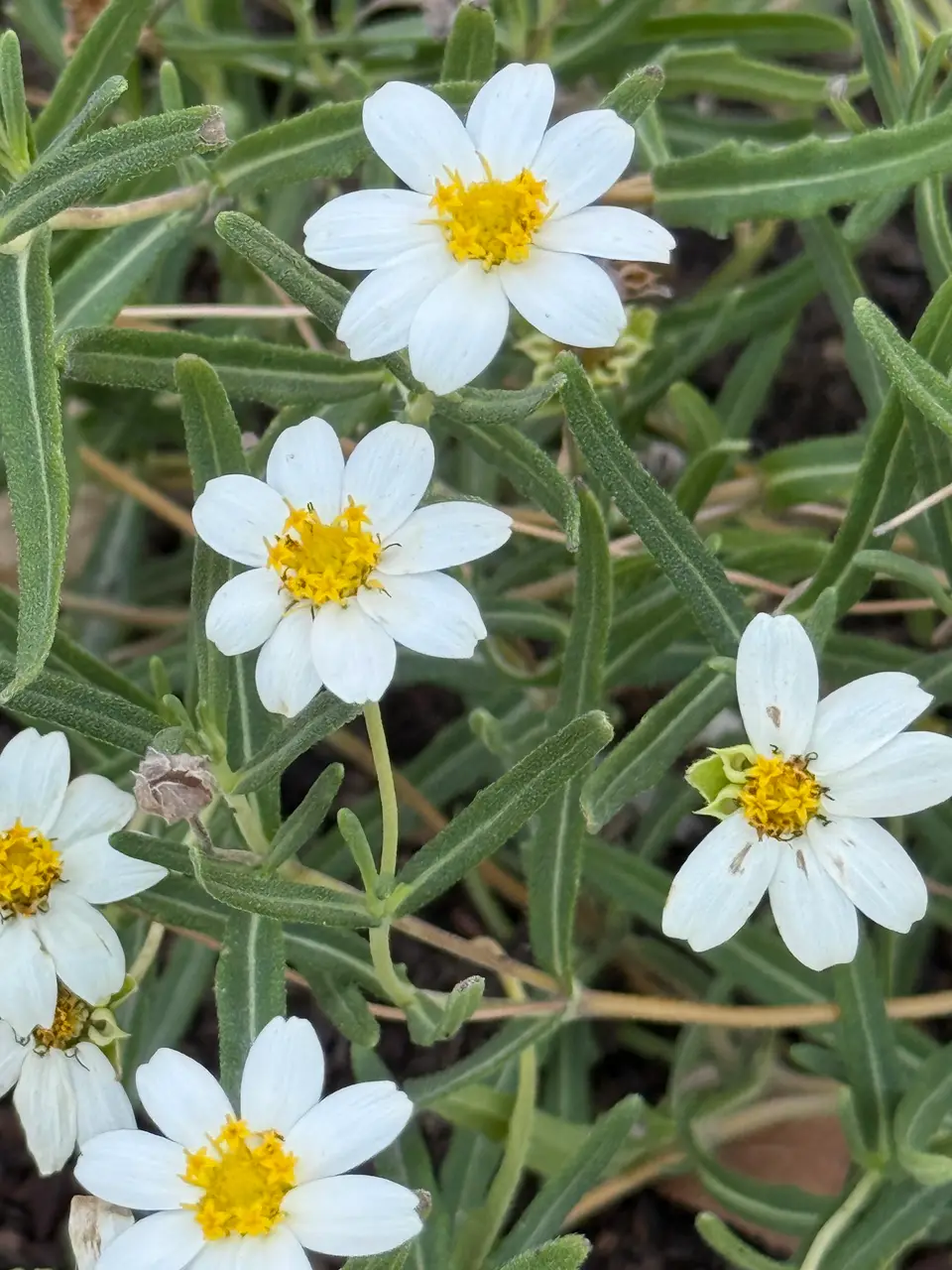
Blackfoot Daisy
A drought-proof native perennial with cheerful white, daisy-like blooms from spring through frost.
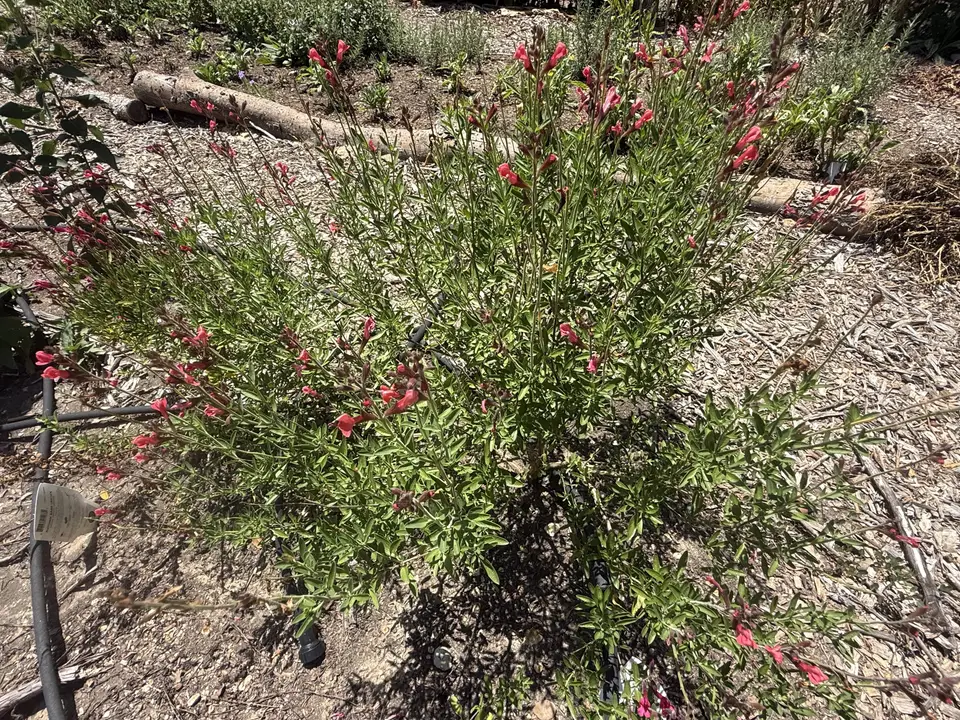
Autumn Sage
A compact, drought-tolerant native shrub that blooms nearly year-round in reds, corals, pinks, and whites.