
Current stock
Illinois Bundleflower
Desmanthus illinoensis

- Sun
- Full Sun
- Water
- Low, Moderate
- Mature size
- 3–5 ft tall × 2–4 ft wide
- Best for
- Pollinator Plant
Planting & care
- Growth habit
- Upright, airy, clump-forming perennial with fine-textured foliage
- Typical bloom
- May–Sep
- Cold hardy to
- Zones 5–8
- Soil
- Well-drained soils preferred; tolerates clay, rocky soils, sandy soils, and disturbed ground
Where to plant
Full sun — at least 6 hours daily; it doesn't tolerate shade and becomes weak and floppy without enough light. It's adaptable to clay, rocky, sandy, or poor soil.
Watering
Water consistently the first season to establish the root system. After that, very little supplemental water is needed — the deep taproot reaches moisture well below the surface.
Cutting back
Leave old stems and seed heads standing through winter — they're an important food source for quail, doves, and songbirds. Cut back to the ground in late winter before new growth begins. It's often slow to re-emerge in spring; be patient, the taproot is alive.
About Illinois Bundleflower
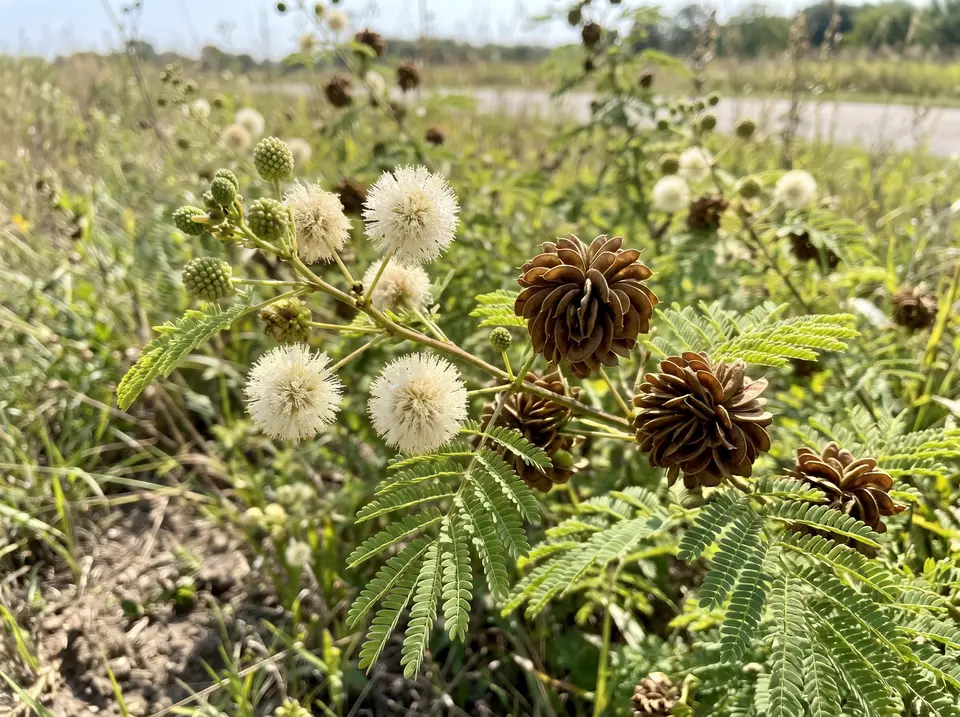
There's a prairie plant growing along roadsides and open fields all across North Texas that most people drive past without noticing, until they see it in a garden and stop to ask what it is. Illinois Bundleflower has feathery, fern-like foliage that looks like a soft prairie mimosa, soft white puffball flowers in summer, and ornamental seed clusters through fall and winter that quail and songbirds depend on. It also fixes atmospheric nitrogen through its root system, building soil fertility while it grows.
The fine, twice-divided leaves fold gently at night or when touched, giving the plant an almost animated quality beyond its soft visual texture. Round, bristly seed heads follow the summer blooms, clustering into the tight bundles that give the plant its name and persisting as an ornamental, wildlife-feeding feature well into winter.
In North Texas, the quail connection is real. Bobwhite quail populations have declined across the region over decades, partly from the loss of native seed plants like this one. Restoring it to fence lines and field edges actively supports quail while providing habitat for songbirds and pollinators too.
In the garden, its soft texture pairs naturally with Little Bluestem, Indiangrass, and prairie wildflowers, filling the middle height of a layered native planting and creating movement in the breeze. Low water, lean soil, full sun — it asks for almost nothing and gives back considerably more.
Where it's native
Illinois Bundleflower occurs naturally in 5 Texas ecoregions — Blackland Prairies, Cross Timbers and Prairies, Post Oak Savannah, Rolling Plains, South Texas Plains. Plants grown from local ecotypes are best adapted to our soils and climate here in the Blackland Prairies.
- 1Trans-Pecos
- 2High Plains
- 3Rolling Plains
- 4Edwards Plateau
- 5Cross Timbers and Prairies
- 6South Texas Plains
- 7Blackland Prairies
- 8Post Oak Savannah
- 9Gulf Prairies and Marshes
- 10Pineywoods
Plants it grows well with
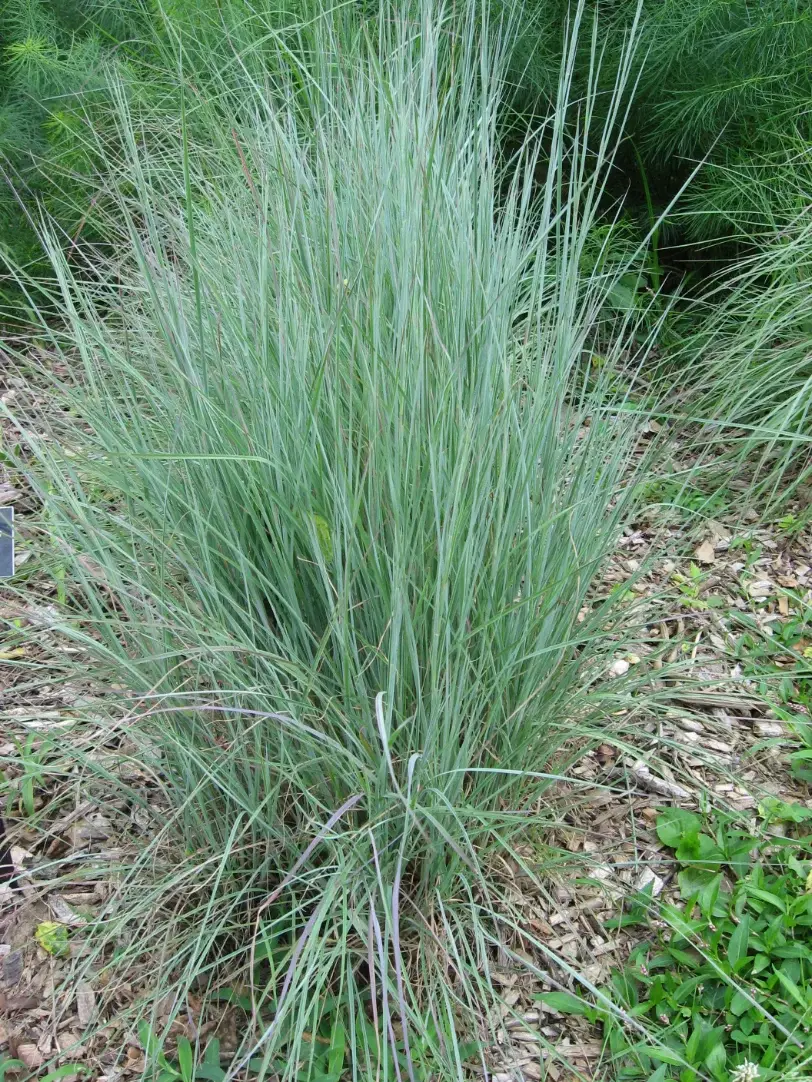
Little Bluestem
A native prairie grass with striking fall color that shifts from blue-green to fiery red and copper.
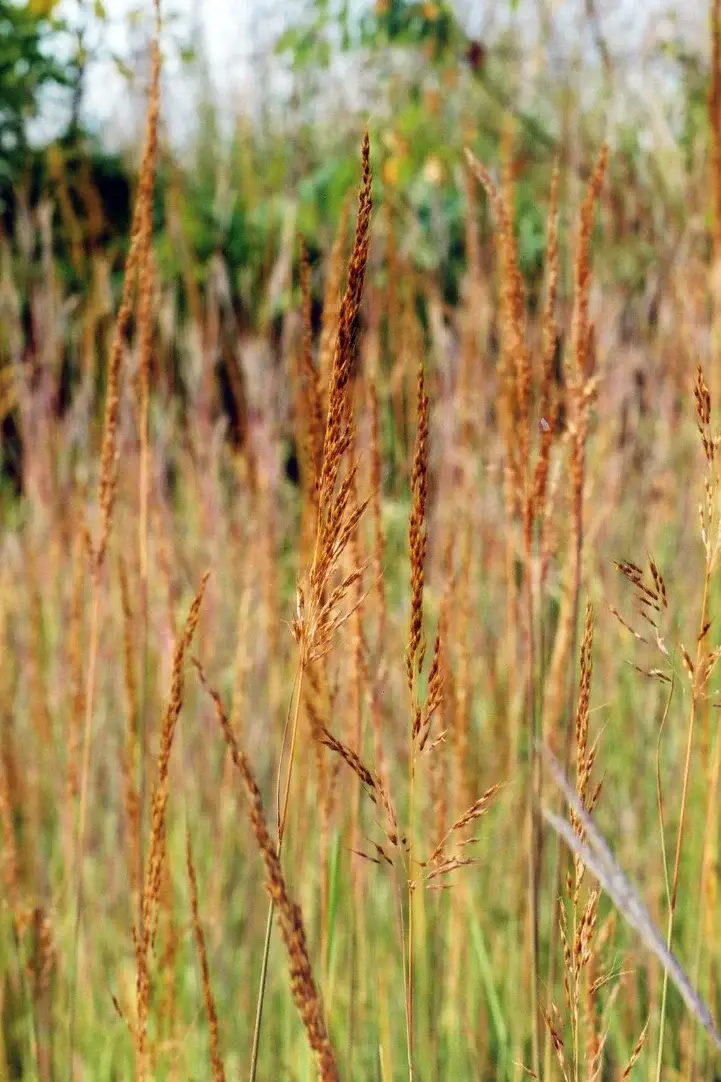
Indiangrass
An iconic tallgrass prairie grass with shimmering copper-bronze seed plumes that dominate the fall landscape.
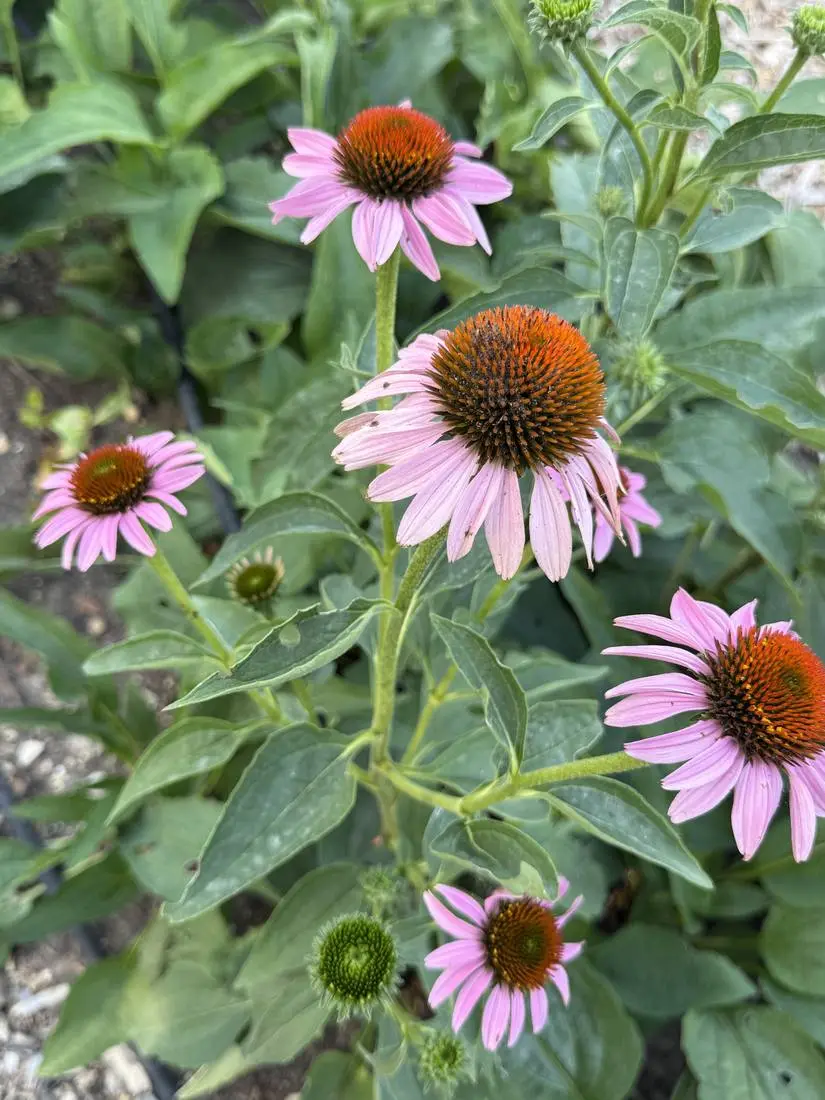
Echinacea purpurea
The classic native prairie coneflower — a long-blooming, pollinator-magnet perennial with a well-known medicinal reputation.
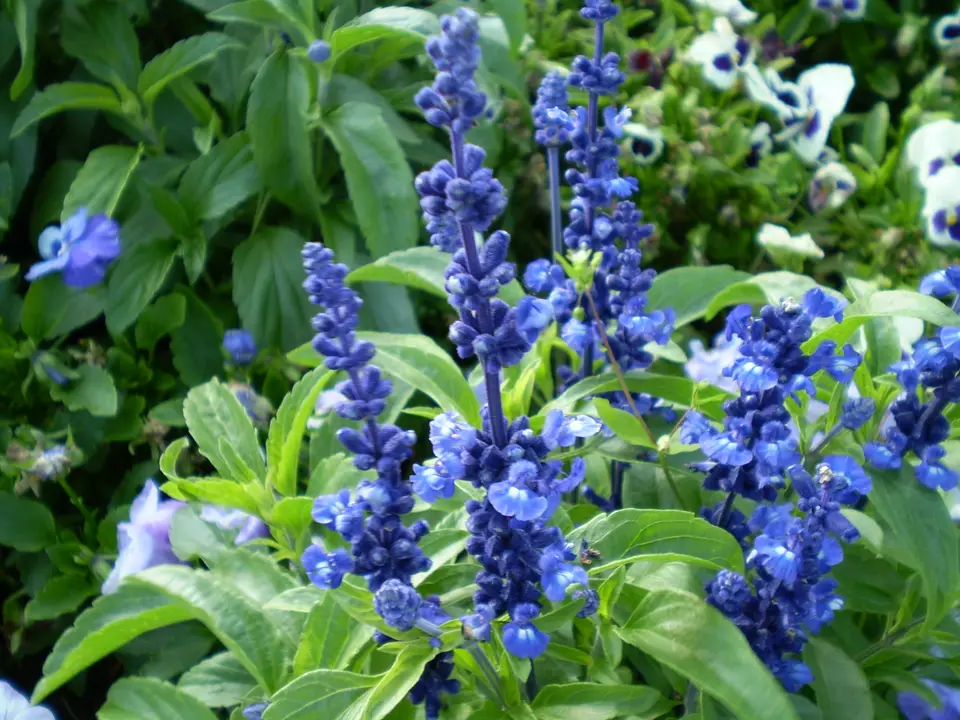
Mealy Blue Sage
A native blue-violet sage with a long bloom season and one of the best pollinator draws in North Texas.