Current stock
Giant Coneflower
Rudbeckia maxima
- Sun
- Full Sun
- Water
- Low, Moderate, Drought tolerant once established
- Mature size
- 4–6 ft tall (flower stalks) x 2–3 ft spread
- Best for
- Pollinator Plant
Planting & care
- Growth habit
- Upright, architectural; basal clump with tall flower stalks
- Typical bloom
- May–Jul
- Cold hardy to
- Zones 4–9
- Soil
- Adaptable; prefers well-drained soils but tolerates clay well
Where to plant
Full sun — at least 6 hours of direct sun. Plants in shade grow weak and produce few or no flower stalks. It's adaptable to clay, loam, or well-drained soil, and prefers some soil depth for its taproot.
Watering
Water consistently the first growing season to help the taproot establish. After that, it's drought tolerant, and it also handles occasional wet soil better than many prairie natives.
Cutting back
Leave the seed heads standing through fall and winter — they're ornamental and goldfinches work them heavily. Cut old stalks back to the basal rosette in late winter before new growth begins. Once planted, avoid digging or moving it; the taproot resents disturbance.
About Giant Coneflower
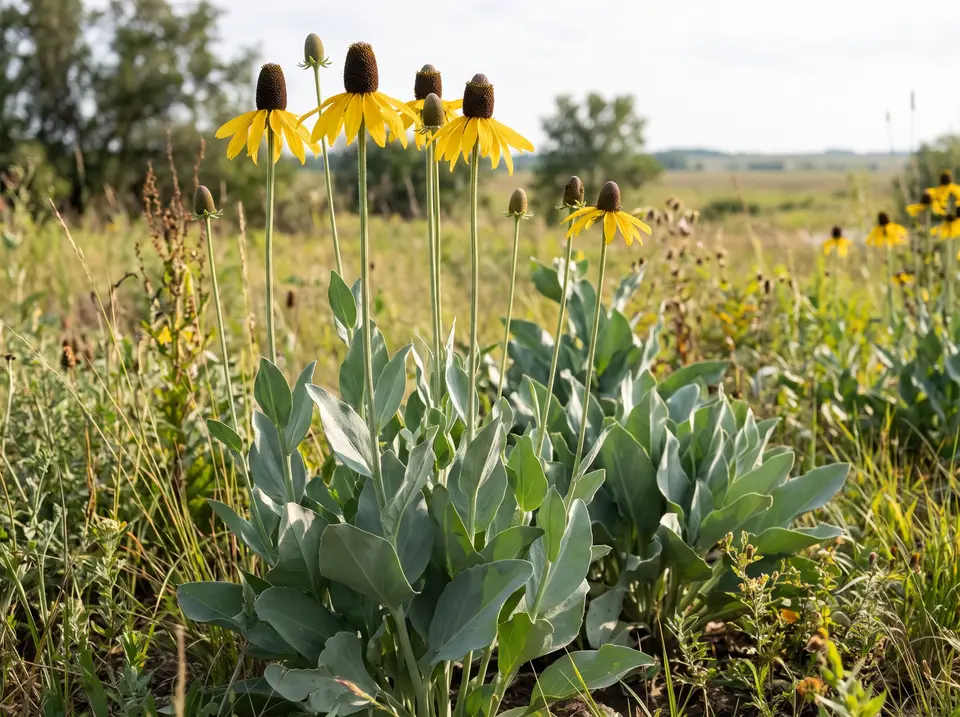
There is a native perennial that sends up flower stalks six feet tall in May. The leaves at the base are paddle-shaped and an unusual blue-gray — a color more often found on ornamental grasses than on a wildflower. The cones at the center of each flower elongate to four or five inches tall, dark brown-black, standing well above the yellow petals. By July, goldfinches are landing on those cones to work the seeds. By November, the stalks are still standing and still worth looking at.
That plant is Giant Coneflower, and it grows naturally in moist prairies and open woodlands across the south-central United States. It's native, perennial, drought tolerant once established, and completely unlike anything else in the regional native plant palette — there's simply nothing else with blue-gray leaves and six-foot stalks that looks like it belongs in a botanic garden.
The scale alone makes it a natural focal point: plant it toward the back of a border, give it full sun and room to stretch, and it commands attention through spring bloom, summer seed heads, and into winter structure. Few native perennials do so much visual work across so many seasons.
For anyone who wants a native garden bold enough to have a genuine centerpiece — something with real presence that ordinary perennials simply can't match — Giant Coneflower delivers scale, texture, and season-long interest in one plant.
Where it's native
Giant Coneflower occurs naturally in 3 Texas ecoregions — Pineywoods, Post Oak Savannah, Gulf Prairies and Marshes. Plants grown from local ecotypes are best adapted to our soils and climate here in the blackland prairie and post oak savannah.
- 1Trans-Pecos
- 2High Plains
- 3Rolling Plains
- 4Edwards Plateau
- 5Cross Timbers and Prairies
- 6South Texas Plains
- 7Blackland Prairies
- 8Post Oak Savannah
- 9Gulf Prairies and Marshes
- 10Pineywoods
Plants it grows well with
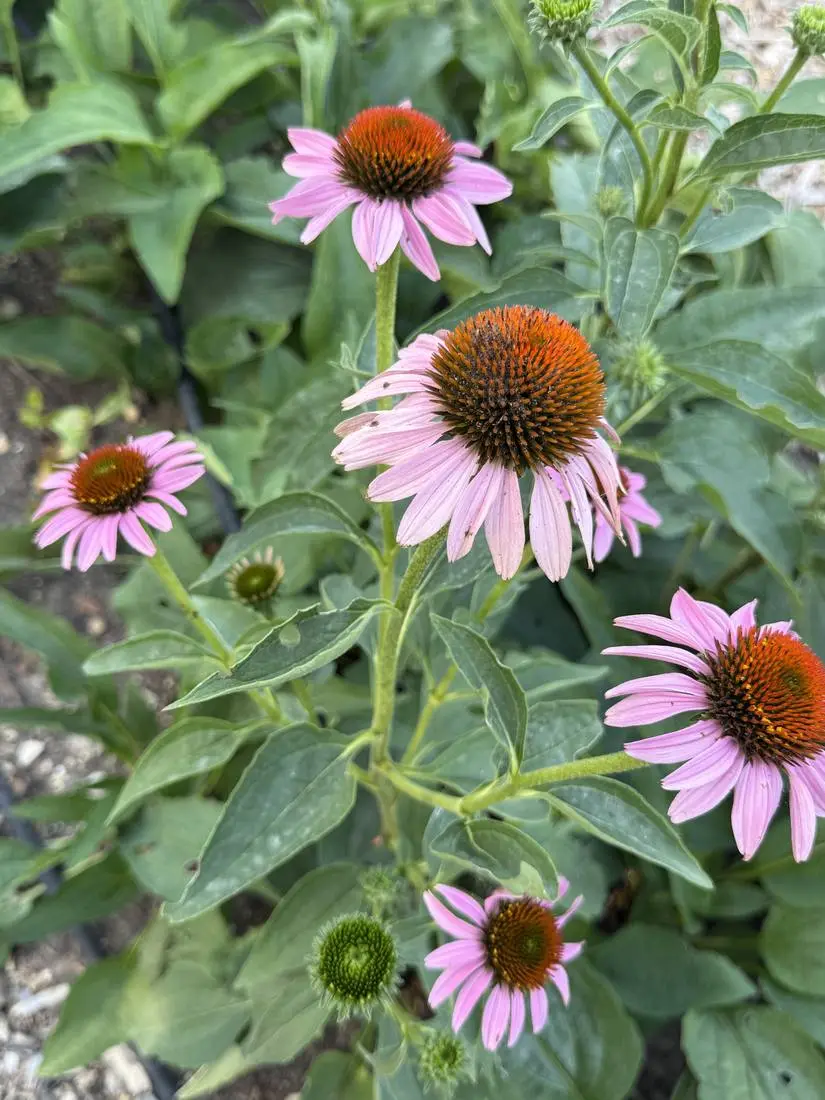
Echinacea purpurea
The classic native prairie coneflower — a long-blooming, pollinator-magnet perennial with a well-known medicinal reputation.
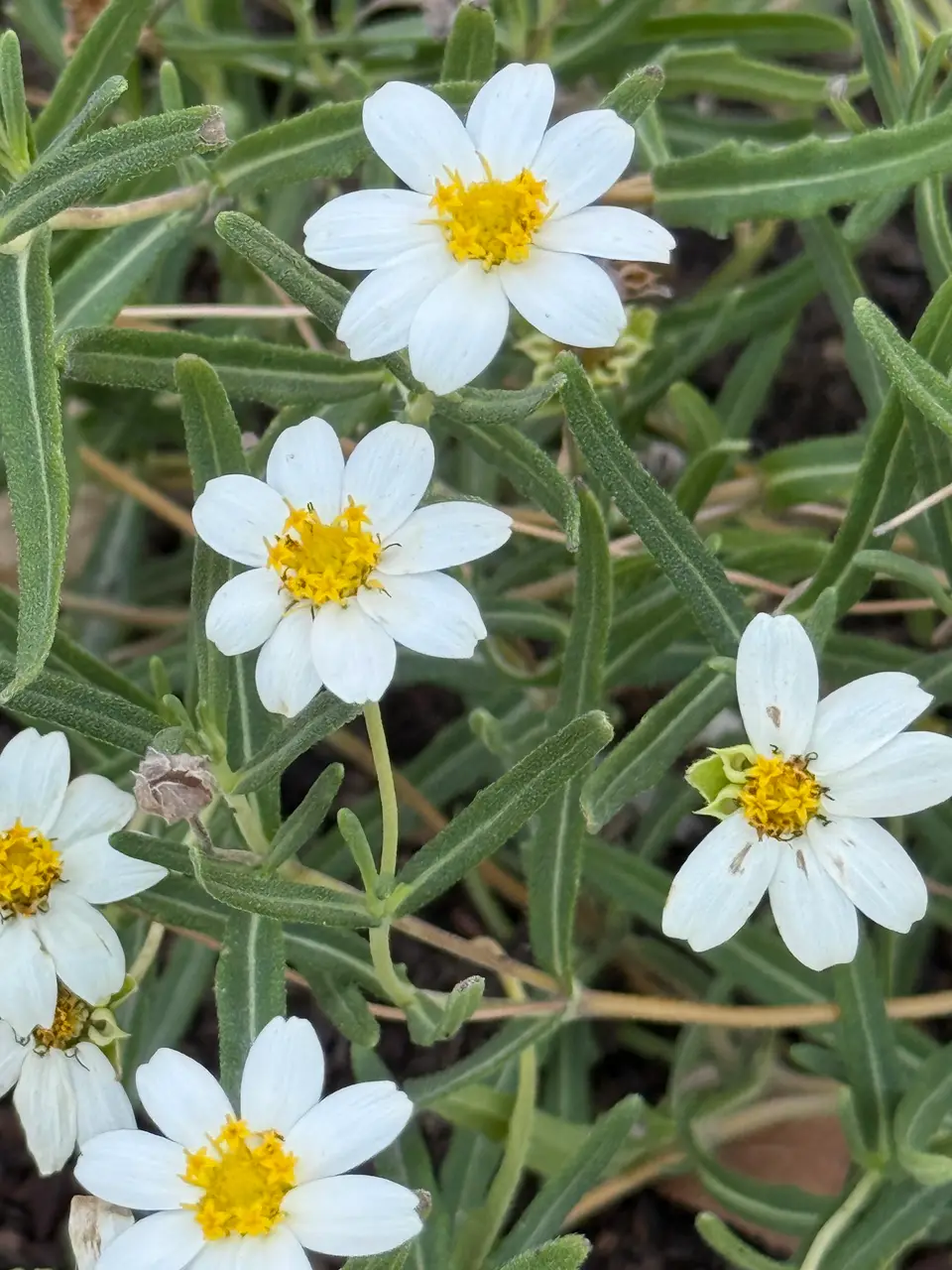
Blackfoot Daisy
A drought-proof native perennial with cheerful white, daisy-like blooms from spring through frost.
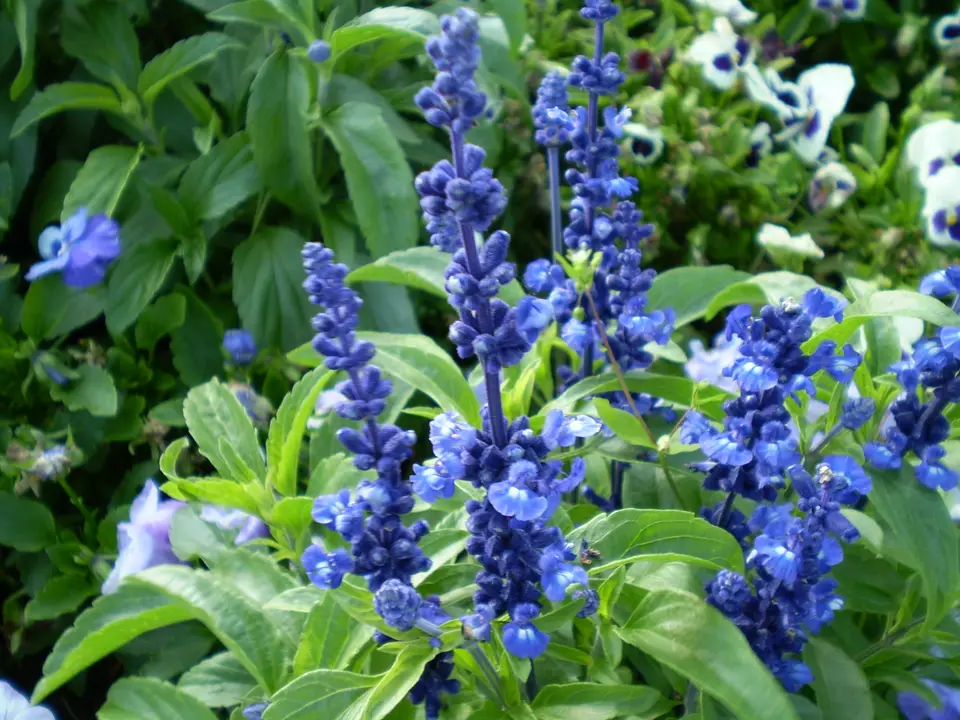
Mealy Blue Sage
A native blue-violet sage with a long bloom season and one of the best pollinator draws in North Texas.
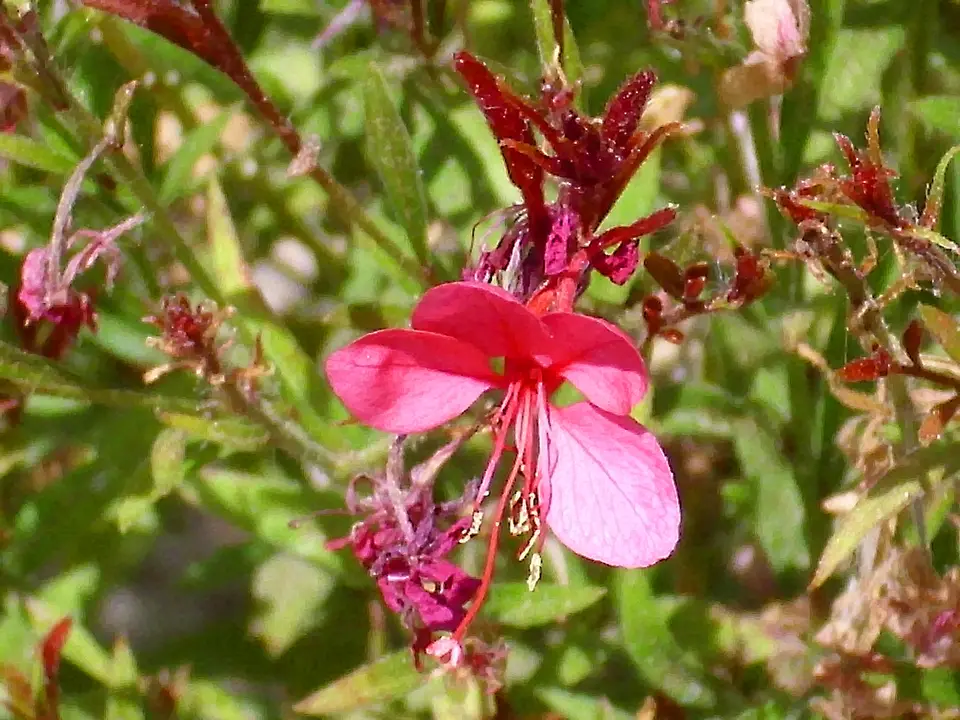
Gaura
A native perennial with airy, wand-like sprays of white and pink flowers that flutter like tiny butterflies all summer.