
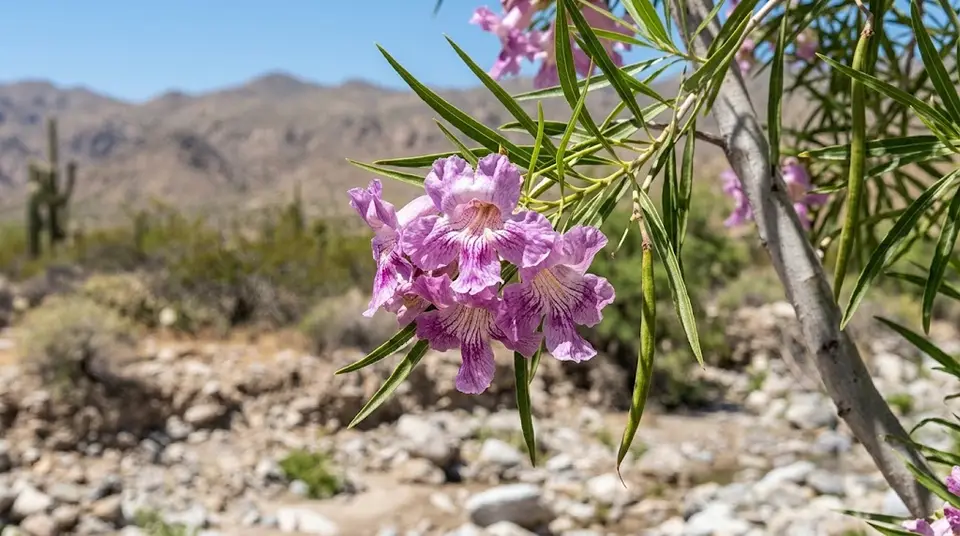
Desert Willow
Chilopsis linearis

- Sun
- Full Sun
- Water
- Low, Drought tolerant once established
- Mature size
- 10-20 ft wide x 15-25 ft tall
- Best for
- Pollinator Plant, Drought-tolerant Landscaping, Patio Tree
Planting & care
- Growth habit
- Open, airy, multi-trunk or single-trunk small tree with graceful, willow-like foliage
- Typical bloom
- May–Sep
- Cold hardy to
- Zones 7–10
- Soil
- Well-drained soils; thrives in sandy, rocky, or amended clay; intolerant of heavy, poorly drained clay
Where to plant
Full sun is required for the best bloom. Sandy, rocky, or well-amended soil is essential — this tree does not tolerate heavy clay without significant amendment or a raised bed.
Watering
Low once established. Water deeply but infrequently — overwatering in clay soil is the most common way to lose this tree.
Cutting back
Prune in late winter. Decide early whether you want a single-trunk or multi-trunk form and remove competing leaders while the tree is young. Remove crossing branches for good airflow.
About Desert Willow
Desert Willow shouldn't be able to do what it does. A tree that produces orchid-like flowers in pinks and lavenders all summer long, in full Texas heat, with almost no water, in rocky or sandy soil that would kill most ornamentals — it doesn't sound real until you're standing in front of one in July and watching a hummingbird work through every bloom.
Its long, narrow, willow-like leaves give the tree a soft, airy texture despite having no actual relation to true willows, and its open, graceful branching means it never feels heavy or overbearing in a landscape. The two-lipped, trumpet-shaped flowers — in shades of pink, lavender, purple, and white with yellow throat markings — are fragrant on warm days and appear in successive flushes, each one triggered by rain or watering.
As the flowers fade, long cylindrical seed pods develop and persist through winter, adding a distinctive, dangling silhouette to the bare branches. The tree can be trained as a clean single-trunk specimen or allowed to grow as a graceful multi-trunk form — either way, it stays lightweight and airy rather than dense.
Native to the desert Southwest and West Texas, it brings genuine desert toughness to any landscape with good drainage and full sun. For a fast-growing, low-water flowering tree that draws hummingbirds from May through September, few natives compete.
Where it's native
Desert Willow occurs naturally in 4 Texas ecoregions — Trans-Pecos, South Texas Plains, Edwards Plateau, Rolling Plains. Plants grown from local ecotypes are best adapted to our soils and climate here in the blackland prairie and post oak savannah.
- 1Trans-Pecos
- 2High Plains
- 3Rolling Plains
- 4Edwards Plateau
- 5Cross Timbers and Prairies
- 6South Texas Plains
- 7Blackland Prairies
- 8Post Oak Savannah
- 9Gulf Prairies and Marshes
- 10Pineywoods
Plants it grows well with
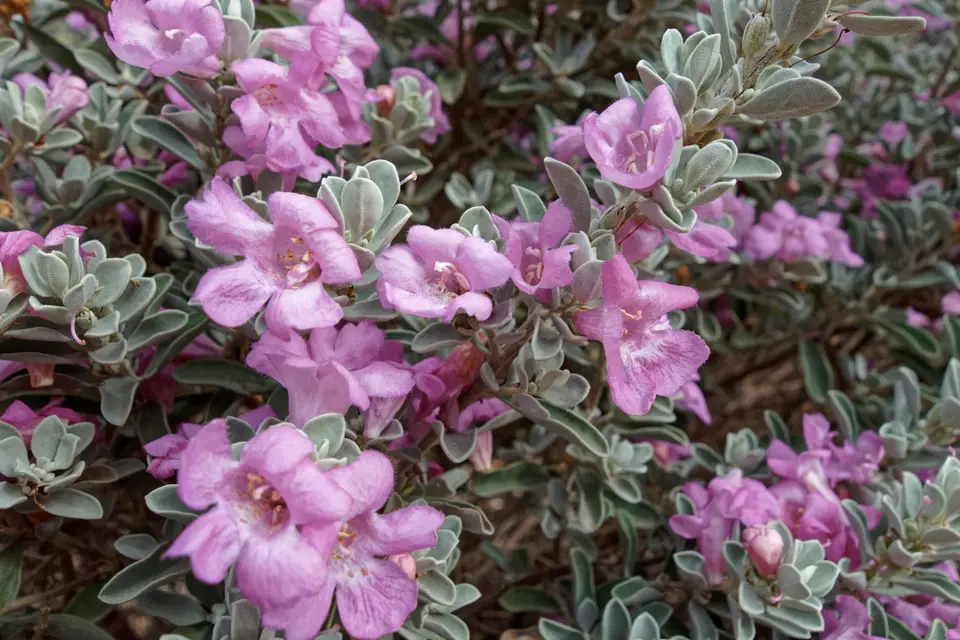
Texas Sage
A silver-leaved native shrub that erupts in surprise blooms after every rain — the legendary "barometer bush."
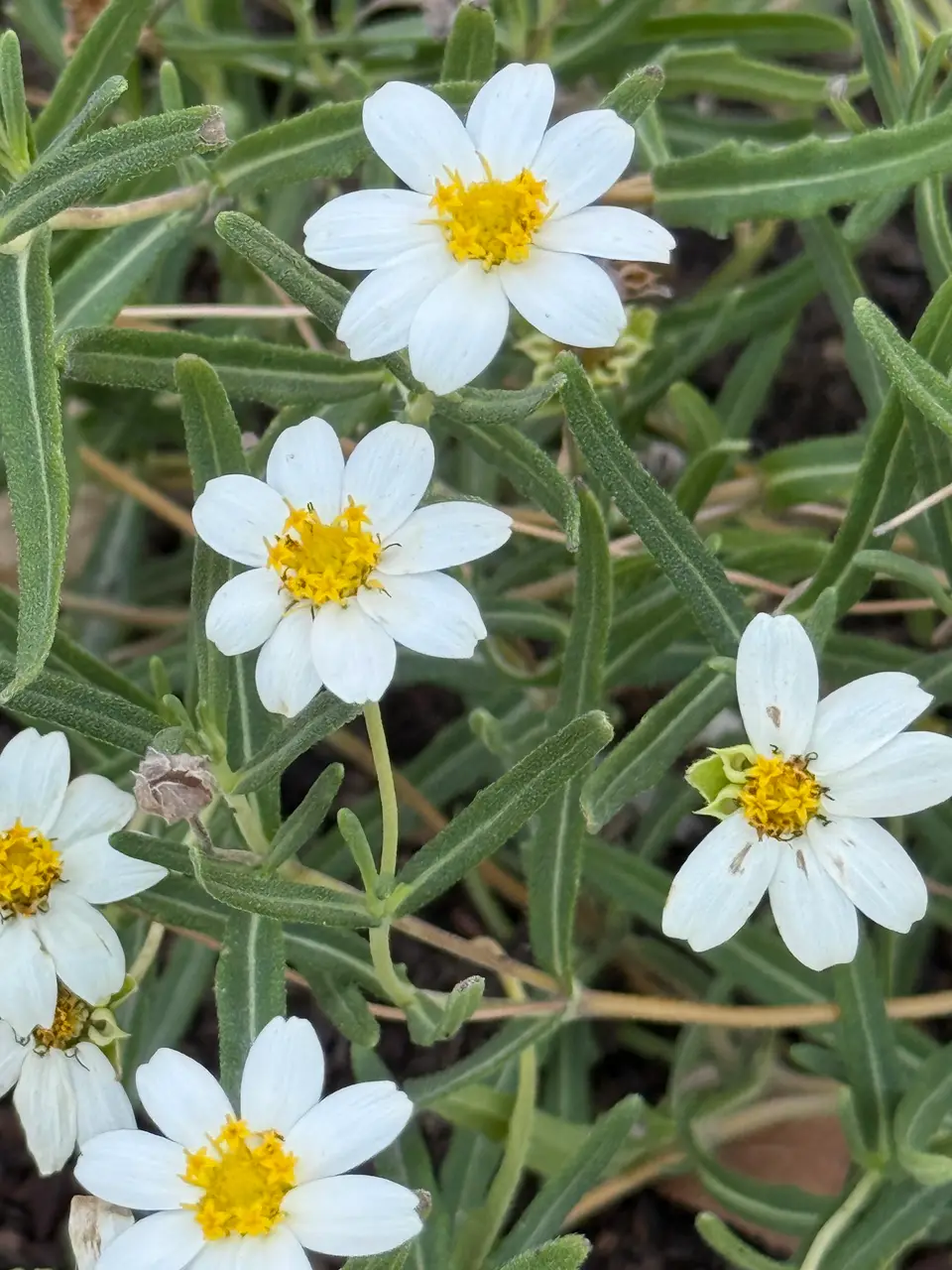
Blackfoot Daisy
A drought-proof native perennial with cheerful white, daisy-like blooms from spring through frost.
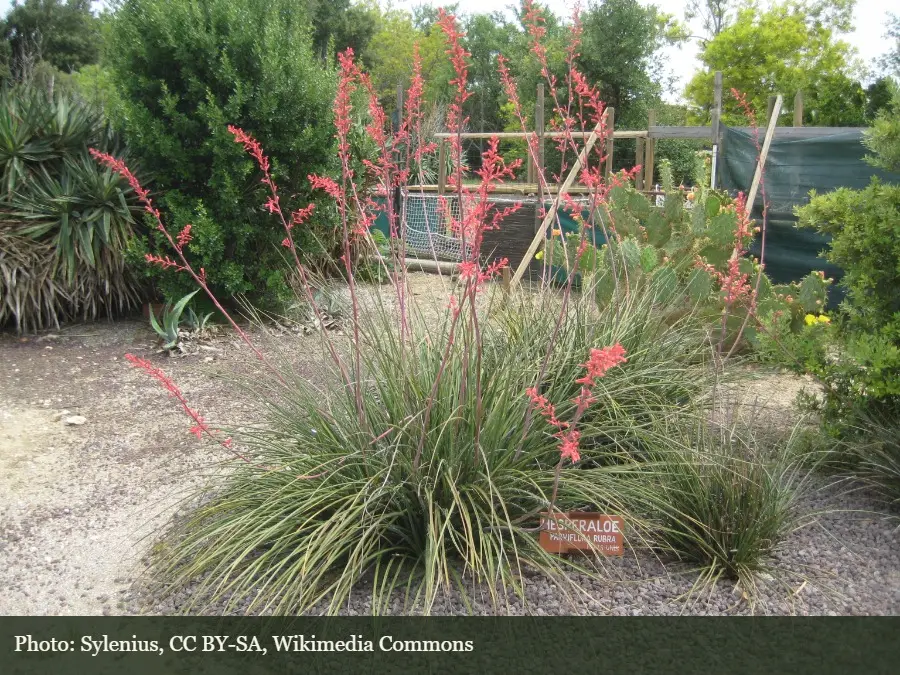
Red Yucca
A soft-leaved, drought-proof native accent plant with towering coral-red blooms that hummingbirds visit all season.
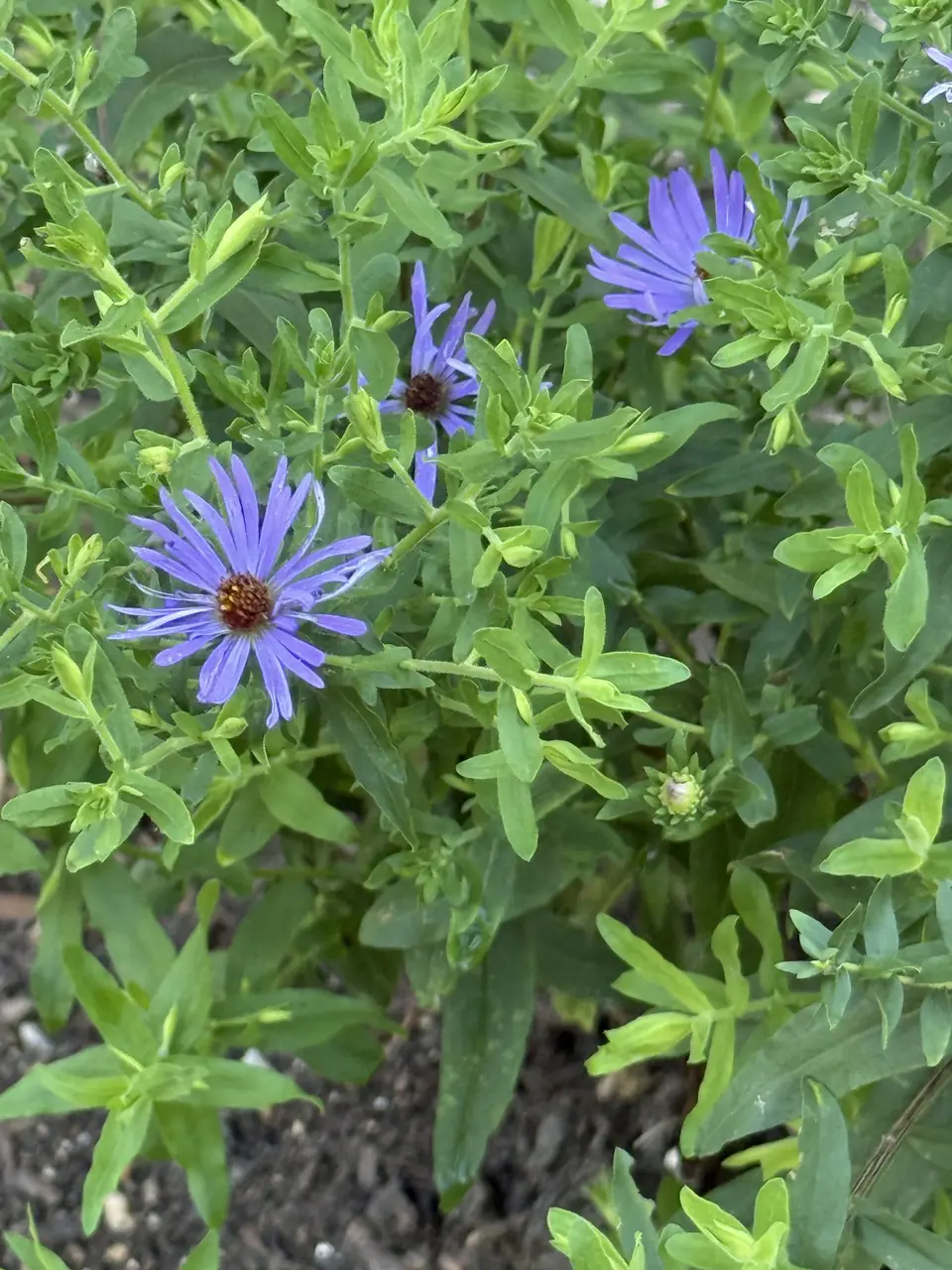
Fall Aster
A native fall-blooming perennial that covers itself in lavender-purple flowers just as everything else fades.