
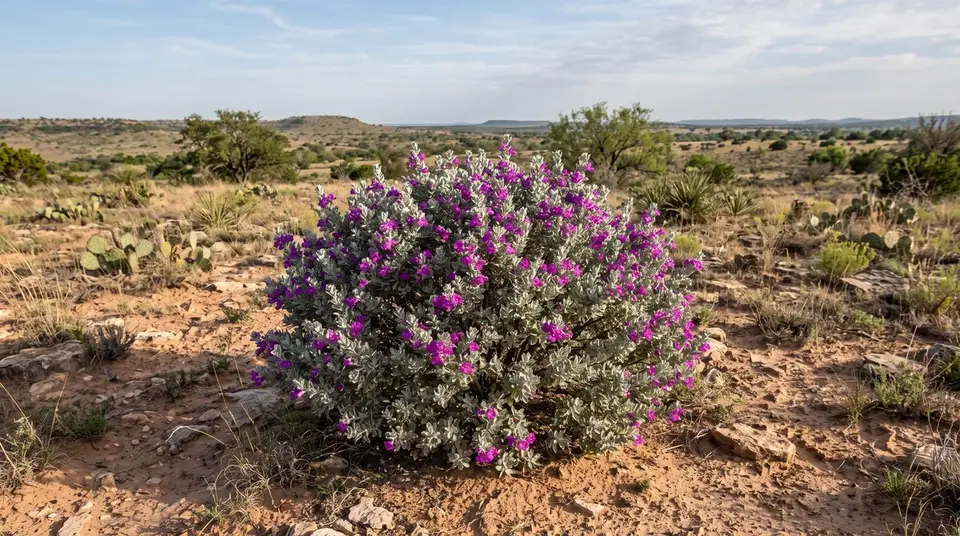
Compact Texas Sage
Leucophyllum frutescens 'Compactum'

5 Gallon and 3 Gallon currently sold out.
- Sun
- Full Sun
- Water
- Low, Drought tolerant once established
- Mature size
- 3-4 ft tall x 3-4 ft wide
- Best for
- Drought-tolerant Landscaping, Native ecosystem plant, Natural hedge, Low maintenance
About these sizes
- Gallon
- Our standard size: a 1-gallon nursery pot, about 6–7 inches across.
- 5 Gallon
- A larger, more established plant — more size and root system from day one.
- 3 Gallon
- A larger, more established plant — more size and root system from day one.
Pay at the nursery, plus 6.75% sales tax. Send your request and we'll confirm availability and your pickup time within 24 hours, then hold your plants. How it works
Planting & care
- Growth habit
- Compact, dense, rounded, multi-stemmed shrub with a tidier, more upright form than the standard species
- Typical bloom
- Jun–Oct
- Cold hardy to
- Zones 8–10
- Soil
- Well-drained, gravelly or rocky, alkaline soil with low organic content; tolerates limestone and caliche; does not want rich or heavily amended soil
Where to plant
Full sun, which the plant needs for compact growth, silver color, and reliable bloom. It wants well-drained, gravelly or rocky, alkaline soil. Sharp drainage matters more than richness, and heavily amended soil causes floppy growth and fewer blooms.
Watering
Low. Once established, water deeply about once a month and let the soil dry out completely between waterings. It would rather be too dry than too wet.
Cutting back
It stays naturally tidy, so it needs little pruning. Trim lightly in late winter, before flower buds form, removing no more than a third of the top growth. Use hand pruners rather than shears, since flowers form on new growth and shearing into a formal shape reduces bloom.
About Compact Texas Sage
Compact Texas sage has everything that makes the standard cenizo a Texas favorite, in a size that fits ordinary yards. It is a dense, rounded shrub of soft, silvery-gray leaves that stays around three to four feet tall and wide, so it fits under a window, along a walkway, or in a tight bed without constant cutting back.
The bloom is the same show the species is famous for. Right after a good rain, or whenever the humidity climbs, the whole shrub erupts almost overnight in purple, lavender-pink bells, which is how it earned the nickname barometer bush. It flushes again and again through summer and into fall, then settles back to quiet silver between rains.
It is as tough as its larger relative. Full sun, sharp drainage, and very little water are all it needs, and deer leave it alone. It suits low hedges, foundation plantings, xeriscape borders, and mass plantings where a tidy, low-water shrub is the goal.
Silver foliage holds through the year since it is evergreen, so the planting looks good in winter as well as summer. For a small, neat, nearly indestructible shrub that does its best work in tough conditions, this is one of the easiest recommendations you can make.
Where it's native
Compact Texas Sage occurs naturally in 3 Texas ecoregions — South Texas Plains, Trans-Pecos, Edwards Plateau. Plants grown from local ecotypes are best adapted to our soils and climate here in the blackland prairie and post oak savannah.
- 1Trans-Pecos
- 2High Plains
- 3Rolling Plains
- 4Edwards Plateau
- 5Cross Timbers and Prairies
- 6South Texas Plains
- 7Blackland Prairies
- 8Post Oak Savannah
- 9Gulf Prairies and Marshes
- 10Pineywoods
Plants it grows well with
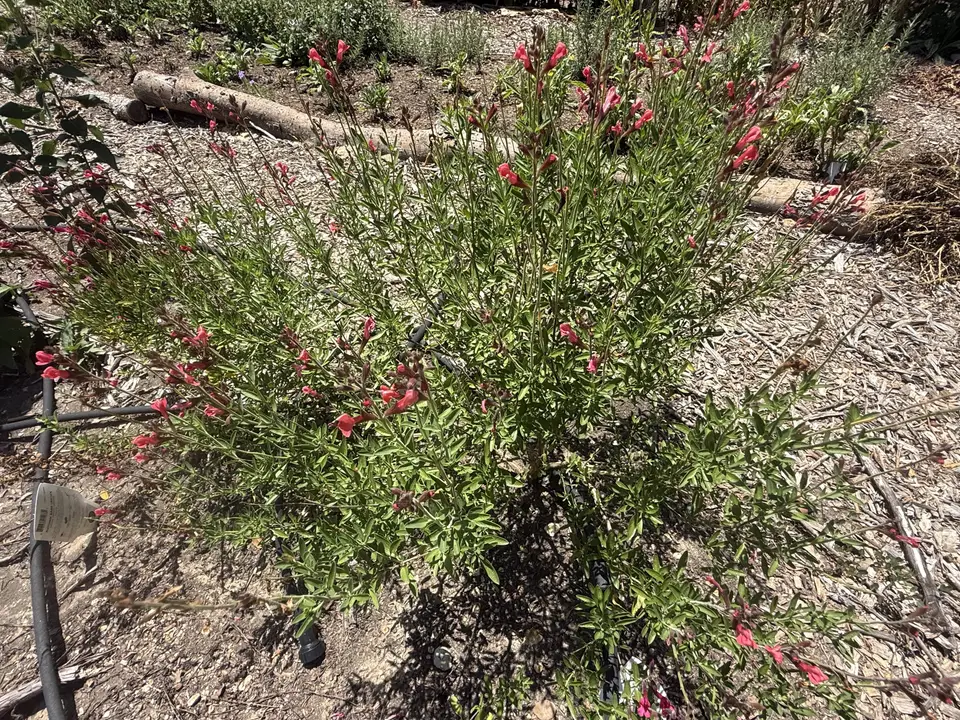
Autumn Sage
A compact, drought-tolerant native shrub that blooms nearly year-round in reds, corals, pinks, and whites.
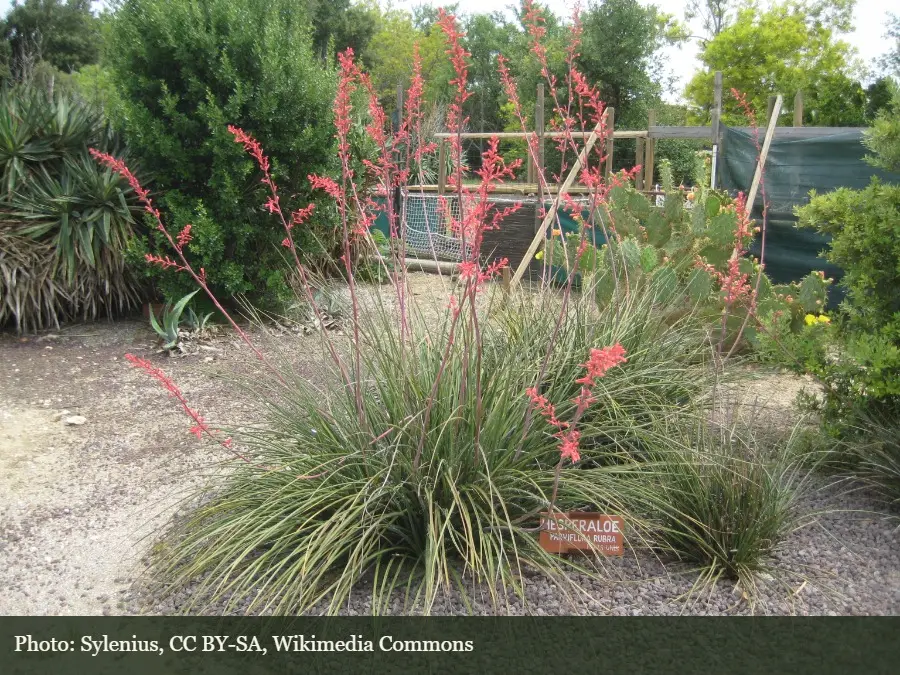
Red Yucca
A soft-leaved, drought-proof native accent plant with towering coral-red blooms that hummingbirds visit all season.
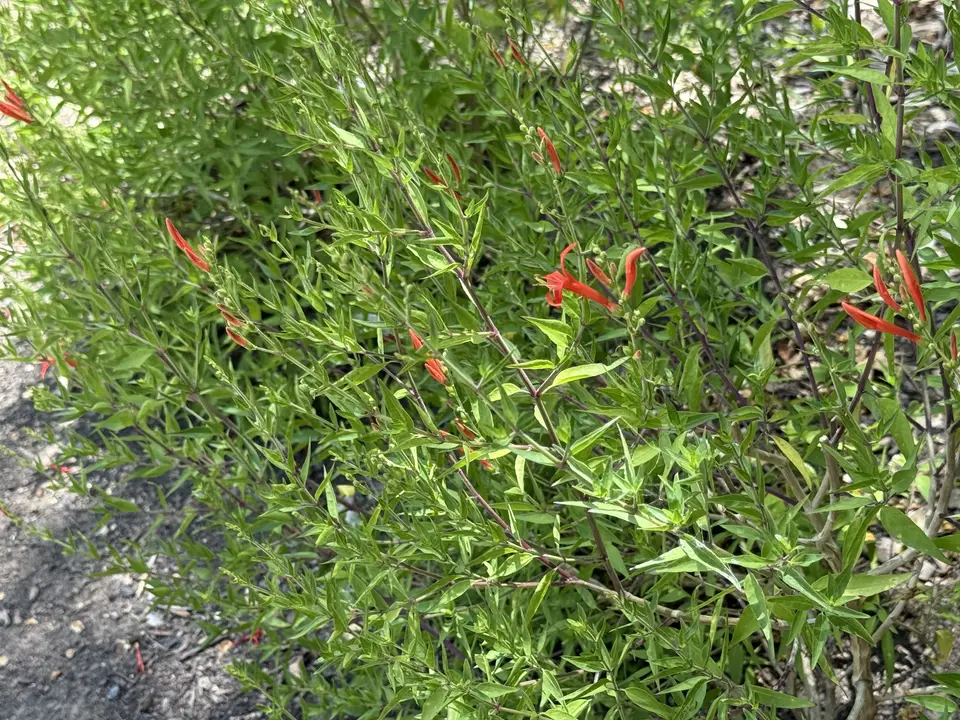
Flame Acanthus
A Texas native hummingbird magnet with brilliant orange-red tubular blooms from late spring through fall.
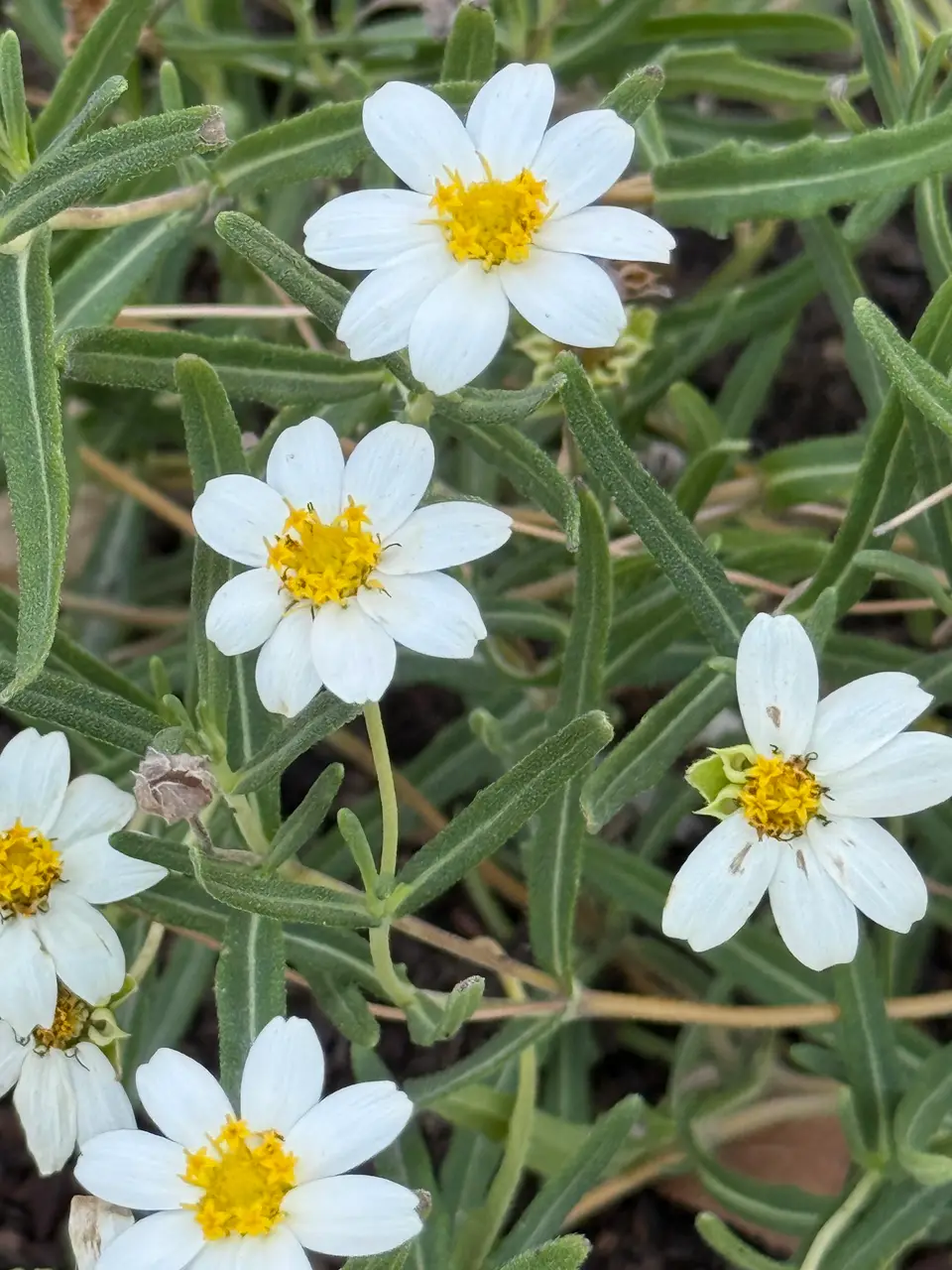
Blackfoot Daisy
A drought-proof native perennial with cheerful white, daisy-like blooms from spring through frost.