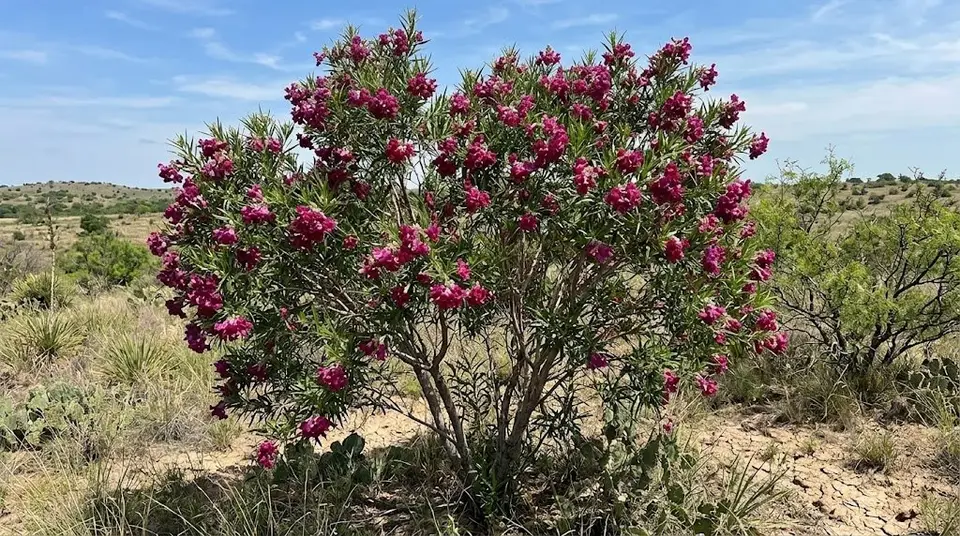
Bubba Desert Willow
Chilopsis linearis 'Bubba'
- Sun
- Full Sun
- Water
- Low, Drought tolerant once established
- Mature size
- 10-20 ft wide x 15-25 ft tall
- Best for
- Pollinator Plant, Drought-tolerant Landscaping, Patio Tree
5 Gallon — $45 — only 2 left
About this size
- 5 Gallon
- A larger, more established plant — more size and root system from day one.
Pay at the nursery, plus 6.75% sales tax. Send your request and we'll confirm availability and your pickup time within 24 hours, then hold your plants. How it works
Planting & care
- Growth habit
- Open, airy, multi-trunk or single-trunk small tree with graceful, willow-like foliage
- Typical bloom
- May–Sep
- Cold hardy to
- Zones 7–10
- Soil
- Well-drained soils; thrives in sandy, rocky, or amended clay; intolerant of heavy, poorly drained clay
Where to plant
Full sun is required for the best bloom. Sandy, rocky, or well-amended soil is essential — like the species, it does not tolerate heavy clay without significant amendment or a raised bed.
Watering
Low once established. Water deeply but infrequently — overwatering in clay soil is the most common way to lose this tree.
Cutting back
Prune in late winter. Decide early whether you want a single-trunk or multi-trunk form and remove competing leaders while the tree is young. Remove crossing branches for good airflow.
About Bubba Desert Willow
Bubba is a selection of desert willow bred for one thing above all: more flowers. Everything else about it is the Desert Willow you would hope for — a tree that throws orchid-like, trumpet-shaped blooms all summer in full Texas heat, with almost no water, in rocky or sandy soil that would defeat most ornamentals — but with a heavier, more generous flower show.
Long, narrow, willow-like leaves give it the same soft, airy texture as the species, despite having no relation to true willows, and its open, graceful branching never feels heavy in a landscape. The blooms arrive in successive flushes from late spring into early fall, each one prompted by a good rain or a deep watering, and hummingbirds and native bees work them all season.
Train it as a clean single-trunk specimen or let it grow as a multi-trunk small tree. Either way it asks for full sun, sharp drainage, and very little else — a fast-growing, low-water flowering tree for a patio, a hot corner, or a mixed native border.
Where it's native
Bubba Desert Willow occurs naturally in 4 Texas ecoregions — Trans-Pecos, South Texas Plains, Edwards Plateau, Rolling Plains. Plants grown from local ecotypes are best adapted to our soils and climate here in the blackland prairie and post oak savannah.
- 1Trans-Pecos
- 2High Plains
- 3Rolling Plains
- 4Edwards Plateau
- 5Cross Timbers and Prairies
- 6South Texas Plains
- 7Blackland Prairies
- 8Post Oak Savannah
- 9Gulf Prairies and Marshes
- 10Pineywoods
Plants it grows well with
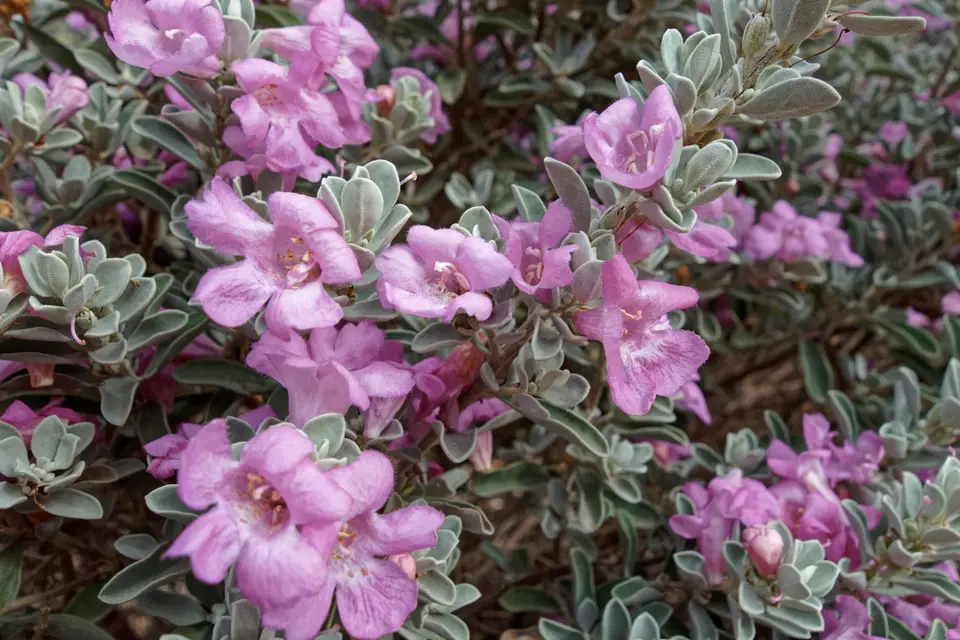
Texas Sage
A silver-leaved native shrub that erupts in surprise blooms after every rain — the legendary "barometer bush."
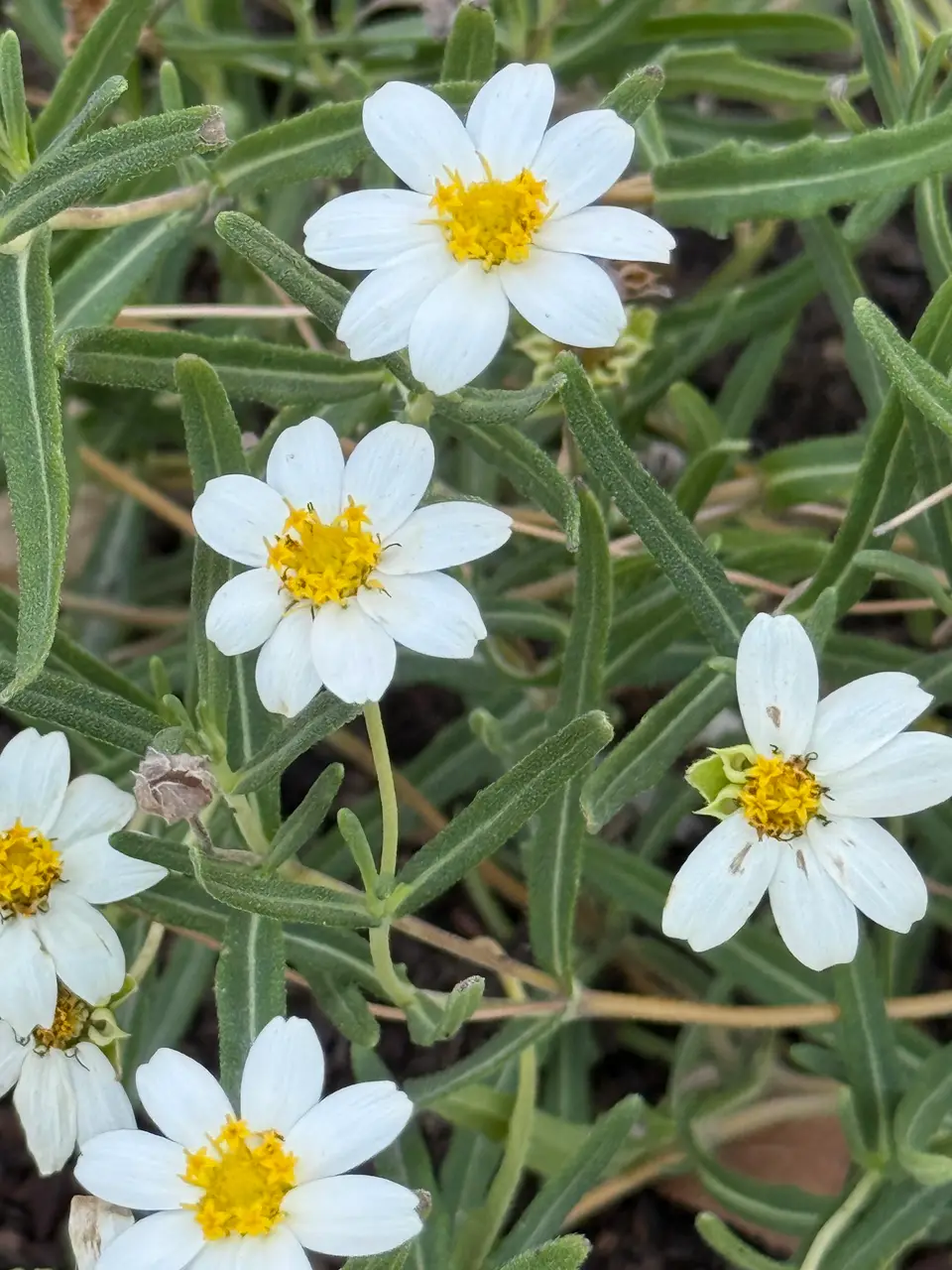
Blackfoot Daisy
A drought-proof native perennial with cheerful white, daisy-like blooms from spring through frost.
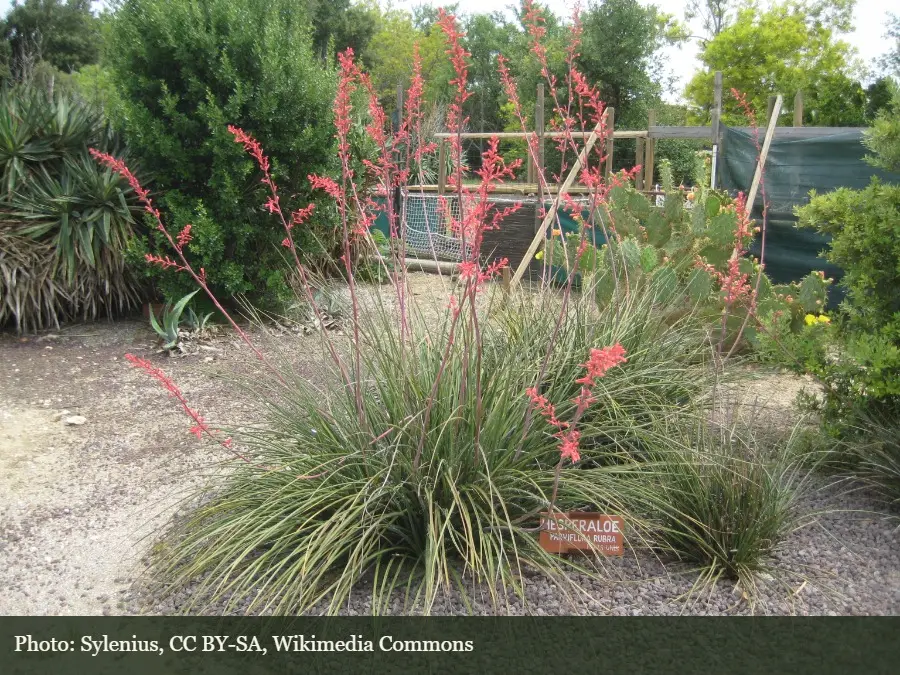
Red Yucca
A soft-leaved, drought-proof native accent plant with towering coral-red blooms that hummingbirds visit all season.
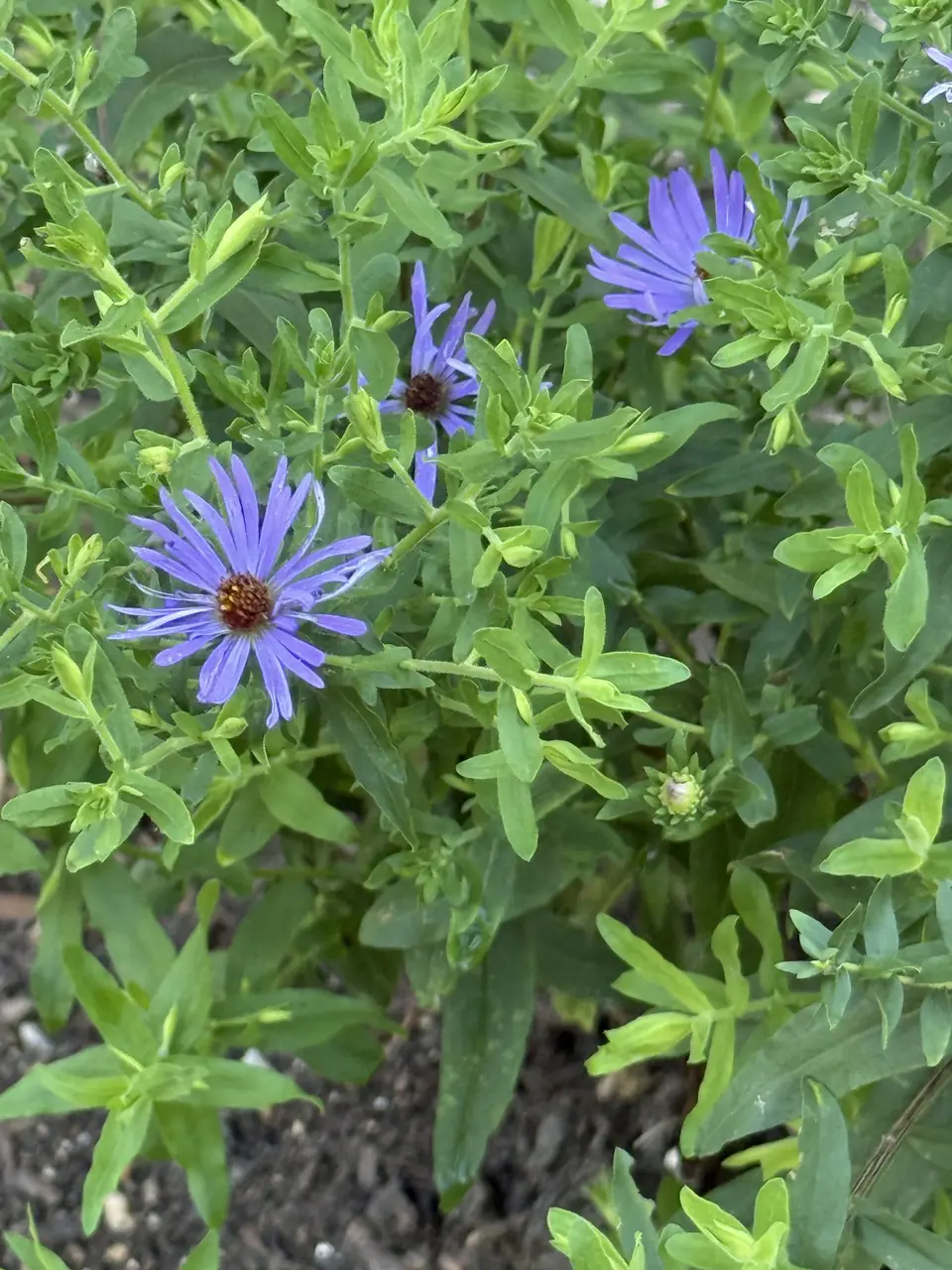
Fall Aster
A native fall-blooming perennial that covers itself in lavender-purple flowers just as everything else fades.