
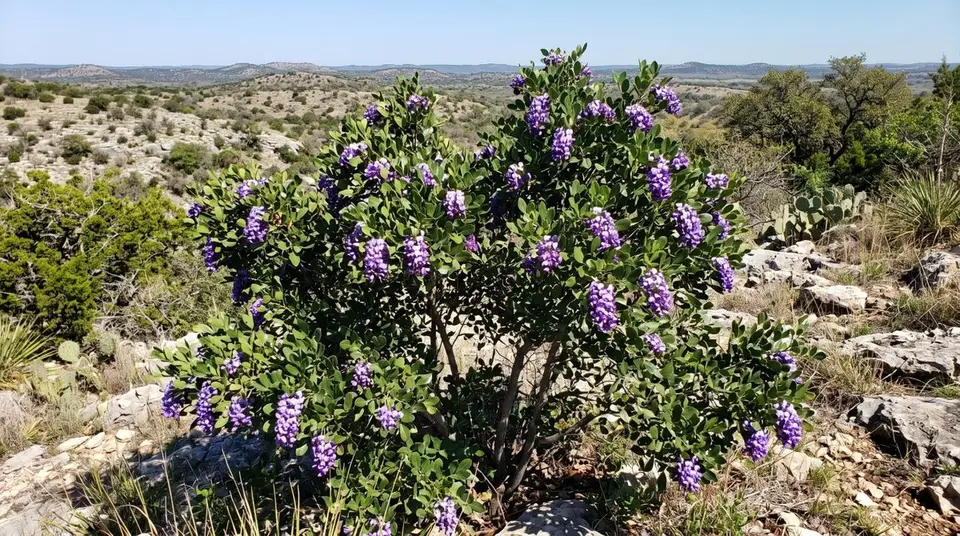
Texas Mountain Laurel
Sophora secundiflora (syn. Dermatophyllum secundiflorum)
- Sun
- Full Sun, Part Shade
- Water
- Drought tolerant once established, Low
- Mature size
- 10-15 ft tall x 8-10 ft wide
- Best for
- Ornamental Tree, Patio Tree, Drought-tolerant Landscaping, Privacy Screen
5 Gallon — $55 — only 1 left
About this size
- 5 Gallon
- A larger, more established plant — more size and root system from day one.
Pay at the nursery, plus 6.75% sales tax. Send your request and we'll confirm availability and your pickup time within 24 hours, then hold your plants. How it works
Planting & care
- Growth habit
- Dense, upright evergreen large shrub or small multi-trunk tree with glossy, dark green leaves
- Typical bloom
- Mar–Apr
- Cold hardy to
- Zones 7–10
- Soil
- Well-drained; thrives in limestone, rocky, and sandy soils, including alkaline ground; intolerant of poorly drained clay
Where to plant
Full sun and sharp drainage. It thrives on rocky, limestone, and sandy soils and is happiest in alkaline ground. In heavy clay, plant on a raised mound or in a raised bed so water drains away from the trunk.
Watering
Water deeply but infrequently for the first two summers to establish the deep taproot. After that it is very drought tolerant, and overwatering or poor drainage is the most common cause of decline.
Cutting back
It needs very little pruning. Trim lightly right after flowering to shape it as a single-trunk or multi-trunk form and to remove dead or crossing branches. Heavy pruning cuts into next year's flower buds.
Establishing
It has a long taproot, so it is best planted while young and left undisturbed. It does not move well once established.
Safety
The bright red seeds and the leaves are toxic if eaten. Keep the pods away from children and pets, and do not use the seeds in crafts or jewelry where children may chew them.
About Texas Mountain Laurel
Texas mountain laurel is the plant people stop to smell. In March and April it hangs itself with clusters of violet-purple flowers that carry a strong, sweet scent, and most people say the same thing when they catch it: grape soda. The blooms cover the shrub for a couple of weeks and bring in bees, and then the show is over, but the tree keeps looking good.
The leaves are glossy, dark green, and evergreen, so the plant holds its structure and color through summer and winter alike. It grows into a dense, upright large shrub or a small multi-trunk tree, ten to fifteen feet tall and eight to ten feet across, and it works as a screen, a patio tree, or a focal point beside a doorway. Despite the name, it is not a true laurel. It is a member of the legume family, native to the limestone hills and rocky canyons of Central and West Texas.
That native habitat explains everything about how it behaves. It wants full sun, thrives in rocky or alkaline soil, and prefers to be left alone. Once its deep taproot is established, it survives on rainfall alone, and it is famously slow, which is part of what makes a healthy specimen valuable.
The bright red seeds inside the fuzzy gray pods look tempting, but they are toxic, along with the leaves, so plant it where children and pets will not chew on them. For a long-lived evergreen that perfumes the whole yard every spring and asks for almost nothing in return, few Texas natives compare.
Where it's native
Texas Mountain Laurel occurs naturally in 3 Texas ecoregions — Edwards Plateau, South Texas Plains, Trans-Pecos. Plants grown from local ecotypes are best adapted to our soils and climate here in the blackland prairie and post oak savannah.
- 1Trans-Pecos
- 2High Plains
- 3Rolling Plains
- 4Edwards Plateau
- 5Cross Timbers and Prairies
- 6South Texas Plains
- 7Blackland Prairies
- 8Post Oak Savannah
- 9Gulf Prairies and Marshes
- 10Pineywoods
Plants it grows well with
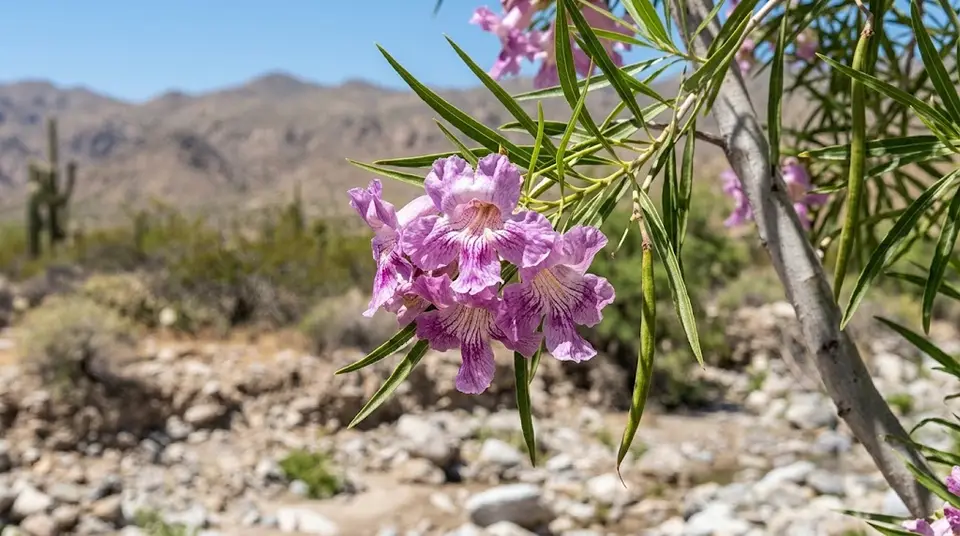
Desert Willow
A fast-growing native flowering tree with orchid-like summer blooms and exceptional drought tolerance.
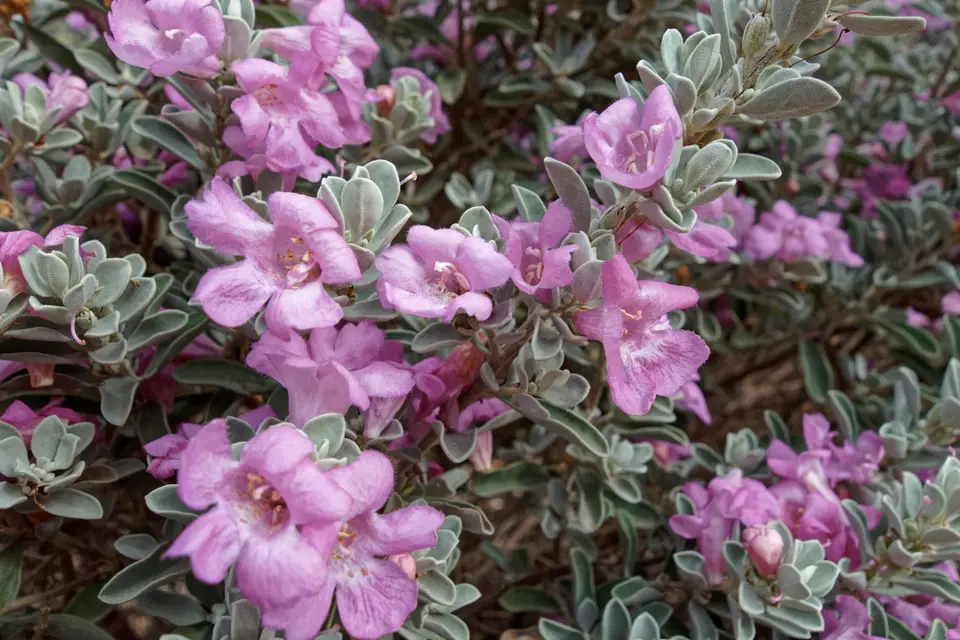
Texas Sage
A silver-leaved native shrub that erupts in surprise blooms after every rain — the legendary "barometer bush."
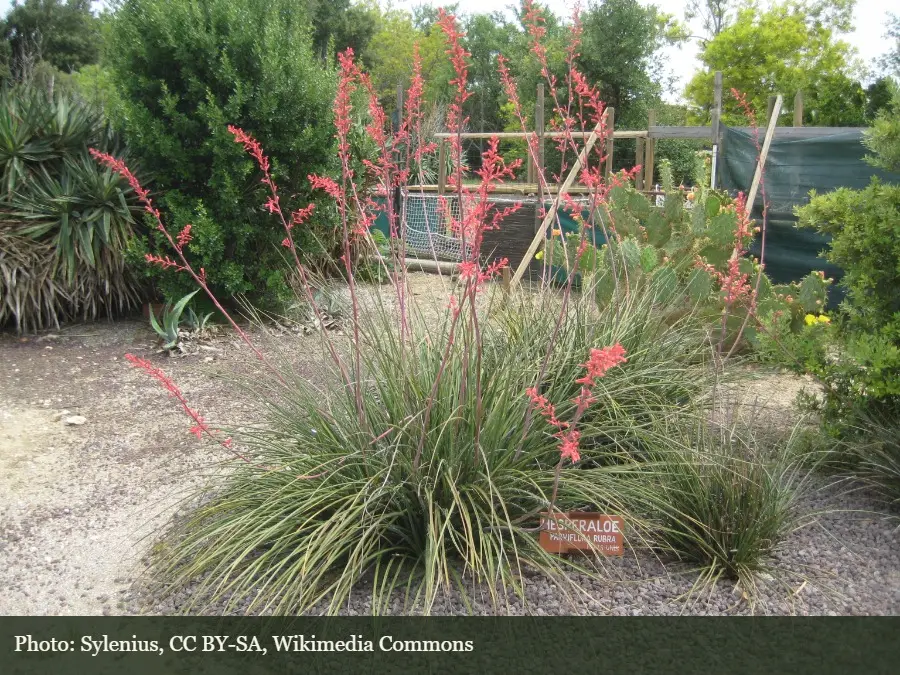
Red Yucca
A soft-leaved, drought-proof native accent plant with towering coral-red blooms that hummingbirds visit all season.