
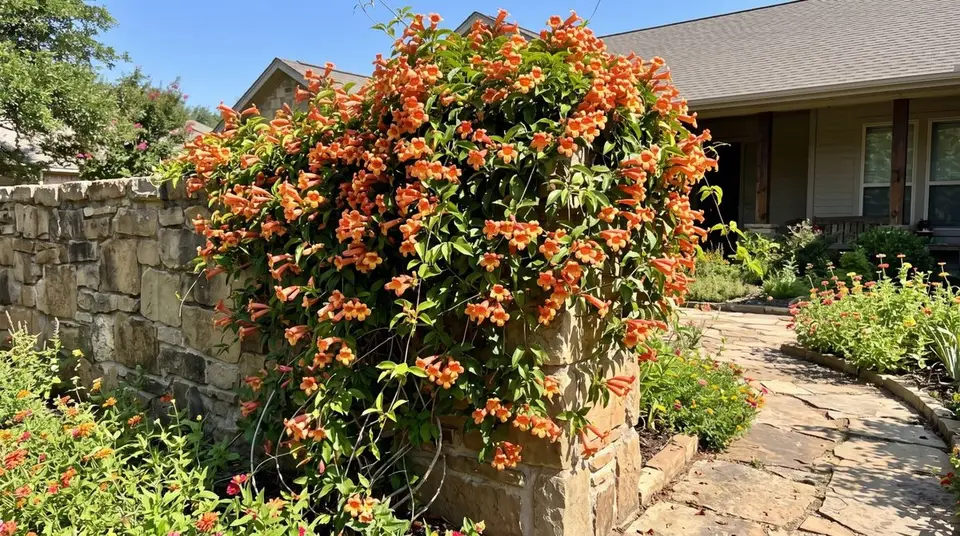
Tangerine Beauty Crossvine
Bignonia capreolata 'Tangerine Beauty'

- Sun
- Full Sun, Part Shade
- Water
- Moderate, Drought tolerant once established
- Mature size
- 20-30 ft tall x 3-6 ft wide
- Best for
- Trellis vine, Hummingbird attractor, Pollinator Plant, Privacy Screen
Gallon — $12 — only 4 left
About this size
- Gallon
- Our standard size: a 1-gallon nursery pot, about 6–7 inches across.
Pay at the nursery, plus 6.75% sales tax. Send your request and we'll confirm availability and your pickup time within 24 hours, then hold your plants. How it works
Planting & care
- Growth habit
- Vigorous, climbing woody vine that clings by tendrils with adhesive tips
- Typical bloom
- Apr–Sep
- Cold hardy to
- Zones 6–9
- Soil
- Adaptable; performs best in well-drained soil with some organic matter; tolerates clay
Where to plant
Full sun for the heaviest bloom, though it also grows in part shade. Give it a sturdy fence, trellis, arbor, or wall right from the start. It climbs on its own by tendrils, but it needs something to grab and a few feet of room to spread.
Watering
Water deeply and regularly through the first two summers to establish the roots. After that it tolerates dry spells well, though it stays fuller and blooms better with an occasional deep soak.
Cutting back
It blooms mostly on last season's growth, so prune right after the main spring bloom. Remove tangled or damaged stems and thin as needed to keep it in bounds. Avoid heavy pruning in late winter, which removes flower buds.
About Tangerine Beauty Crossvine
Tangerine Beauty crossvine is one of the most spectacular things a fence can wear. In spring it covers itself in clusters of bright orange-red trumpets with yellow throats, so many at once that the green leaves nearly disappear behind them. Hummingbirds find the flowers within days.
It is a selected form of a native vine that grows wild across the eastern half of the United States, climbing through the woods toward the light. That woodland heritage shows in its habit. It climbs on its own by tendrils that end in tiny adhesive pads, so it clings to trellises, wire, and rough surfaces without any tying, and it stays leafy nearly all year, turning a reddish-purple in cold weather.
The name comes from the wood. Cut a stem crosswise and the center shows a neat cross, which gave the vine its common name. It grows quickly once established, reaching 20 to 30 feet, and it will cover an arbor, a chain-link fence, or the side of a building in a few seasons. It also blooms again on and off through summer, though never as heavily as in spring.
For anyone who wants bold color on a vertical surface and a plant that hummingbirds visit every day, this is hard to beat. It is tough, adaptable, and rewarding, and it fits a Texas garden better than most flowering vines.
Where it's native
Tangerine Beauty Crossvine occurs naturally in 4 Texas ecoregions — Pineywoods, Post Oak Savannah, Blackland Prairies, Gulf Prairies and Marshes. Plants grown from local ecotypes are best adapted to our soils and climate here in the Blackland Prairies.
- 1Trans-Pecos
- 2High Plains
- 3Rolling Plains
- 4Edwards Plateau
- 5Cross Timbers and Prairies
- 6South Texas Plains
- 7Blackland Prairies
- 8Post Oak Savannah
- 9Gulf Prairies and Marshes
- 10Pineywoods
Plants it grows well with
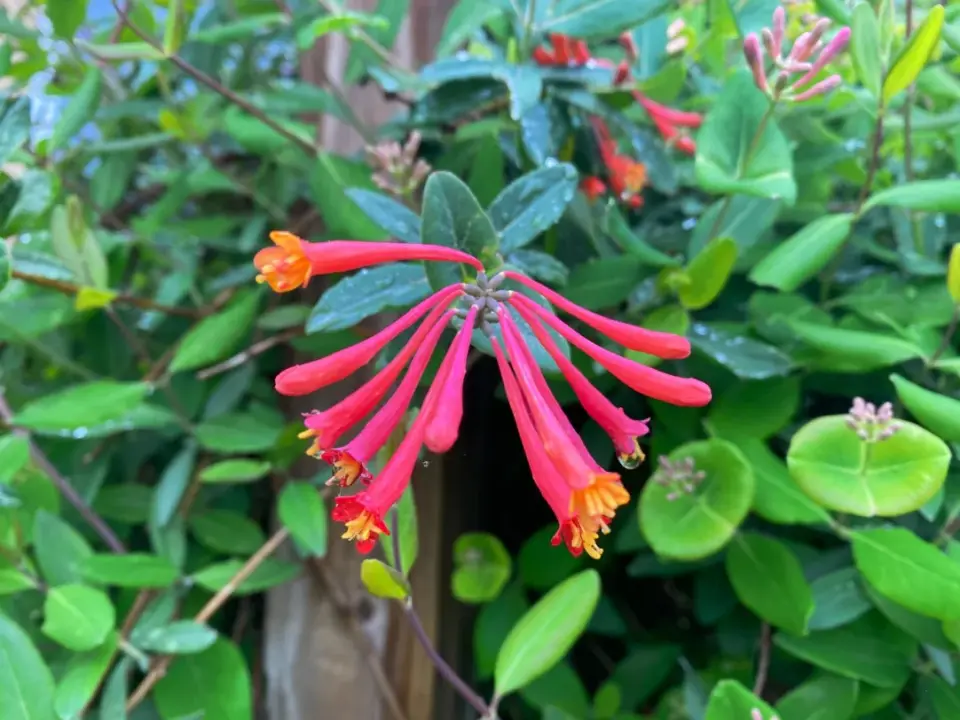
Coral Honeysuckle
A fast-growing native vine covered in coral-red trumpet blooms that hummingbirds can't resist.
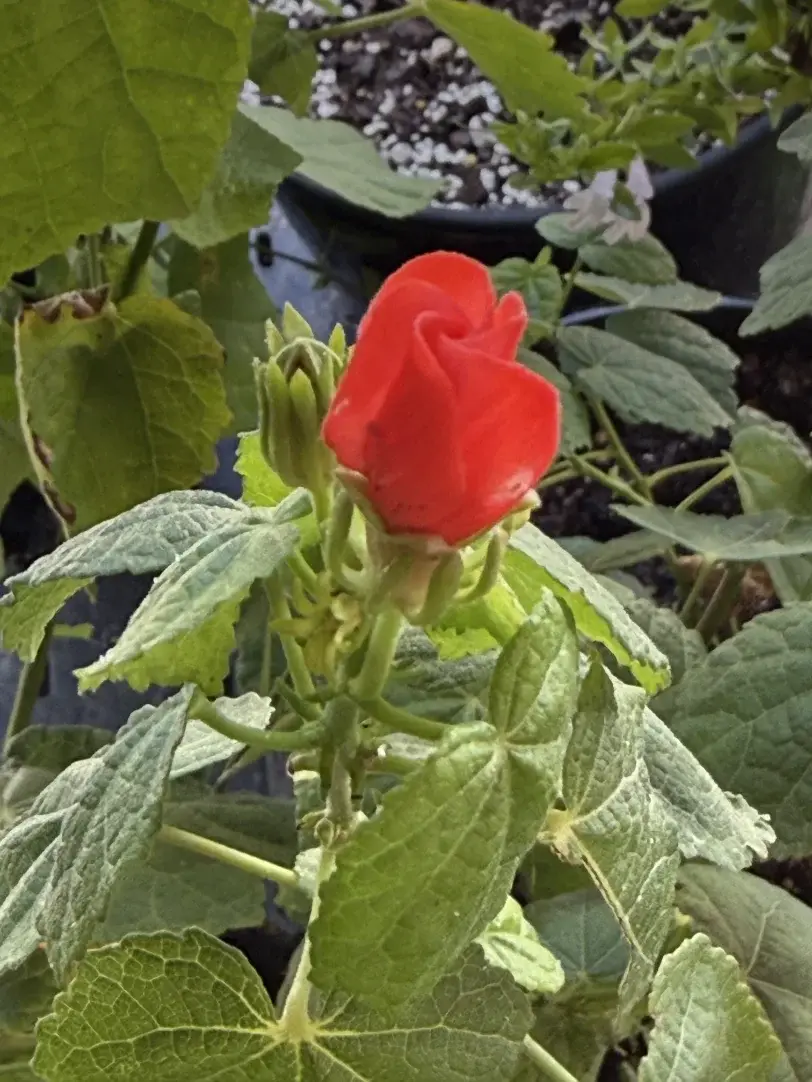
Turk’s Cap
A shade-loving native perennial with distinctive spiraled red blooms that flower nonstop from late spring through fall.
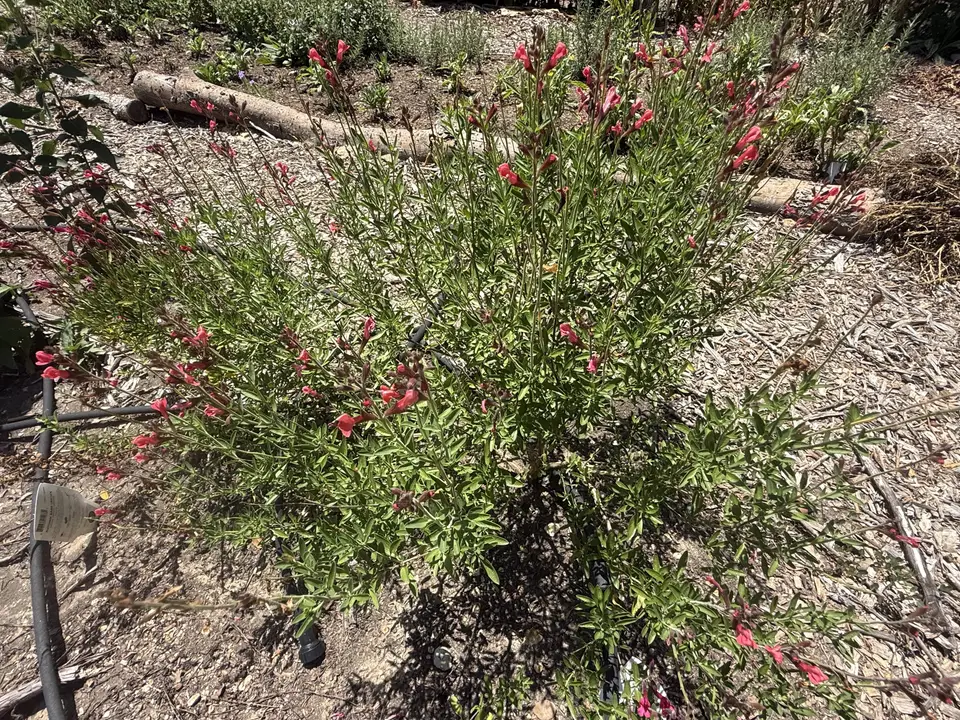
Autumn Sage
A compact, drought-tolerant native shrub that blooms nearly year-round in reds, corals, pinks, and whites.