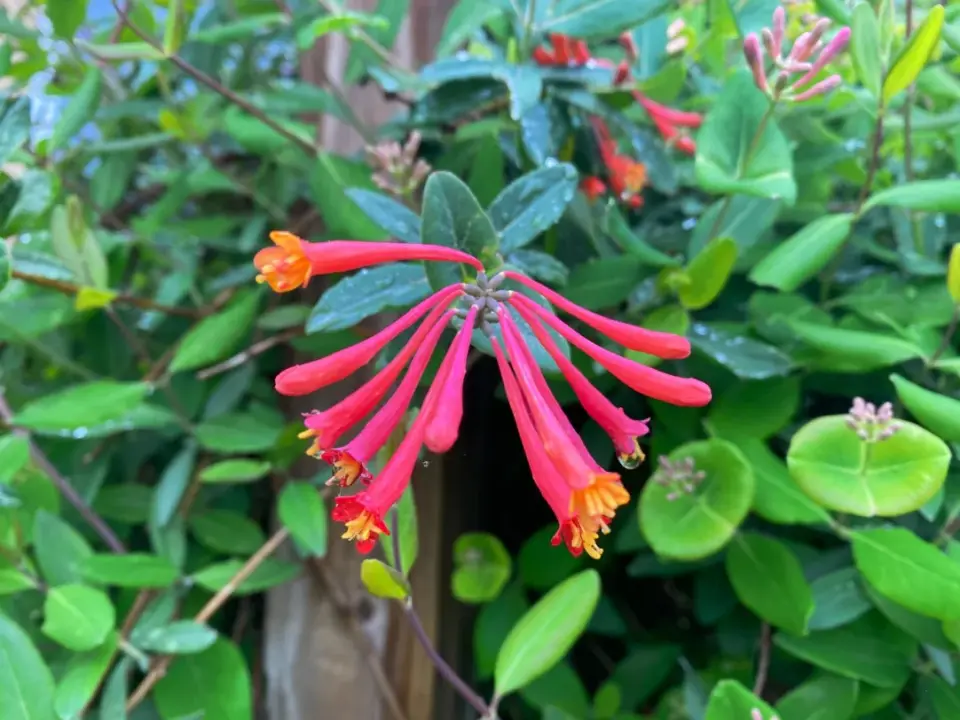
Coral Honeysuckle
Lonicera sempervirens
- Sun
- Full Sun, Part Shade
- Water
- Moderate, Drought tolerant once established
- Mature size
- 10-20 ft long x 3-6 ft spread
- Best for
- Trellis vine, Hummingbird attractor, Pollinator Plant
Gallon — $14
About this size
- Gallon
- Our standard size: a 1-gallon nursery pot, about 6–7 inches across.
Pay at the nursery, plus 6.75% sales tax. Send your request and we'll confirm availability and your pickup time within 24 hours, then hold your plants. How it works
Planting & care
- Growth habit
- Twining, climbing vine
- Typical bloom
- Mar–Jun
- Cold hardy to
- Zones 4–9
- Soil
- Well-drained; adaptable to clay with amendment
Where to plant
Full sun for the best bloom, with a trellis, fence, or other structure to climb. It's adaptable to well-drained soil and tolerates clay with some amendment.
Watering
Water regularly while it's getting established. Once rooted in, it's drought tolerant and only needs occasional deep watering during extended dry spells.
Cutting back
Prune after the spring bloom flush to maintain shape and encourage more flowers. It can be cut back hard in late winter and will respond with vigorous new growth.
About Coral Honeysuckle
Coral Honeysuckle twines up fences, trellises, and arbors, covering itself from spring into summer with clusters of long, slender, coral-red trumpets that flare open to reveal a soft yellow throat. It's one of the most reliable hummingbird plants in Texas — ruby-throated and black-chinned hummingbirds visit it constantly through their spring migration and nesting season, and the show rarely lets up before fall.
Unlike the aggressive Japanese honeysuckle it's often confused with, this native vine has no fragrance, doesn't sucker or take over, and poses no threat to surrounding plants — a distinction worth knowing, since it means all the beauty comes without the invasive baggage. Its blue-green, paired leaves stay semi-evergreen through mild winters, and in fall the vine produces small red berries that songbirds, especially orioles and catbirds, seek out.
It's an easygoing vine once it has something to climb, growing quickly to cover a trellis, mailbox post, or fence line with a natural, layered look rather than a dense wall. Left unpruned it arches and drapes gracefully; with an occasional trim it stays tidy and full.
For anyone who wants hummingbirds at eye level from spring through fall, without inheriting an invasive species headache, Coral Honeysuckle is one of the easiest and most rewarding choices in a native landscape.
Where it's native
Coral Honeysuckle occurs naturally in 6 Texas ecoregions — Pineywoods, Post Oak Savannah, Blackland Prairies, Cross Timbers and Prairies, Edwards Plateau, Gulf Prairies and Marshes. Plants grown from local ecotypes are best adapted to our soils and climate here in the Blackland Prairies.
- 1Trans-Pecos
- 2High Plains
- 3Rolling Plains
- 4Edwards Plateau
- 5Cross Timbers and Prairies
- 6South Texas Plains
- 7Blackland Prairies
- 8Post Oak Savannah
- 9Gulf Prairies and Marshes
- 10Pineywoods
Plants it grows well with
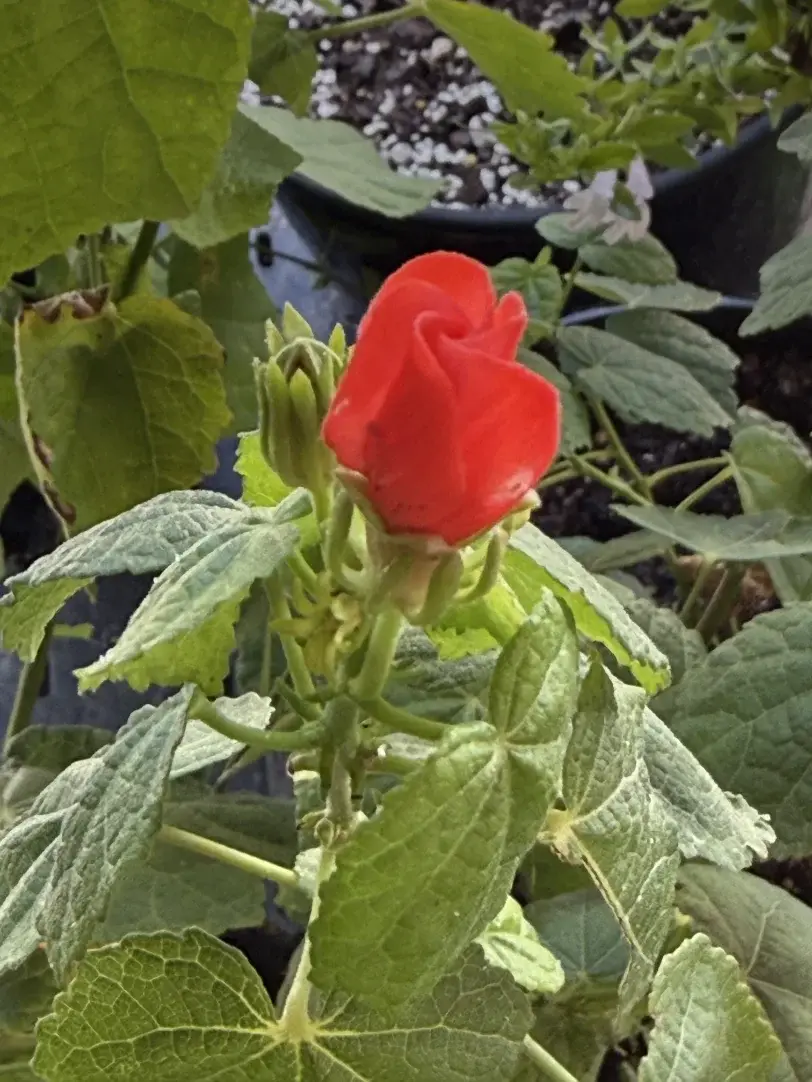
Turk’s Cap
A shade-loving native perennial with distinctive spiraled red blooms that flower nonstop from late spring through fall.
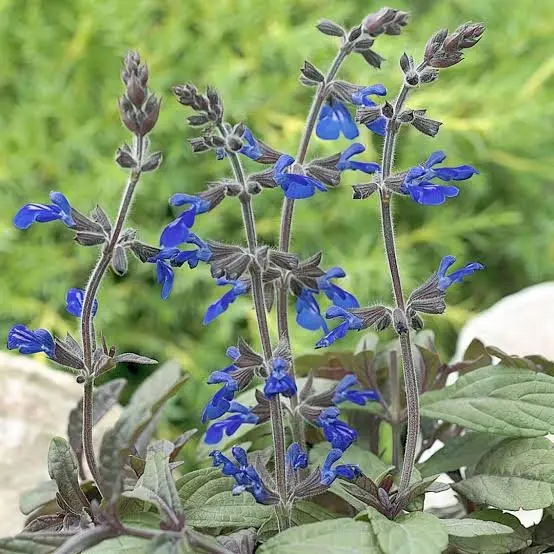
Bicolor Salvia
Bicolor salvia is a low, spreading sage with dark green leaves and deep blue-violet flowers from spring through fall. Bees and hummingbirds visit the blooms, and deer generally leave it alone.
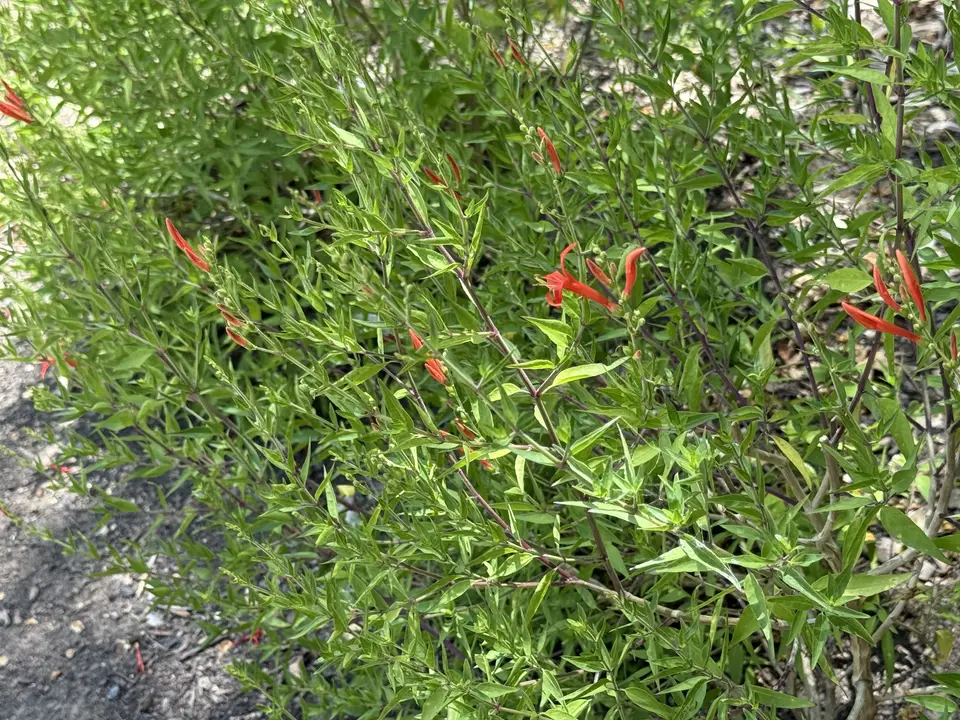
Flame Acanthus
A Texas native hummingbird magnet with brilliant orange-red tubular blooms from late spring through fall.