
Society Garlic
Tulbaghia violacea
- Sun
- Full Sun, Part Shade
- Water
- Moderate, Drought tolerant once established
- Mature size
- 1-2 ft tall, 1 ft wide per clump
- Best for
- Pollinator Plant, Low maintenance, Drought-tolerant Landscaping, Herb
Gallon — $10
About this size
- Gallon
- Our standard size: a 1-gallon nursery pot, about 6–7 inches across.
Pay at the nursery, plus 6.75% sales tax. Send your request and we'll confirm availability and your pickup time within 24 hours, then hold your plants. How it works
Planting & care
- Growth habit
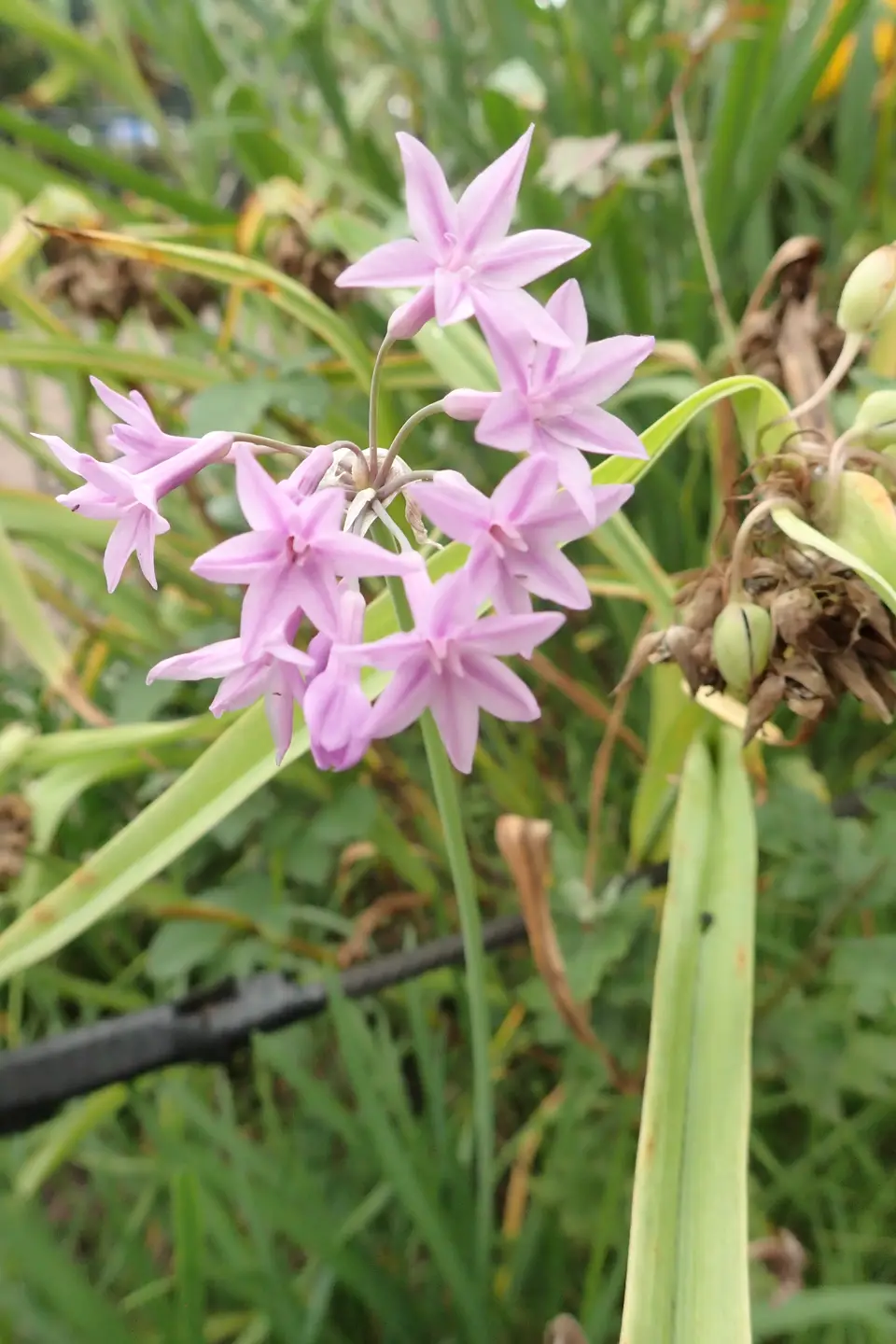
- Tidy, grass-like clump of narrow, strap-shaped leaves with wiry flower stalks rising above the foliage
- Typical bloom
- May–Nov
- Cold hardy to
- Zones 7–10
- Soil
- Adaptable to most well-drained soils; sandy or loamy soil preferred; good drainage essential to prevent tuber rot
Where to plant
Full sun for the heaviest bloom; tolerates partial shade with reduced flowering. Adaptable to most well-drained soils; sandy or loamy soil preferred.
Watering
Moderate during the growing season; drought tolerant once established. Avoid soggy soil, which can rot the tuberous roots.
Pruning
Light pruning in late winter or early spring to remove dead foliage and promote a compact form. Deadhead spent flower stalks after bloom to encourage continued flowering.
About Society Garlic
If deer have been eating their way through the flower beds, Society Garlic is one of the easiest sells around. Every part of this tidy, grass-like perennial, leaves and roots alike, carries a garlic scent that deer and rabbits steer clear of, while the flowers themselves smell sweet and floral, almost like hyacinth.
From early summer all the way to the first frost, Society Garlic sends up wiry stems topped with airy clusters of star-shaped, lilac-pink blooms that hover above narrow gray-green foliage. It's a long, reliable bloom season packed into a compact, well-behaved clump, no spreading out of control, no fuss.
Once established, it needs very little: some water through the growing season, a well-drained spot, and almost nothing else. It shrugs off Texas heat, tolerates reflected heat from patios and driveways, and even holds up in poor or rocky soil.
For anyone tired of losing plants to deer, this is the low-maintenance answer they've been looking for, and both the leaves and flowers are edible, giving it easy crossover appeal for herb gardeners too.
Plants it grows well with
Bicolor Salvia
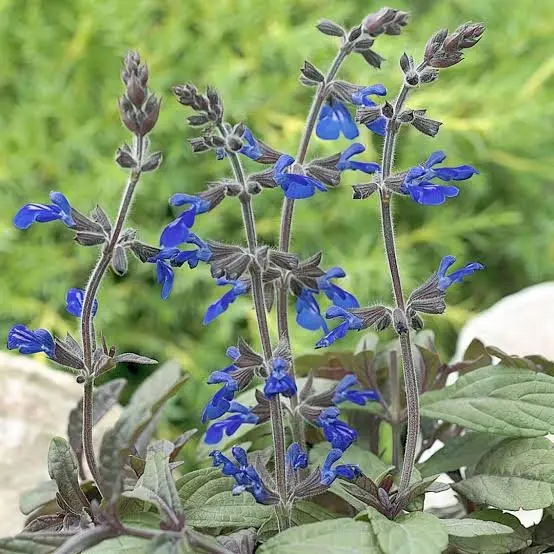
Bicolor salvia is a low, spreading sage with dark green leaves and deep blue-violet flowers from spring through fall. Bees and hummingbirds visit the blooms, and deer generally leave it alone.
Autumn Sage
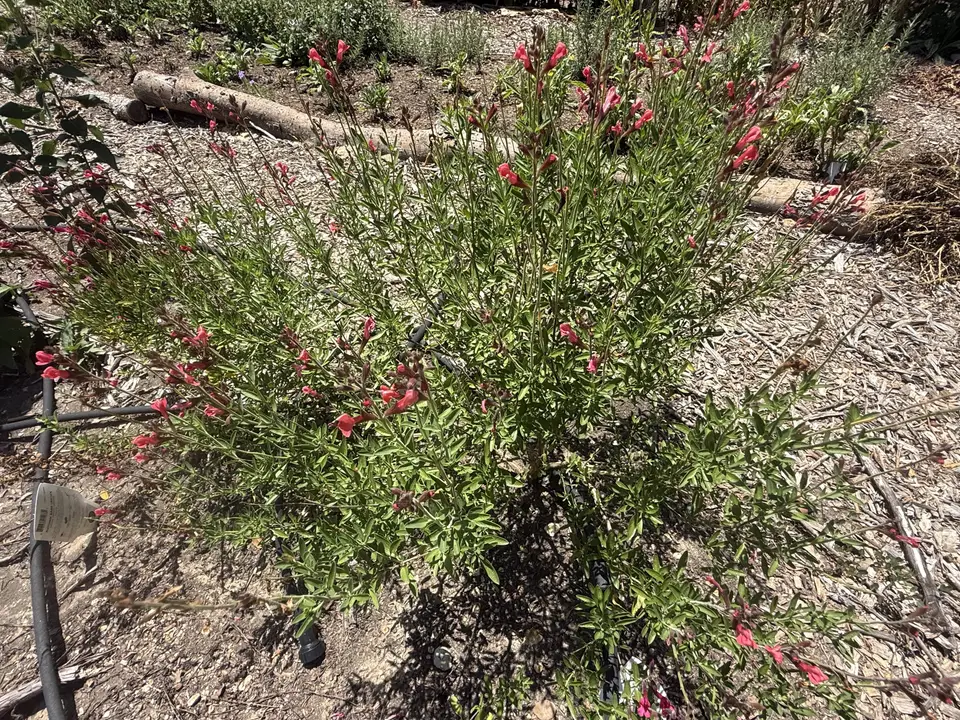
A compact, drought-tolerant native shrub that blooms nearly year-round in reds, corals, pinks, and whites.
Red Yucca
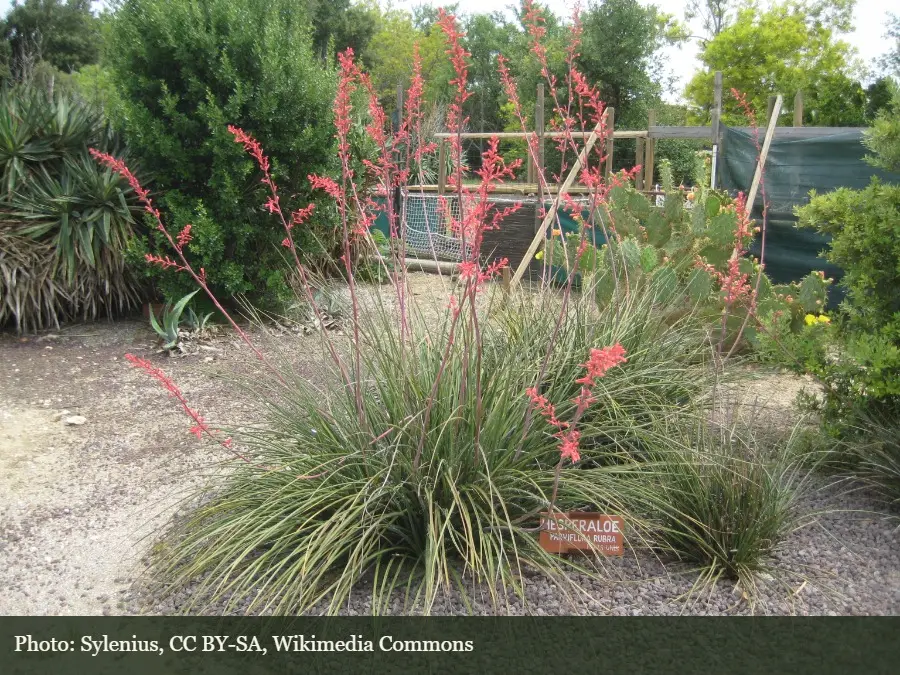
A soft-leaved, drought-proof native accent plant with towering coral-red blooms that hummingbirds visit all season.