
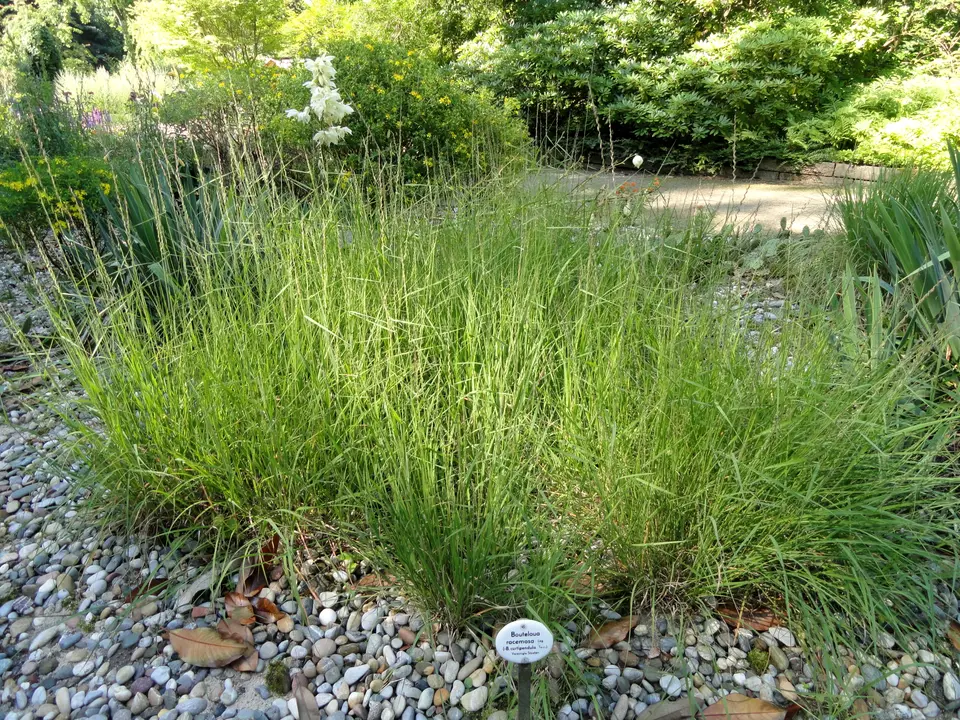
Side-Oats Grama
Bouteloua curtipendula

- Sun
- Full Sun
- Water
- Low, Moderate, Drought tolerant once established
- Mature size
- 1.5–3 ft tall x 1–2 ft wide
- Best for
- Erosion Control, Drought-tolerant Landscaping, Ornamental Grass
Planting & care
- Growth habit
- Clump-forming warm-season grass with arching stems and dangling oat-like seed spikes along one side of the stem
- Typical bloom
- May–Sep
- Cold hardy to
- Zones 4–9
- Soil
- Well-drained soils preferred; adaptable to clay, limestone, sandy, rocky, and poor soils
Where to plant
Full sun — at least 6–8 hours of direct sun for the best density, upright habit, and seed production. It's highly adaptable to rocky, sandy, clay, or limestone soil; good drainage is essential.
Watering
Low once established. Water regularly the first growing season to encourage deep roots; after that, natural rainfall is usually enough across Texas.
Cutting back
Cut back to 4–6 inches in late February or early March before new growth emerges. Leaving the winter structure through fall and early winter provides wildlife habitat and real landscape interest.
About Side-Oats Grama
If you want a native grass that earns its place in the landscape from summer straight through winter, and does it on almost nothing, Side-Oats Grama is the one to grow. This is the Texas state grass, and it carries that title honestly, handling heat, drought, limestone, and clay better than most ornamental grasses on the market.
Those seed heads are the real story. Small oat-like spikelets dangle in a neat row along every stem from early summer into fall, flushing a rich reddish-orange when fresh and aging to warm tan for months of winter interest. No other grass in the region looks quite like it in full display.
Growing throughout the Texas prairies and Great Plains, it's been tested by thousands of years of heat, drought, and hard freezes, and it passes every time. Once established, it asks almost nothing: no fertilizer, minimal supplemental water, and one hard cutback in late winter to keep it tidy. It clumps neatly without spreading, making it easy to manage in borders, mass plantings, and containers.
It pairs naturally with native wildflowers, too. Planted beside Black-eyed Susans, Prairie Blazing Star, or Indiangrass, it becomes part of a prairie composition that makes everything around it look better — exactly the kind of foundation grass a native planting is built around.
Where it's native
Side-Oats Grama occurs naturally in 6 Texas ecoregions — Blackland Prairies, Cross Timbers and Prairies, Rolling Plains, High Plains, Edwards Plateau, South Texas Plains. Plants grown from local ecotypes are best adapted to our soils and climate here in the Blackland Prairies.
- 1Trans-Pecos
- 2High Plains
- 3Rolling Plains
- 4Edwards Plateau
- 5Cross Timbers and Prairies
- 6South Texas Plains
- 7Blackland Prairies
- 8Post Oak Savannah
- 9Gulf Prairies and Marshes
- 10Pineywoods
Plants it grows well with
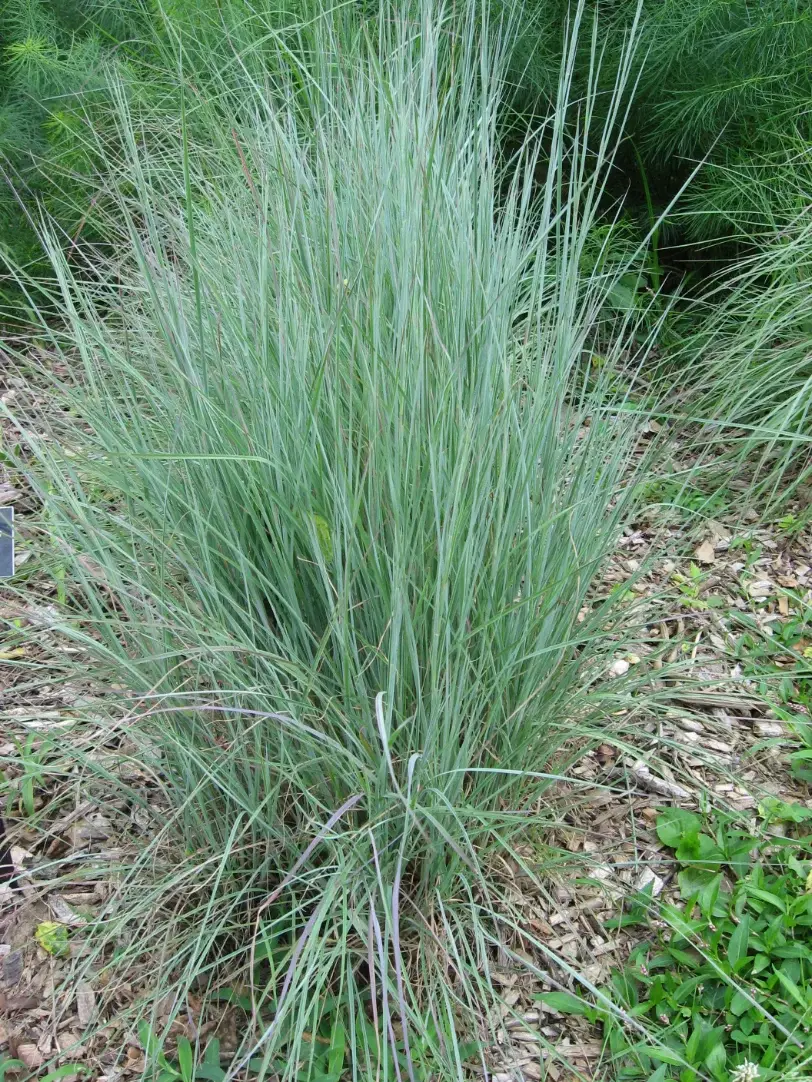
Little Bluestem
A native prairie grass with striking fall color that shifts from blue-green to fiery red and copper.
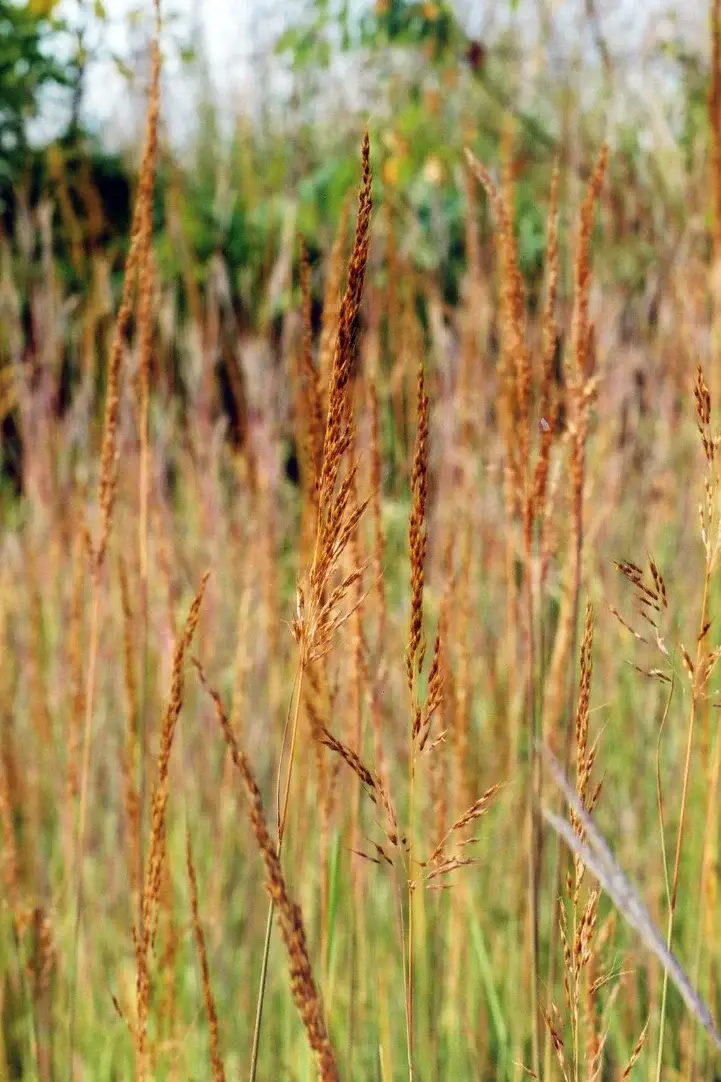
Indiangrass
An iconic tallgrass prairie grass with shimmering copper-bronze seed plumes that dominate the fall landscape.
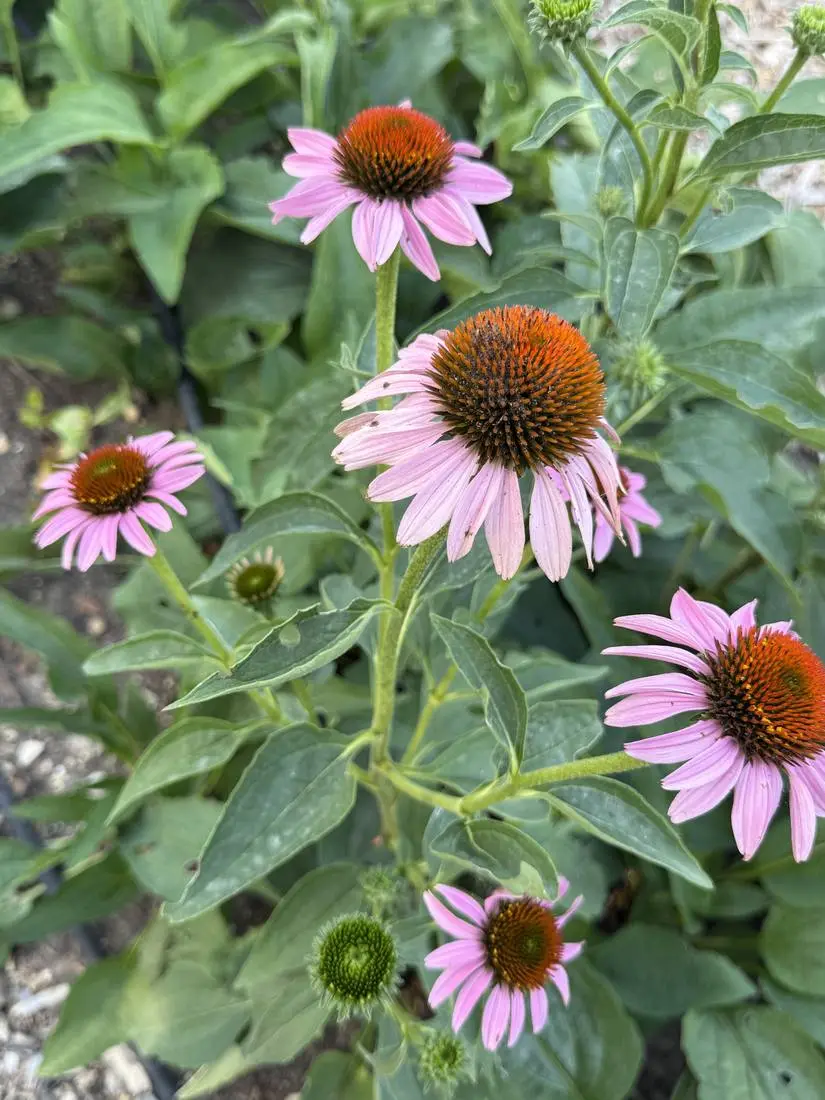
Echinacea purpurea
The classic native prairie coneflower — a long-blooming, pollinator-magnet perennial with a well-known medicinal reputation.