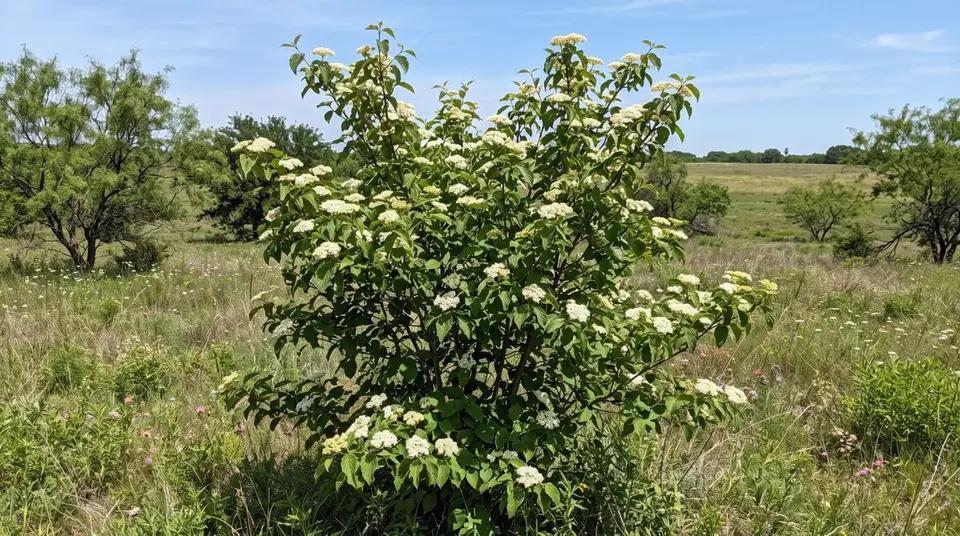
Roughleaf Dogwood
Cornus drummondii

- Sun
- Full Sun, Part Shade
- Water
- Low, Moderate, Drought tolerant once established
- Mature size
- 10-15 ft tall x 10-15 ft wide
- Best for
- Wildlife cover / habitat, Erosion Control, Privacy Screen, Pollinator Plant
Gallon — $14
About this size
- Gallon
- Our standard size: a 1-gallon nursery pot, about 6–7 inches across.
Pay at the nursery, plus 6.75% sales tax. Send your request and we'll confirm availability and your pickup time within 24 hours, then hold your plants. How it works
Planting & care
- Growth habit
- Multi-stemmed, spreading, colony-forming shrub
- Typical bloom
- Apr–Jun
- Cold hardy to
- Zones 4–9
- Soil
- Adaptable; thrives in clay, loam, and poor soils
Where to plant
Full sun to part shade, with the best flowering, densest growth, and most fruit in full sun. It's highly adaptable to clay, loam, or poor soil, and handles North Texas clay especially well.
Watering
Water consistently the first full growing season to establish the root system. After that, it's drought tolerant and also handles periodic wet conditions well.
Cutting back
Prune in late winter to shape, control size, or encourage dense regrowth — it responds well to hard pruning. It spreads naturally by root suckers to form a colony; remove suckers to keep it contained, or let it fill in for a natural hedge.
About Roughleaf Dogwood
There's a hedge plant that grows wild along fence lines and creek banks all across North Texas. It flowers white in May, feeds a parade of birds through summer on its small white berries, turns a rich reddish-purple in fall, and grows fast enough to form a real screen within a few seasons, all without irrigation, fertilization, or significant maintenance. It's called Roughleaf Dogwood.
One of the most ecologically productive native shrubs in the region, it forms a dense, multi-stemmed colony over time, exactly the kind of thick, bird-filled screen that people pay real money to achieve with non-native alternatives. Cedar waxwings, bluebirds, mockingbirds, robins, and woodpeckers all hit the berries hard in summer, and the flat-topped clusters of creamy white spring blooms are excellent native bee resources.
Distinctly sandpaper-rough leaves are the plant's signature identifying feature, giving it real textural character beyond its flowers and fruit. The dense thicket structure provides year-round nesting and escape cover for birds and small mammals.
Once established in North Texas clay, it's essentially self-sufficient — tolerating heat, drought, and periodic wet conditions, and spreading slowly by root suckers to fill a fence line naturally. It can be pruned hard for a tighter form, or left to naturalize if a looser look is preferred. Either way, the birds show up.
Where it's native
Roughleaf Dogwood occurs naturally in 5 Texas ecoregions — Blackland Prairies, Cross Timbers and Prairies, Post Oak Savannah, Pineywoods, Rolling Plains. Plants grown from local ecotypes are best adapted to our soils and climate here in the Blackland Prairies.
- 1Trans-Pecos
- 2High Plains
- 3Rolling Plains
- 4Edwards Plateau
- 5Cross Timbers and Prairies
- 6South Texas Plains
- 7Blackland Prairies
- 8Post Oak Savannah
- 9Gulf Prairies and Marshes
- 10Pineywoods
Plants it grows well with
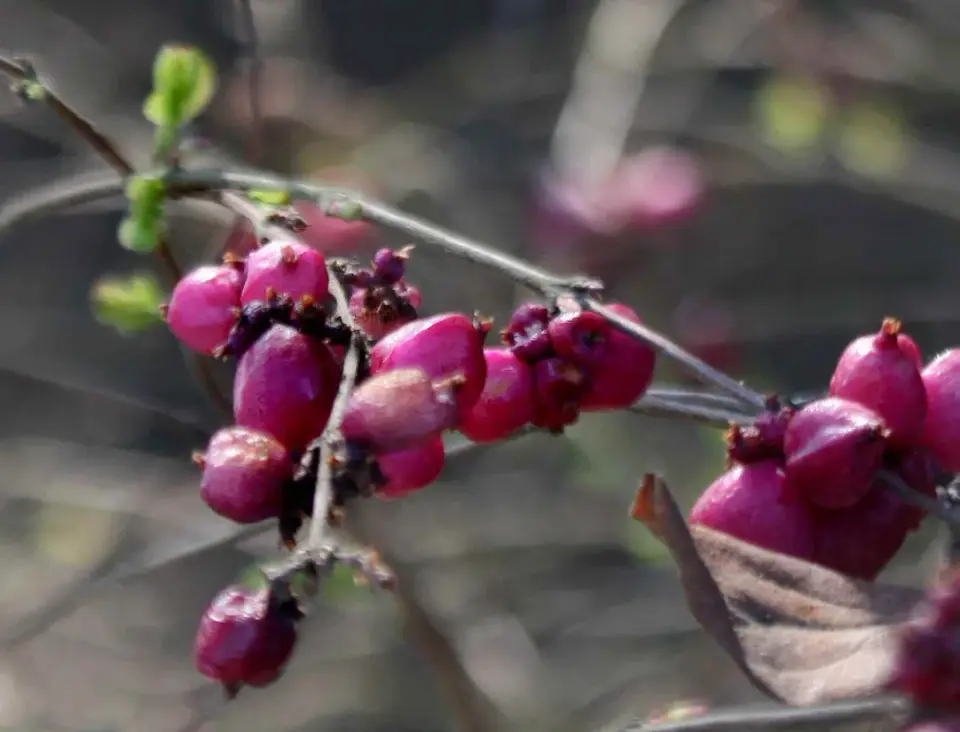
Coralberry
A tough, shade-tolerant native shrub that transforms every fall into a striking display of coral-pink to magenta berries.
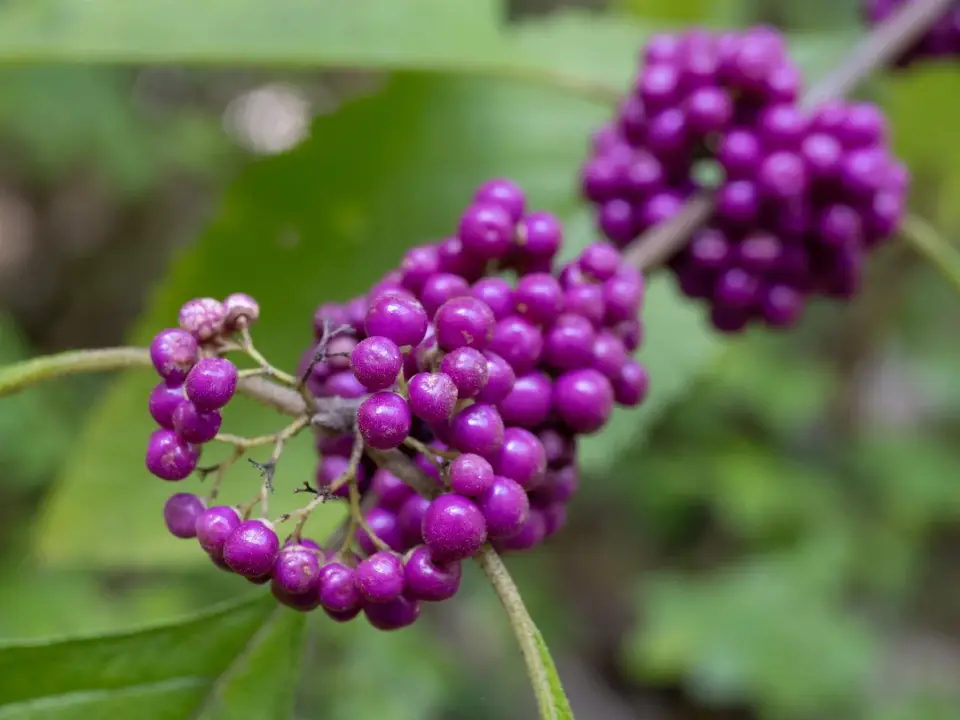
American Beautyberry
A native shrub famous for the clusters of electric-purple berries that wrap around its stems every fall.
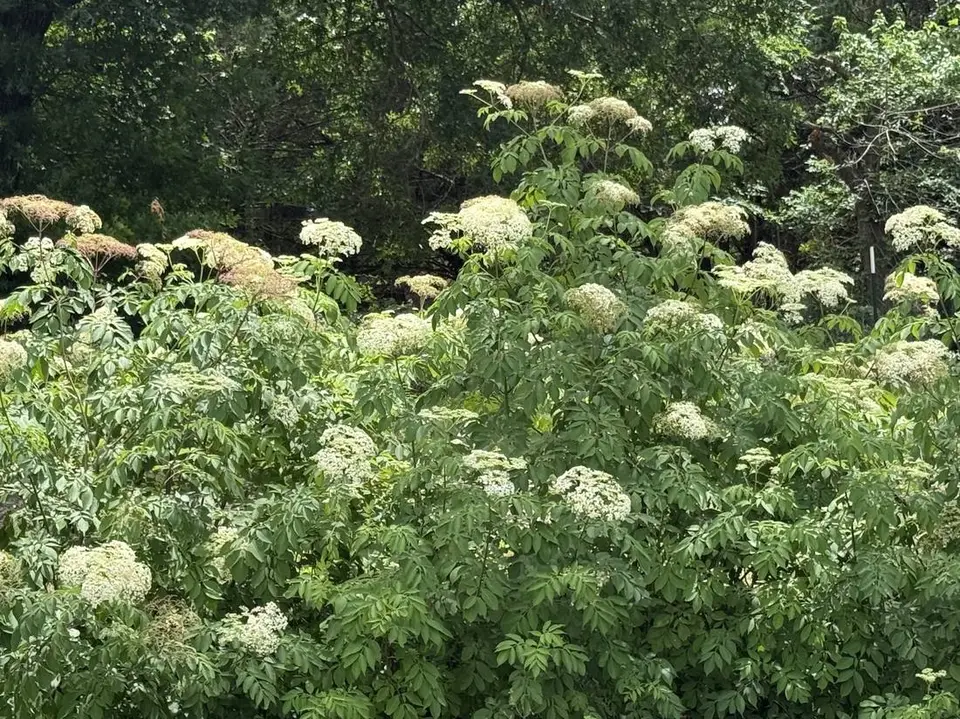
Elderberry
A fast-growing native shrub with broad white flower clusters in early summer followed by dark, bird-favorite berries in fall.