Elderberry
Sambucus nigra ssp. canadensis

- Sun
- Full Sun, Part Shade
- Water
- Moderate, High, Prefers moist well drained soil
- Mature size
- 6–12 ft tall × 6–10 ft wide
- Best for
- Edible Fruit, Pollinator Plant, Natural hedge
Planting & care
- Growth habit
- Multi-stem, spreading shrub; can form thickets
- Typical bloom
- May–Jun
- Cold hardy to
- Zones 4–9
- Soil
- Adaptable; prefers rich, well-drained soils but tolerates clay well
Where to plant
Full sun to part shade, in soil that stays reasonably moist — it performs best in rich, well-drained soil but tolerates clay well, especially with some compost worked in.
Watering
Keep the soil consistently moist, particularly during the first season and through summer heat. It tolerates occasional dry spells once established but prefers not to dry out completely.
Cutting back
Cut back older canes hard in late winter to encourage vigorous new growth — berries form on new wood, so this pruning actually improves next season's flowering and fruiting.
About Elderberry
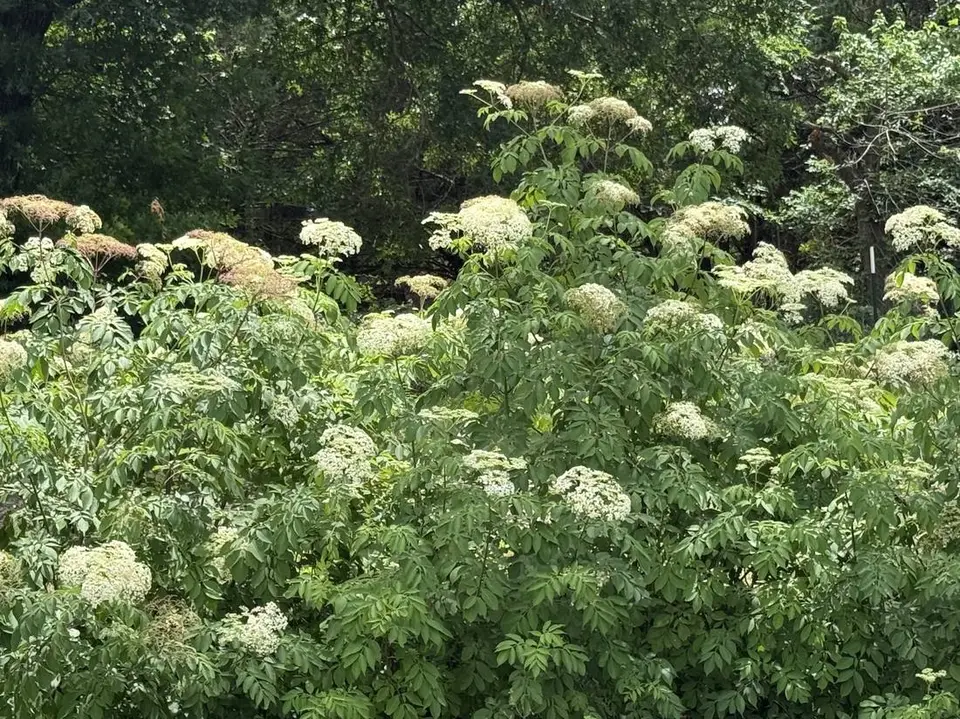
Elderberry covers itself in enormous flat-topped clusters of creamy white flowers in May and June, then follows up with heavy, drooping clusters of dark purple-black berries that ripen through late summer. Birds find the berries irresistible — more than 40 species feed on them, from cedar waxwings to mockingbirds — and the flowers themselves draw a steady stream of native bees and other pollinators through the entire bloom window.
It's a fast, vigorous grower that reaches full size within a couple of seasons, filling out into a multi-stemmed, arching shrub that works beautifully as an informal hedge, a wildlife border, or a stand-alone specimen with genuine presence. The large, textured foliage gives it a lush look through the growing season, and the branching habit means it never looks stiff or overly manicured.
Elderberry handles the kind of wet, low-lying spots that stress out many other shrubs, and it tolerates North Texas clay without complaint. It's a plant that thrives on being left mostly alone, rewarding minimal care with a strong seasonal show twice a year — first the flowers, then the fruit.
For anyone building a wildlife garden, a native hedgerow, or simply wanting a fast, reliable shrub with real ecological value, Elderberry delivers on every front.
Where it's native
Elderberry occurs naturally in 7 Texas ecoregions — Pineywoods, Post Oak Savannah, Blackland Prairies, Cross Timbers and Prairies, Gulf Prairies and Marshes, Edwards Plateau, South Texas Plains. Plants grown from local ecotypes are best adapted to our soils and climate here in the Blackland Prairies.
- 1Trans-Pecos
- 2High Plains
- 3Rolling Plains
- 4Edwards Plateau
- 5Cross Timbers and Prairies
- 6South Texas Plains
- 7Blackland Prairies
- 8Post Oak Savannah
- 9Gulf Prairies and Marshes
- 10Pineywoods