
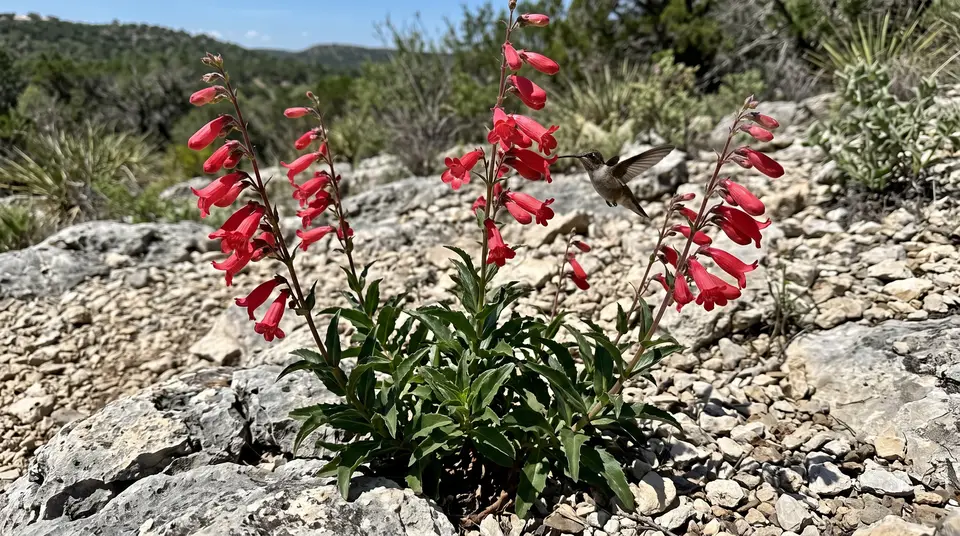
Rock Penstemon
Penstemon baccharifolius

- Sun
- Full Sun, Part Shade
- Water
- Low, Drought tolerant once established
- Mature size
- 1–2 ft tall, 1–2 ft wide
- Best for
- Drought-tolerant Landscaping, Hummingbird attractor, Pollinator Plant, Native ecosystem plant
Gallon — $10
About this size
- Gallon
- Our standard size: a 1-gallon nursery pot, about 6–7 inches across.
Pay at the nursery, plus 6.75% sales tax. Send your request and we'll confirm availability and your pickup time within 24 hours, then hold your plants. How it works
Planting & care
- Growth habit
- Compact, sprawling to upright shrubby perennial; woody at the base; branches trail nicely over rock edges and walls
- Typical bloom
- Apr–Oct
- Cold hardy to
- Zones 7–10
- Soil
- Very well-drained rocky, gravelly, or limestone-based soils with low organic matter; do not tolerate clay or rich, fertile soil — root rot follows quickly
Where to plant
Full sun to part shade. Excellent drainage is non-negotiable — rocky, gravelly, or limestone-based soil is ideal; avoid clay or rich, amended garden beds, which shorten this plant's life considerably.
Watering
Low once established. Water sparingly — this plant is far more likely to be lost to overwatering than drought. Let the soil dry out between waterings.
Cutting back
After the last freeze, cut back winter-damaged growth. In milder years, a light trim in late winter encourages fuller, more compact regrowth. Avoid heavy pruning during active summer bloom.
About Rock Penstemon
If a rocky, awful strip along a driveway seems like nothing will ever grow there, Rock Penstemon is the answer. This tough little Texas native was practically built for bad soil: it thrives in the same thin, rocky, limestone ground that defeats most garden perennials, and it rewards that neglect with clusters of brilliant cherry-red to orange-red tubular flowers that hummingbirds cannot resist.
Unlike most penstemons, which fade in summer heat, this one saves its showiest bloom for the hottest part of the Texas summer, when most other plants are hiding from the sun. Thick, dark green, toothed leaves sometimes take on a purple cast in cold weather, giving the low, woody-based mound some seasonal character even out of bloom.
Native to the limestone bluffs of the Edwards Plateau and West Texas, it's a natural fit for a dry creek bed, a xeric berm, or a true rock garden. It stays compact, under 2 feet tall and wide, and looks especially good trailing over the edge of a retaining wall or spilling across decomposed granite.
The one thing it asks for in return is drainage — this isn't a plant for rich garden beds or clay soil, so it's best suited to anyone already leaning into the low-water, rock-garden look.
Where it's native
Rock Penstemon occurs naturally in 2 Texas ecoregions — Edwards Plateau, Trans-Pecos. Plants grown from local ecotypes are best adapted to our soils and climate here in the blackland prairie and post oak savannah.
- 1Trans-Pecos
- 2High Plains
- 3Rolling Plains
- 4Edwards Plateau
- 5Cross Timbers and Prairies
- 6South Texas Plains
- 7Blackland Prairies
- 8Post Oak Savannah
- 9Gulf Prairies and Marshes
- 10Pineywoods
Plants it grows well with
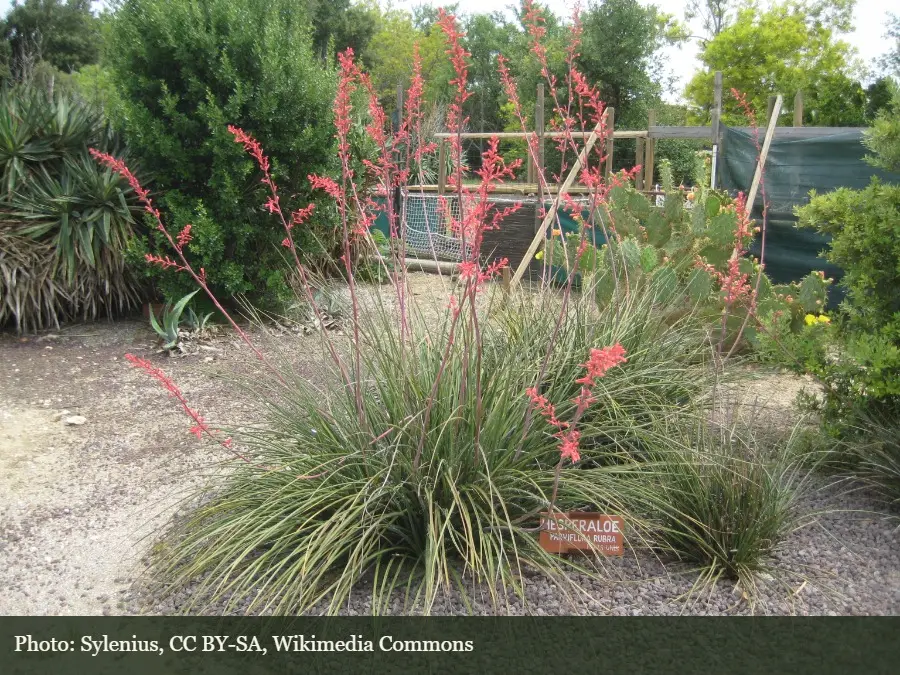
Red Yucca
A soft-leaved, drought-proof native accent plant with towering coral-red blooms that hummingbirds visit all season.
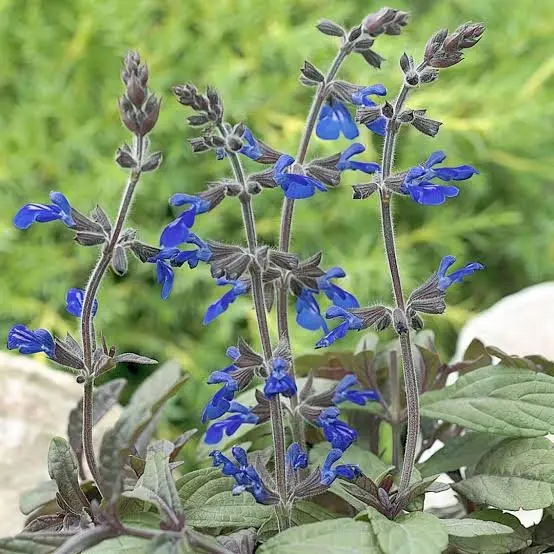
Bicolor Salvia
Bicolor salvia is a low, spreading sage with dark green leaves and deep blue-violet flowers from spring through fall. Bees and hummingbirds visit the blooms, and deer generally leave it alone.
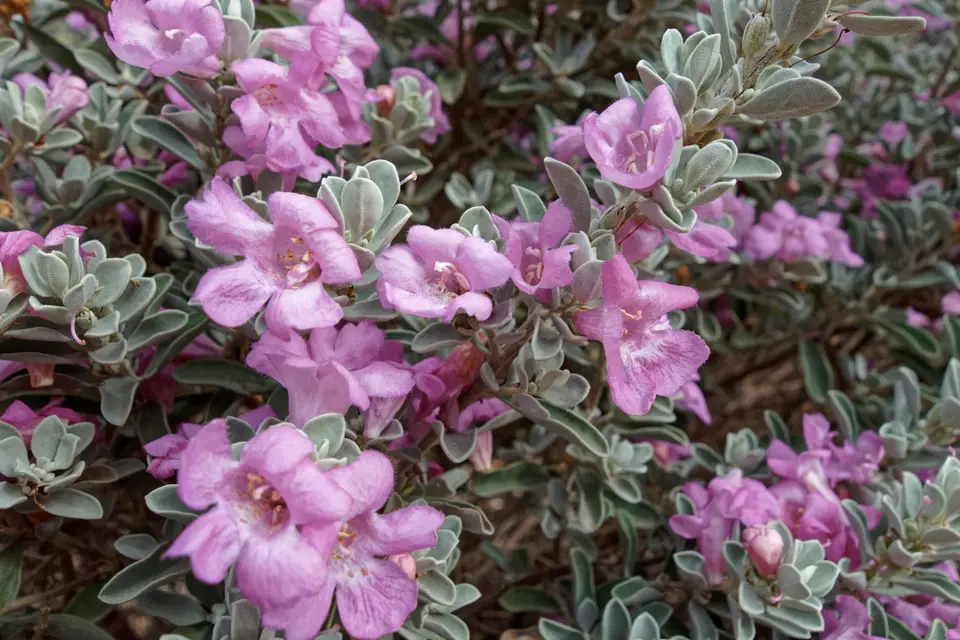
Texas Sage
A silver-leaved native shrub that erupts in surprise blooms after every rain — the legendary "barometer bush."