
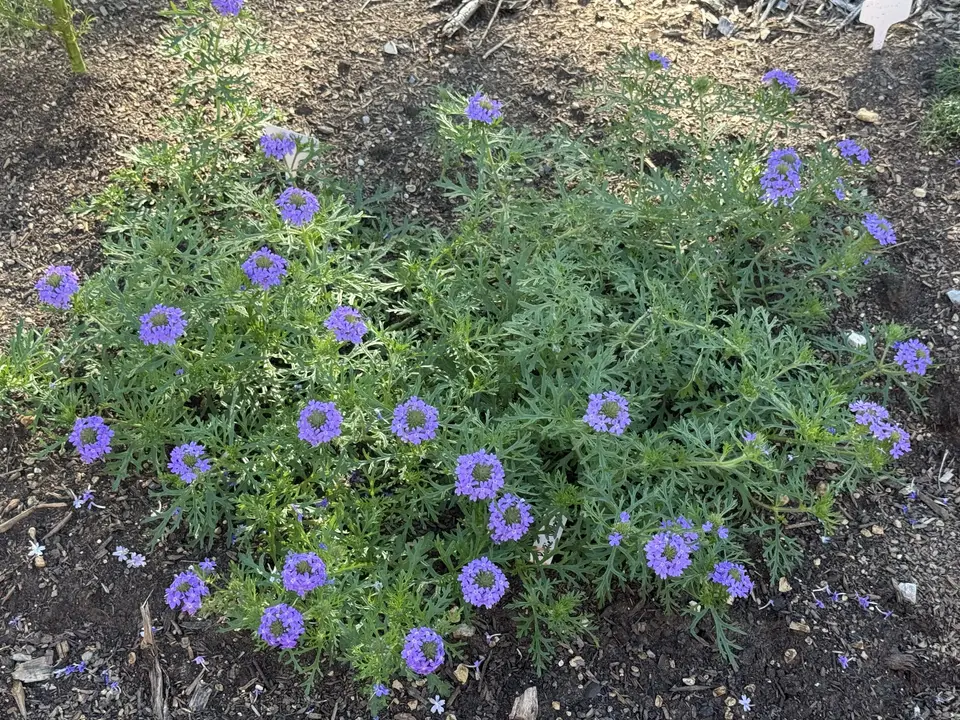
Prairie Verbena
Verbena bipinnatifida (syn. Glandularia bipinnatifida)

- Sun
- Full Sun, Part Shade
- Water
- Low, Moderate, Drought tolerant once established
- Mature size
- 6-12” tall x 18-36” spread
- Best for
- Groundcover, Pollinator Plant
Gallon — $10
About this size
- Gallon
- Our standard size: a 1-gallon nursery pot, about 6–7 inches across.
Pay at the nursery, plus 6.75% sales tax. Send your request and we'll confirm availability and your pickup time within 24 hours, then hold your plants. How it works
Planting & care
- Growth habit
- Low, spreading, mat-forming
- Typical bloom
- Mar–Jun
- Cold hardy to
- Zones 7–9
- Soil
- Well-drained soils; thrives in sandy, rocky, or poor soils; tolerates clay if not waterlogged
Where to plant
Full sun is preferred; it tolerates light afternoon shade but blooms most heavily and stays most compact in full sun. Well-drained soil matters most — it thrives in sandy, rocky, or lean soil and tolerates clay with decent drainage.
Watering
Low once established. Water consistently the first season to help it establish; after that, rainfall is generally enough across most of Texas.
Cutting back
Shear lightly after the first bloom flush if it gets leggy, to encourage rebloom and a more compact shape. No hard pruning needed.
About Prairie Verbena
If you want something that blooms early, spreads fast, and brings in butterflies before almost anything else in the garden has woken up, Prairie Verbena is the plant. This low-growing native wildflower carpets the ground in bright purple from late winter into early summer, blooming reliably every year without much help.
Deeply cut, fern-like gray-green leaves give it a delicate, lacy look, and the dense, rounded flower clusters open from the base upward, extending the show over several weeks. Slender, sprawling stems root wherever they touch moist soil, letting the plant spread outward on its own.
Native across the Texas plains, it has been thriving in thin soil, full sun, and dry stretches for thousands of years. Once established, it spreads both by rooting stems and by dropping seed into nearby bare ground — more plants show up without any extra effort.
For pollinators, it's one of the best early-season options in the entire native plant palette. Butterflies, native bees, and even hummingbirds work it heavily while bigger, showier plants are still leafing out, making it one of the first real nectar sources of the year.
Where it's native
Prairie Verbena occurs naturally in 6 Texas ecoregions — Blackland Prairies, Cross Timbers and Prairies, Post Oak Savannah, Edwards Plateau, Rolling Plains, South Texas Plains. Plants grown from local ecotypes are best adapted to our soils and climate here in the Blackland Prairies.
- 1Trans-Pecos
- 2High Plains
- 3Rolling Plains
- 4Edwards Plateau
- 5Cross Timbers and Prairies
- 6South Texas Plains
- 7Blackland Prairies
- 8Post Oak Savannah
- 9Gulf Prairies and Marshes
- 10Pineywoods
Plants it grows well with
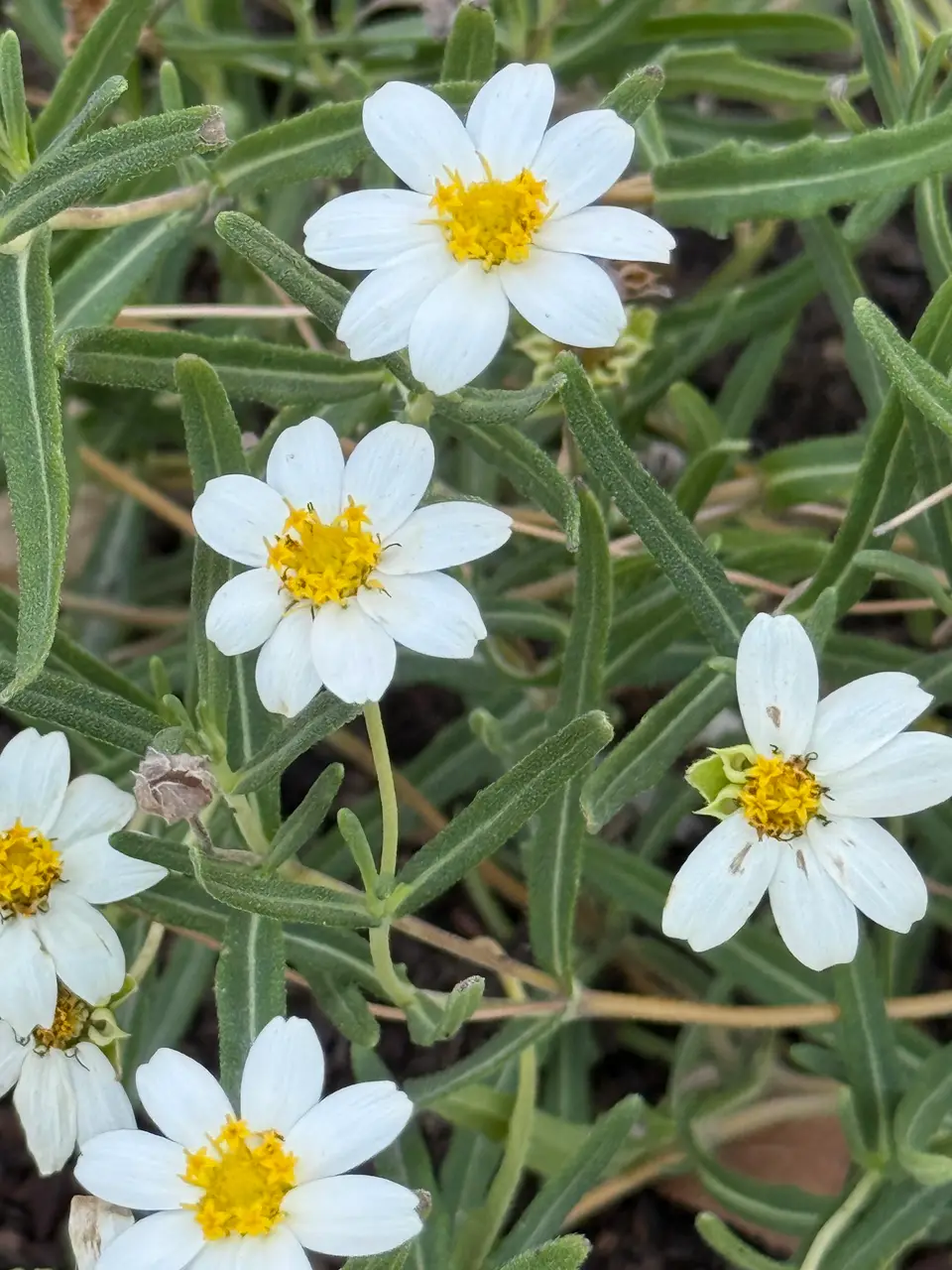
Blackfoot Daisy
A drought-proof native perennial with cheerful white, daisy-like blooms from spring through frost.
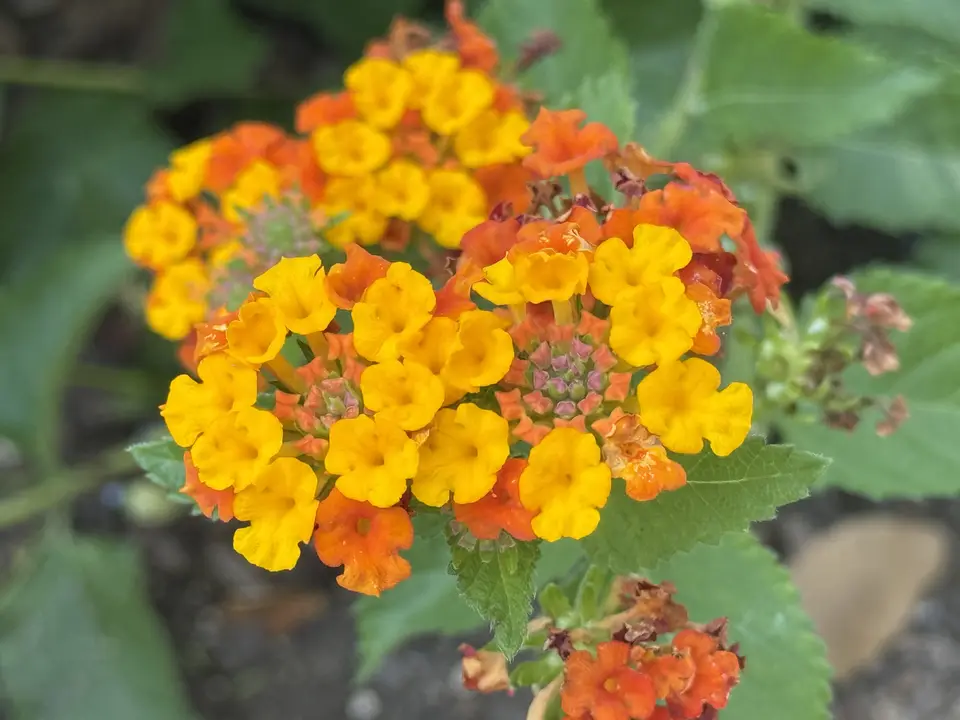
Texas Lantana
A tough, long-blooming native shrub with multi-colored flower clusters that draw butterflies from May through frost.
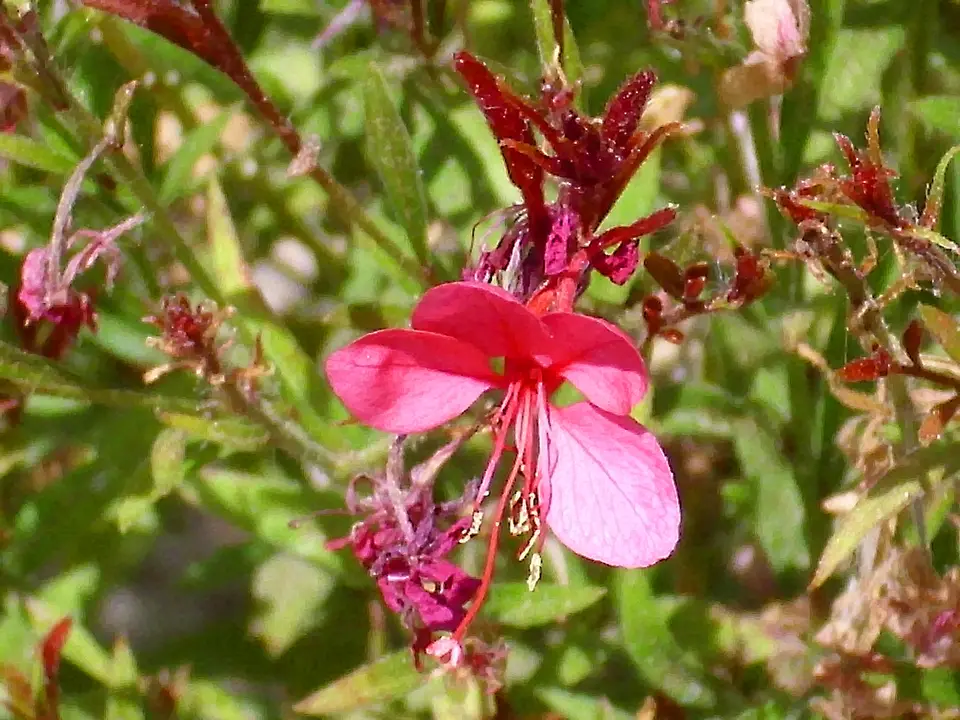
Gaura
A native perennial with airy, wand-like sprays of white and pink flowers that flutter like tiny butterflies all summer.