Mesa Azure Salvia
Salvia microphylla 'Mesa Azure'
- Sun
- Full Sun, Part Shade
- Water
- Low, Moderate, Drought tolerant once established
- Mature size
- 1.5-2 ft tall x 1.5-2 ft wide
- Best for
- Pollinator Plant, Hummingbird attractor, Drought-tolerant Landscaping, Low maintenance
Gallon — $10 — only 2 left
About this size
- Gallon
- Our standard size: a 1-gallon nursery pot, about 6–7 inches across.
Pay at the nursery, plus 6.75% sales tax. Send your request and we'll confirm availability and your pickup time within 24 hours, then hold your plants. How it works
Planting & care
- Growth habit
- Dense, compact, mounding subshrub with a semi-woody base and soft flowering stems; noticeably more compact than standard Autumn Sage (Salvia greggii)
- Typical bloom
- Apr–Nov
- Cold hardy to
- Zones 7–9
- Soil
- Well-drained soil is essential; tolerates rocky, sandy, or amended clay; pH 6.0-8.0
Where to plant
Full sun to part shade — full sun gives the best bloom and most compact form; light afternoon shade is fine in peak summer heat. Well-drained soil is the key requirement; rocky, sandy, or amended clay all work as long as water doesn't pool.
Watering
Water consistently until established, then reduce. Drought tolerant once rooted in, but performs best with occasional deep watering during extended dry spells.
Pruning
Shear lightly after each bloom flush to keep the mound tight and trigger the next round of flowers. Cut back harder in late February before spring growth starts.
About Mesa Azure Salvia
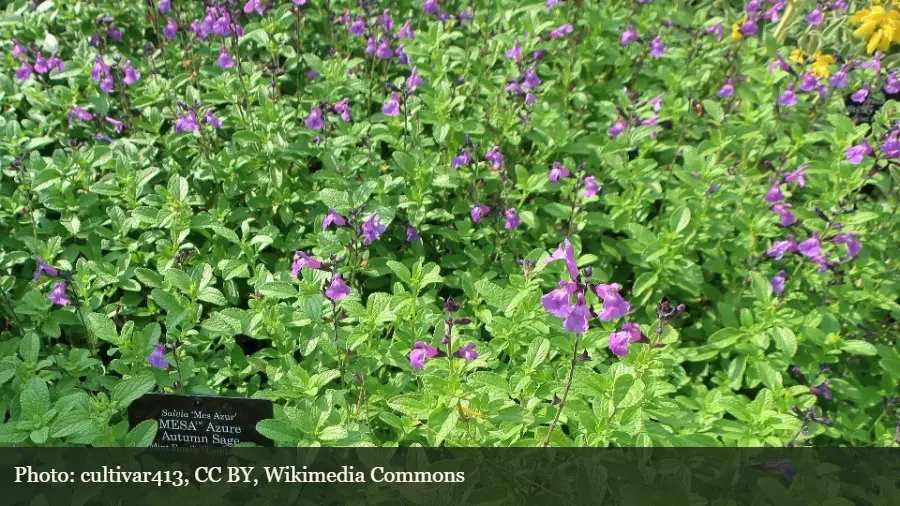
If Autumn Sage is the plant that fills a bed, Mesa Azure is the one that fills a pot on the porch. It's the same tough, hummingbird-magnet salvia already familiar to Texas gardeners, just scaled down into a tidy mound of densely wrinkled green leaves and lavender-purple flowers that keep coming from April clear through November.
It asks for the same easy care as the rest of the salvia family: full sun, soil that drains, and not much else once it's established. Where it earns its own spot is size — for a small bed, a patio container, or a tight spot along a walkway, Mesa Azure delivers the same long bloom season and hummingbird traffic without needing the extra room a standard Autumn Sage wants.
For anyone who loves the look of a blooming salvia but is working with limited space, Mesa Azure is an easy, compact answer.
Where it's native
Mesa Azure Salvia occurs naturally in 2 Texas ecoregions — Trans-Pecos, Edwards Plateau. Plants grown from local ecotypes are best adapted to our soils and climate here in the blackland prairie and post oak savannah.
- 1Trans-Pecos
- 2High Plains
- 3Rolling Plains
- 4Edwards Plateau
- 5Cross Timbers and Prairies
- 6South Texas Plains
- 7Blackland Prairies
- 8Post Oak Savannah
- 9Gulf Prairies and Marshes
- 10Pineywoods
Plants it grows well with
Bicolor Salvia
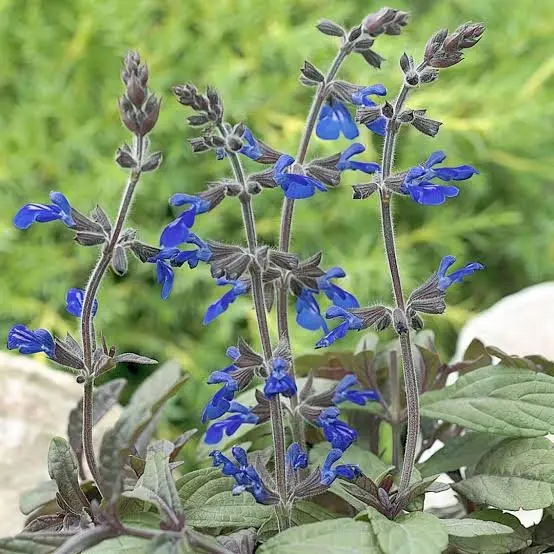
Bicolor salvia is a low, spreading sage with dark green leaves and deep blue-violet flowers from spring through fall. Bees and hummingbirds visit the blooms, and deer generally leave it alone.
Autumn Sage
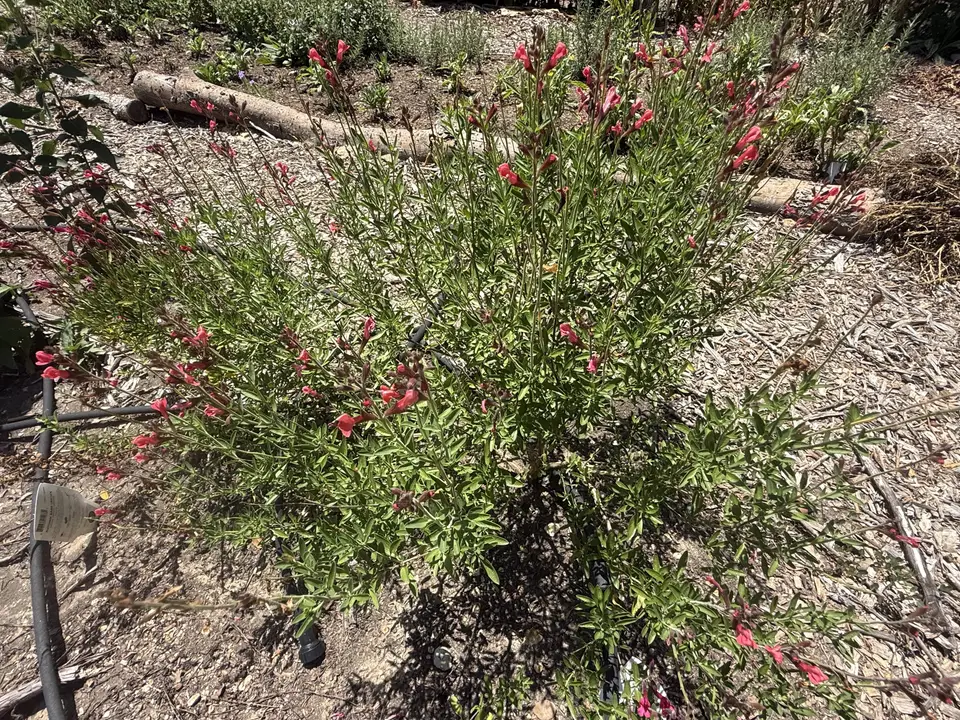
A compact, drought-tolerant native shrub that blooms nearly year-round in reds, corals, pinks, and whites.
Turk’s Cap
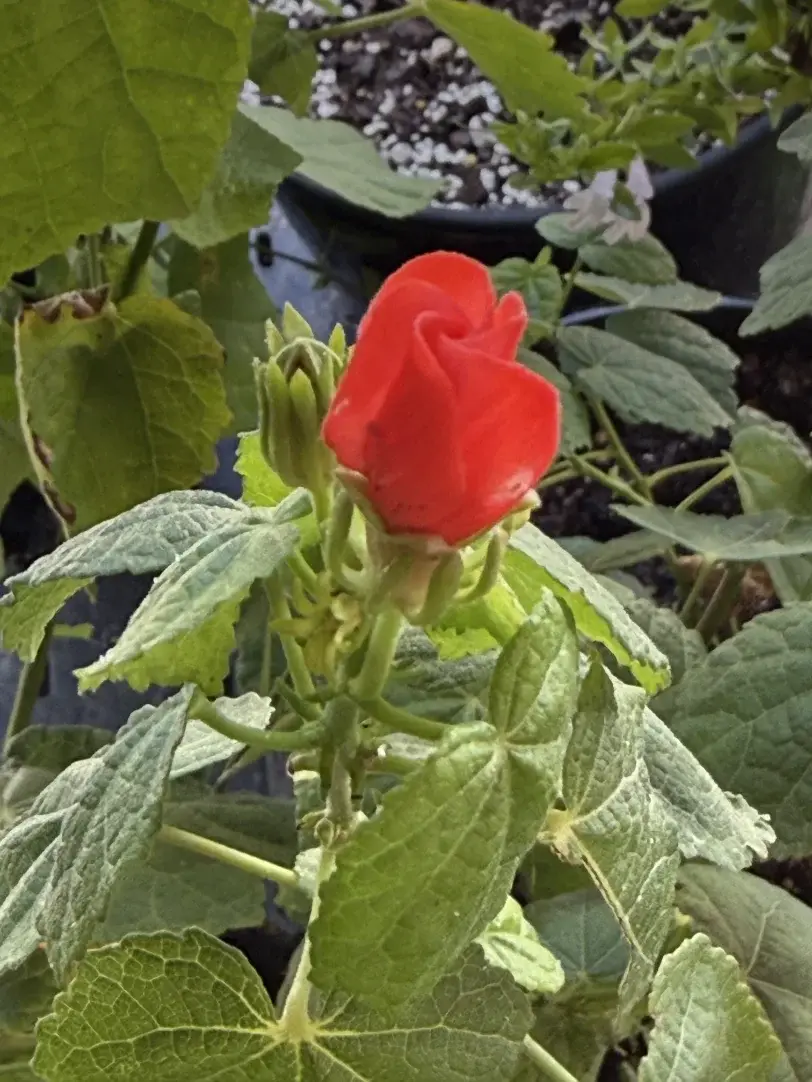
A shade-loving native perennial with distinctive spiraled red blooms that flower nonstop from late spring through fall.