
Current stock
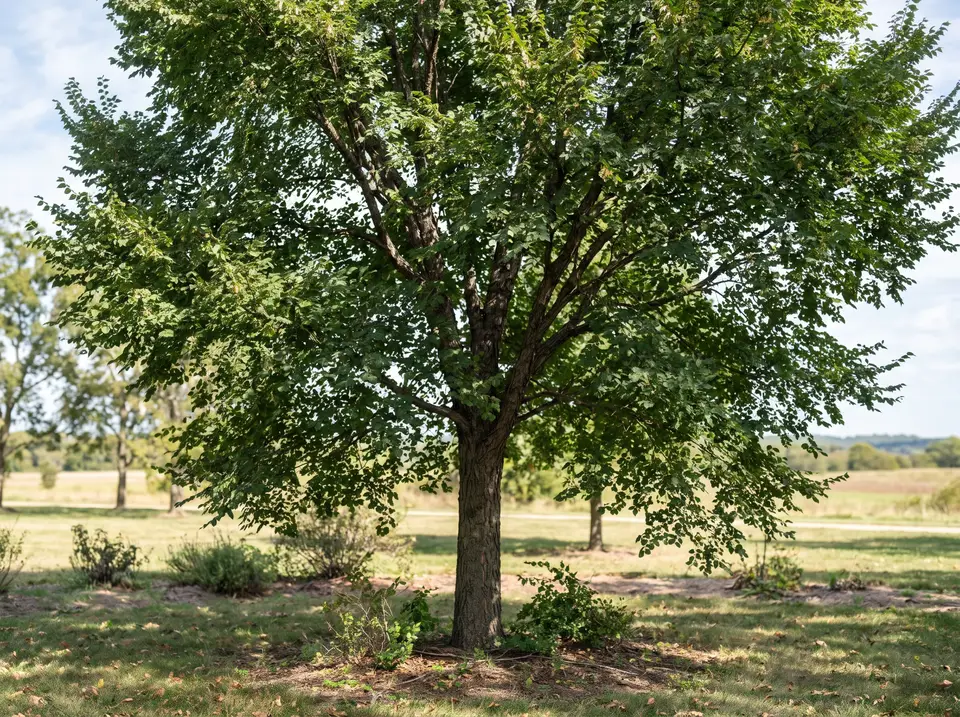
Cedar Elm
Ulmus crassifolia

- Sun
- Full Sun, Part Shade
- Water
- Low, Drought tolerant once established, Moderate
- Mature size
- 40–60 ft tall x 30–50 ft wide
- Best for
- Fast shade tree, Native ecosystem plant, Wildlife cover / habitat, Windbreak
Planting & care
- Growth habit
- Single-trunk tree with broadly rounded to vase-shaped crown; dense shade canopy at maturity
- Typical bloom
- Aug–Sep
- Cold hardy to
- Zones 6–9
- Soil
- Extremely adaptable — rocky limestone, heavy clay, sandy loam, or alluvial soils; pH 6.0–8.5; one of the most soil-adaptable native trees in Texas
Where to plant
Full sun to part shade. This is one of the most soil-adaptable native trees available — it handles rocky limestone, heavy clay, sandy loam, or alluvial soil equally well.
Watering
Water regularly the first couple of years to establish deep roots. Once established, it's drought tolerant and also handles occasional wet clay without issue.
Cutting back
Train young trees to a single leader in their first few years. Once the form is established, pruning needs are minimal — mainly removing crossing or damaged branches.
About Cedar Elm
Cedar Elm is everywhere across North Texas if you know what to look for — on the limestone hills, in the creek bottoms, at the edge of every post oak woodland. It's the region's signature native shade tree, and for good reason: it handles clay, drought, alkaline soil, and summer heat with a reliability few trees can match.
Small, rough-textured leaves give the canopy a fine, dense texture that casts genuinely cool shade through the hottest months, and in fall the whole tree turns a clean, consistent golden yellow — one of the more dependable fall color displays among Texas natives. Unlike other elms, Cedar Elm blooms and sets its small winged seeds in late summer rather than spring, a subtle quirk that sets it apart botanically.
At maturity it grows into a broad, rounded to vase-shaped crown 40 to 60 feet tall, substantial enough to anchor a landscape as a specimen shade tree or work in a row as a windbreak. Its dense branching also provides real nesting habitat for birds, and the tree serves as a host plant for a number of moth and butterfly species.
For anyone planting a shade tree in North Texas who wants something that actually belongs here — not something that struggles through its second summer — Cedar Elm is about as close to a sure thing as native trees get.
Where it's native
Cedar Elm occurs naturally in 7 Texas ecoregions — Blackland Prairies, Cross Timbers and Prairies, Post Oak Savannah, Pineywoods, Gulf Prairies and Marshes, South Texas Plains, Edwards Plateau. Plants grown from local ecotypes are best adapted to our soils and climate here in the Blackland Prairies.
- 1Trans-Pecos
- 2High Plains
- 3Rolling Plains
- 4Edwards Plateau
- 5Cross Timbers and Prairies
- 6South Texas Plains
- 7Blackland Prairies
- 8Post Oak Savannah
- 9Gulf Prairies and Marshes
- 10Pineywoods
Plants it grows well with
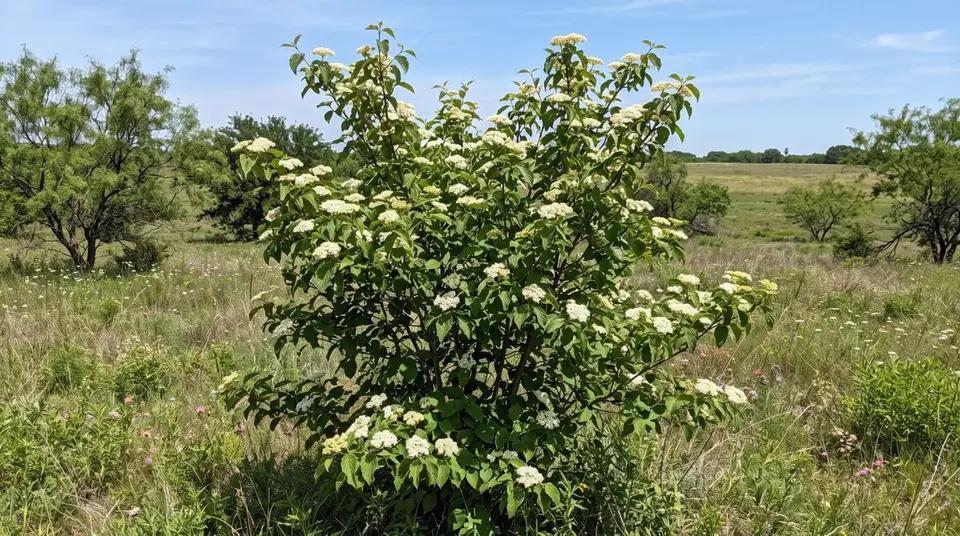
Roughleaf Dogwood
A fast-growing native shrub that forms a dense, bird-filled privacy screen with spring blooms and summer berries.
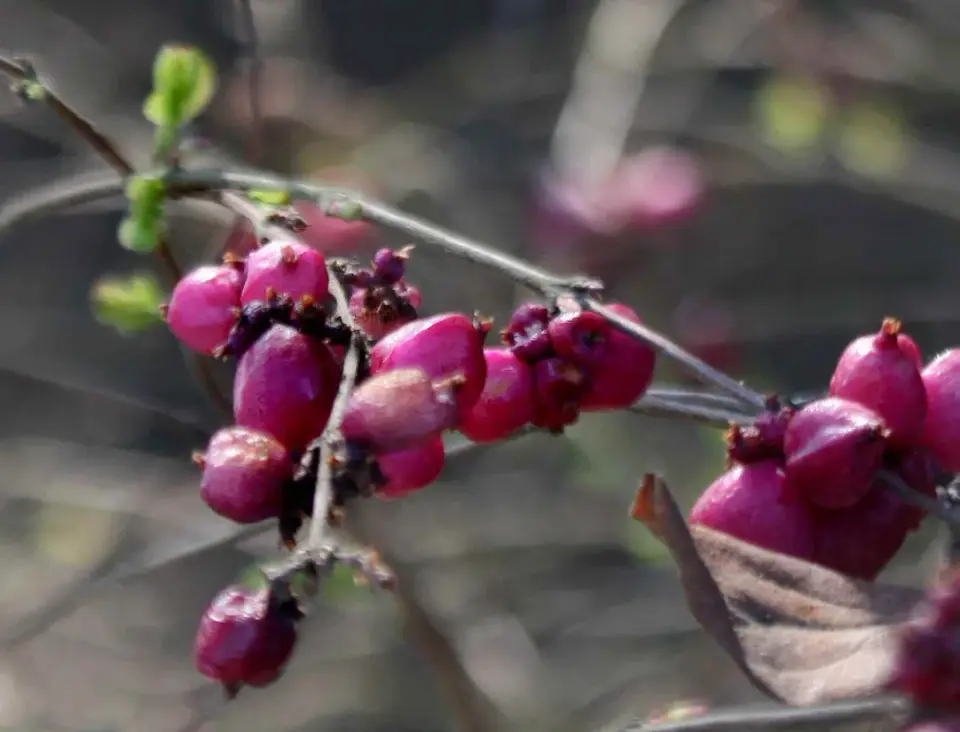
Coralberry
A tough, shade-tolerant native shrub that transforms every fall into a striking display of coral-pink to magenta berries.
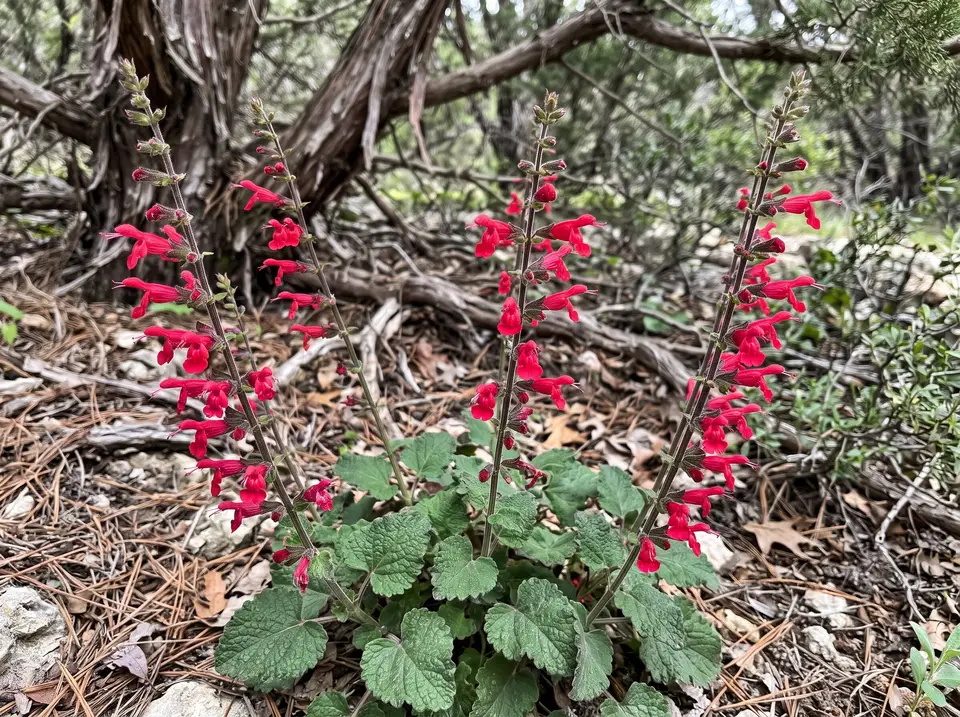
Cedar Sage
A shade-tolerant native sage with vivid red blooms that draw hummingbirds during spring migration.