
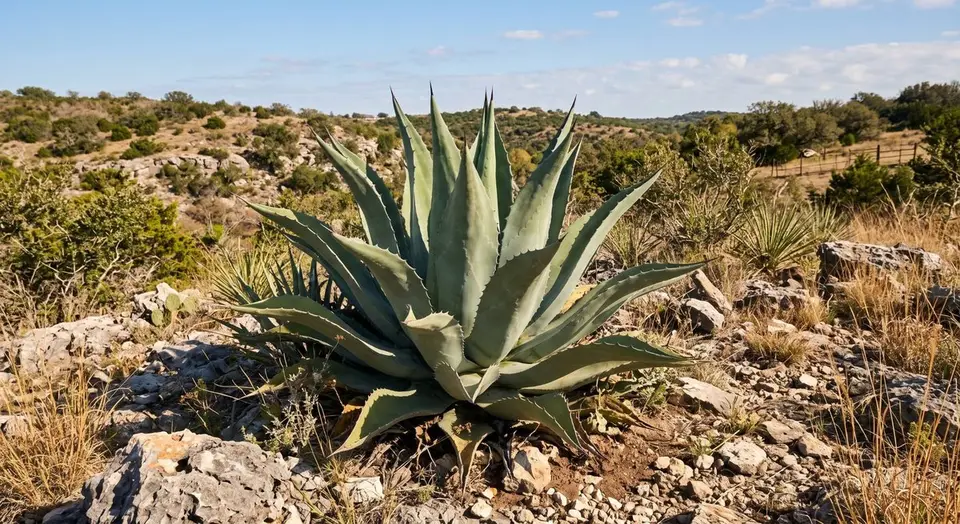
Blue Agave
Agave americana
- Sun
- Full Sun
- Water
- Drought tolerant once established, Prefers dry conditions once established
- Mature size
- 6-8 ft tall x 8-10 ft wide (flower stalk 15-30 ft)
- Best for
- Drought-tolerant Landscaping, Low maintenance, Hummingbird attractor
Planting & care
- Growth habit
- Large, evergreen rosette of thick, blue-gray, sword-shaped leaves with sharp teeth and a terminal spine; slowly forms clusters by offsets
- Typical bloom
- Jun–Aug
- Cold hardy to
- Zones 8–10
- Soil
- Very well-drained; thrives in sandy, rocky, and lean soils; intolerant of constantly wet soil
Where to plant
Full sun and sharp drainage. This is a big plant, reaching eight to ten feet across, so give it plenty of room and set it back from walkways, driveways, and play areas. In heavy clay, plant on a raised mound or in a raised bed.
Watering
Water lightly the first summer to establish. After that it needs almost no added water, and constantly wet soil is the surest way to lose it.
Winter care
It tolerates cold down to roughly the mid-teens Fahrenheit. In colder North Texas winters, protect young plants during hard freezes, and keep the soil on the dry side, since cold combined with wet soil does the most damage.
After flowering
Each rosette blooms once, after ten to thirty years, then declines. It leaves behind offsets around the base that keep the planting going. Remove the spent plant with gloves and let the offsets fill in.
Handling
The leaf tips and edges are very sharp, and the sap can irritate skin. Wear gloves and long sleeves when working with it.
About Blue Agave
Nothing in a landscape makes a statement quite like a blue agave. Agave americana grows into a huge, symmetrical rosette of thick, blue-gray leaves, each one edged with teeth and tipped with a dark spine, and a single mature plant can span eight to ten feet. It is sculpture that happens to be alive.
The color is the draw. That cool blue-gray reads beautifully against red stone, green shrubs, and white walls, and it looks good in every season, including deep winter, when little else in the garden does. It asks for full sun, poor soil, and almost no water, and it shrugs off the kind of summer that flattens most plants.
The nickname century plant is a bit of an exaggeration. Most plants bloom after ten to thirty years, sending up a flower stalk that can climb fifteen to thirty feet and draw hummingbirds, bees, and bats. After that, the rosette slowly declines, but it does not leave you empty-handed. Offsets appear around the base of the plant over the years, and they keep the planting going.
Give it room, and place it where the sharp leaves will not brush against a walkway or a play area. In return it will anchor a bed for decades with almost no work, a natural partner for red yucca, desert willow, and Texas sage.
Plants it grows well with
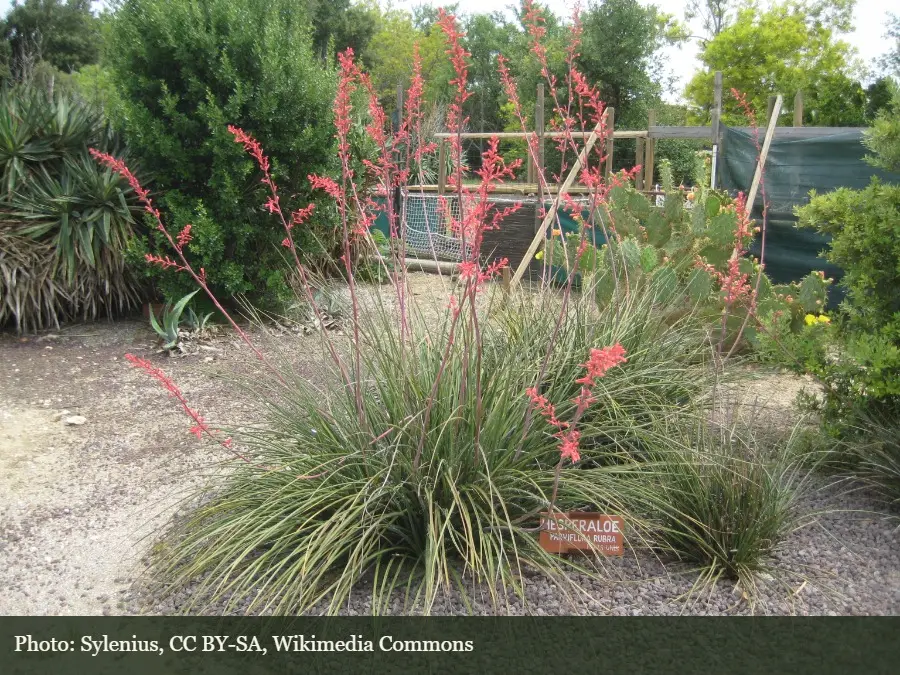
Red Yucca
A soft-leaved, drought-proof native accent plant with towering coral-red blooms that hummingbirds visit all season.
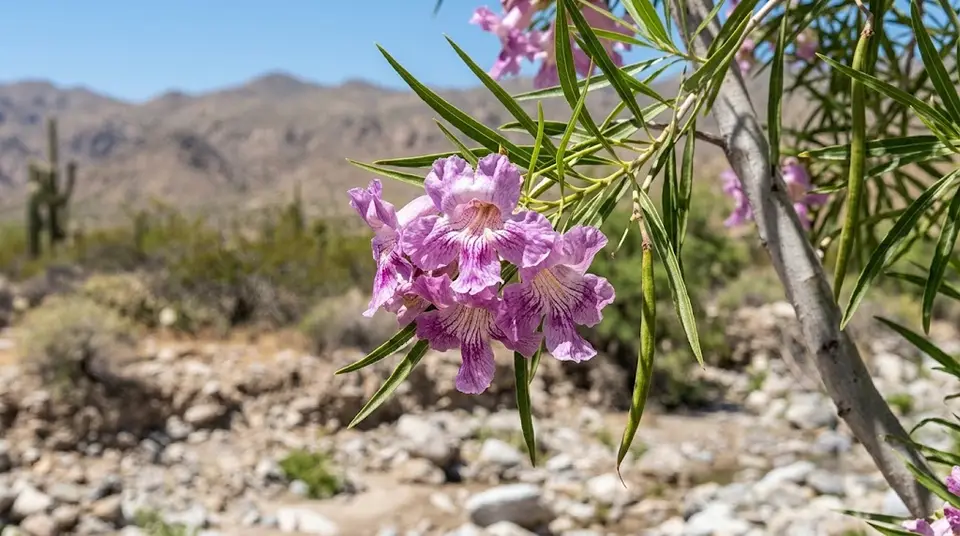
Desert Willow
A fast-growing native flowering tree with orchid-like summer blooms and exceptional drought tolerance.
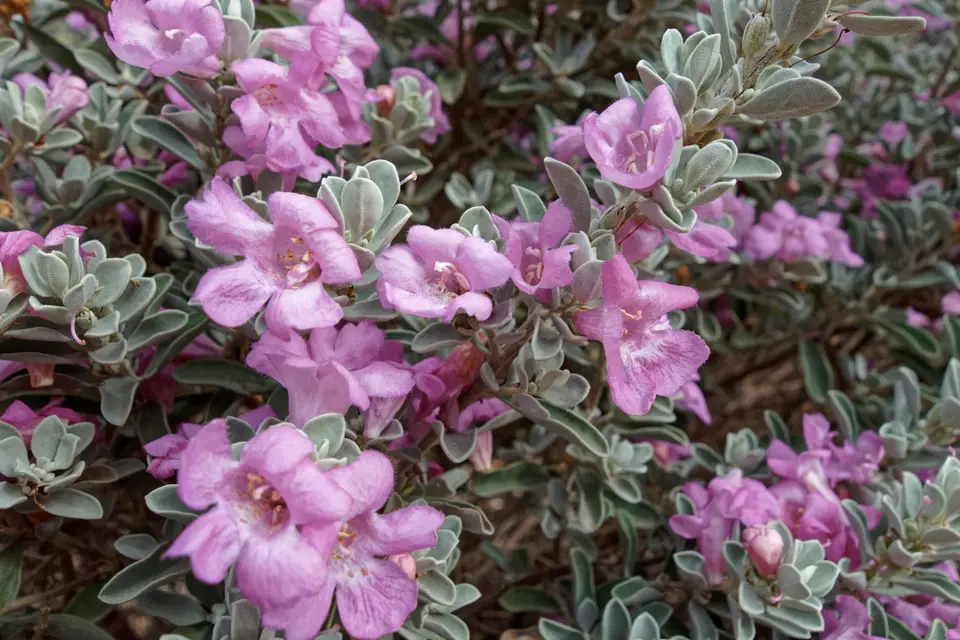
Texas Sage
A silver-leaved native shrub that erupts in surprise blooms after every rain — the legendary "barometer bush."