
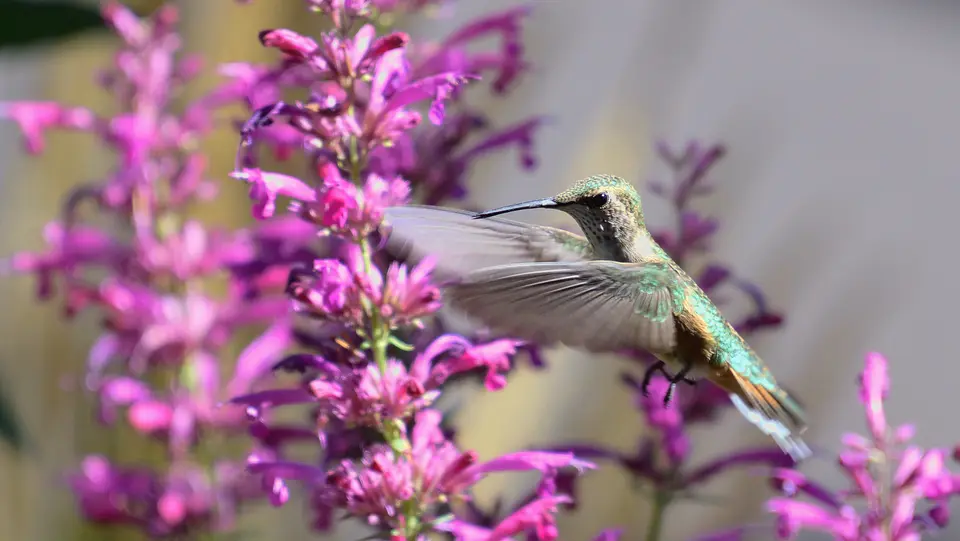
Agastache (Tutti Frutti)
Agastache 'Tutti Frutti' (A. rupestris × A. cana hybrid)
- Sun
- Full Sun
- Water
- Moderate, Drought tolerant once established
- Mature size
- 3–4 ft tall, 2–3 ft wide
- Best for
- Pollinator Plant, Hummingbird attractor, Cut Flowers, Drought-tolerant Landscaping
Planting & care
- Growth habit
- Upright, open, herbaceous perennial on stiff square purple stems; fine-textured, aromatic gray-green foliage
- Typical bloom
- Jul–Oct
- Cold hardy to
- Zones 6–9
- Soil
- Average, well-drained soil; not particular about soil type but prefers alkaline conditions; will die in standing water
Where to plant
Full sun with good drainage. It's not picky about soil type but leans toward alkaline conditions, and it will not tolerate standing water.
Watering
Water regularly the first season to get it established. After that, it's drought tolerant and needs only occasional deep watering during dry stretches.
Cutting back
Deadhead spent flower spikes through the season to keep it blooming. Cut back hard in early spring just before new growth starts, and in colder areas leave the old stems standing over winter for extra protection.
About Agastache (Tutti Frutti)
Tutti Frutti Hyssop sends up spike after spike of raspberry-pink, tubular flowers on sturdy, upright stems from midsummer all the way into fall — right when many other perennials are winding down. Each spike opens gradually from hot-pink buds into a dense column of fuchsia-tinged blooms, giving the plant weeks of continuous color rather than one quick flush.
Hummingbirds and butterflies can't resist it, and on a warm afternoon a mature clump is rarely without visitors. Brush against the fine, gray-green foliage and it releases a bright lemon-anise scent — pleasant to people, but exactly why deer tend to leave this plant alone.
It's a fast, easy grower that asks for little beyond full sun and good drainage, holding its shape on stiff, square stems that rarely need staking even at three to four feet tall. That sturdiness, combined with its long vase life, makes it a favorite for cutting gardens as well as pollinator beds.
In a mixed border, its fine, upright texture adds vertical structure without crowding out its neighbors — a plant that works as hard visually as it does for the wildlife it attracts.
Plants it grows well with
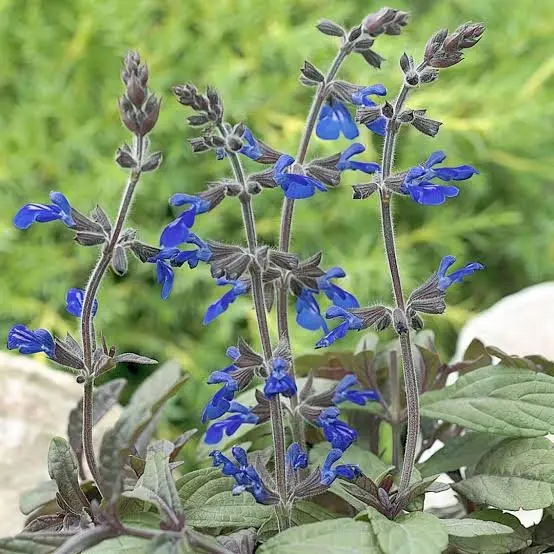
Bicolor Salvia
Bicolor salvia is a low, spreading sage with dark green leaves and deep blue-violet flowers from spring through fall. Bees and hummingbirds visit the blooms, and deer generally leave it alone.
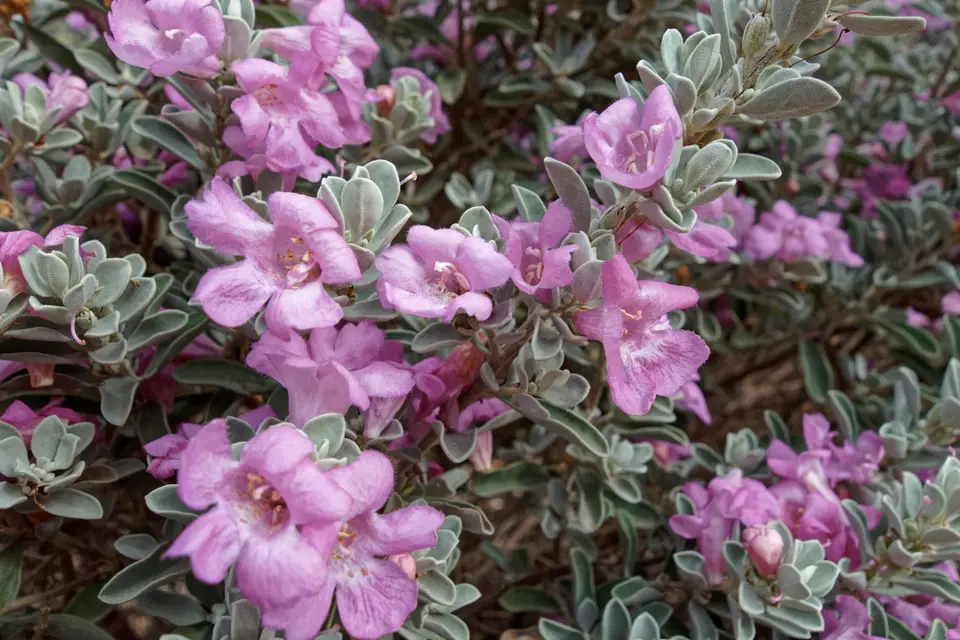
Texas Sage
A silver-leaved native shrub that erupts in surprise blooms after every rain — the legendary "barometer bush."
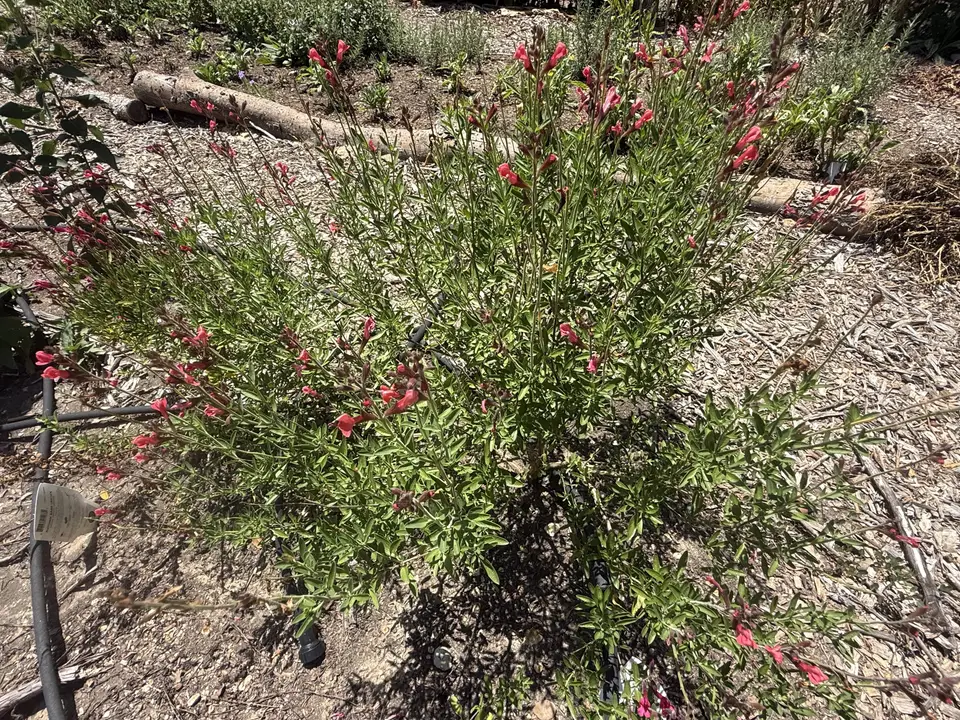
Autumn Sage
A compact, drought-tolerant native shrub that blooms nearly year-round in reds, corals, pinks, and whites.