Wild Foxglove
Penstemon cobaea

- Sun
- Full Sun, Part Shade
- Water
- Low, Moderate, Prefers dry conditions once established
- Mature size
- 2-3 ft tall x 1-2 ft wide
- Best for
- Pollinator Plant
Planting & care
- Growth habit
- Upright clumping with basal rosette
- Typical bloom
- Apr–Jun
- Cold hardy to
- Zones 5–9
- Soil
- Well-drained soil; thrives in sandy, rocky, or limestone soils; dislikes heavy clay unless amended
Where to plant
Full sun to part shade, with the strongest bloom and most upright habit in full sun. Well-drained soil is essential; it thrives in sandy, rocky, or limestone-based soil, and struggles in heavy clay unless significantly amended.
Watering
Low to moderate once established. Water regularly the first growing season to encourage roots; after that, rainfall is generally enough. Never let water stand around the crown — drainage is the most important factor for long-term success.
Cutting back
Minimal pruning needed. Leave seed heads after bloom for natural reseeding, or harvest seed. Cut back spent stalks in summer if desired.
About Wild Foxglove
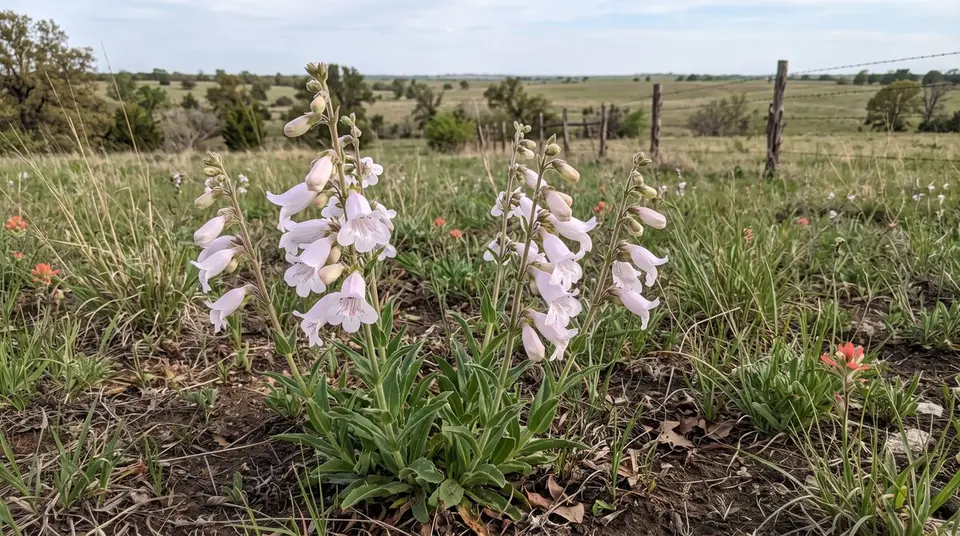
For a Texas native that stops people in their tracks in early spring, Wild Foxglove is the plant. The blooms are massive by native wildflower standards, large, tubular, lavender to pink with a white throat, and they arrive in April, one of the showiest penstemons anywhere and completely native to Texas limestone country.
Smooth, slightly waxy, blue-green leaves form a basal rosette that sends up tall, upright flowering stalks each spring, each one topped with a run of oversized blooms marked with purple nectar guides that lead pollinators straight in.
It's built for the conditions that define North and Central Texas: thin rocky soil, alkaline pH, summer heat, and winter cold. Once settled in, it asks for very little: no fertilizer, minimal water, and a spot with excellent drainage. It reseeds naturally over time, so one plant can become a small colony over a few seasons in the right spot.
Bumblebees and hummingbirds both work these flowers heavily, making it a genuine wildlife plant that earns its place in any pollinator garden, on top of being one of the most dramatic native blooms of the entire spring season.
Where it's native
Wild Foxglove occurs naturally in 4 Texas ecoregions — Blackland Prairies, Cross Timbers and Prairies, Post Oak Savannah, Edwards Plateau. Plants grown from local ecotypes are best adapted to our soils and climate here in the Blackland Prairies.
- 1Trans-Pecos
- 2High Plains
- 3Rolling Plains
- 4Edwards Plateau
- 5Cross Timbers and Prairies
- 6South Texas Plains
- 7Blackland Prairies
- 8Post Oak Savannah
- 9Gulf Prairies and Marshes
- 10Pineywoods