Current stock
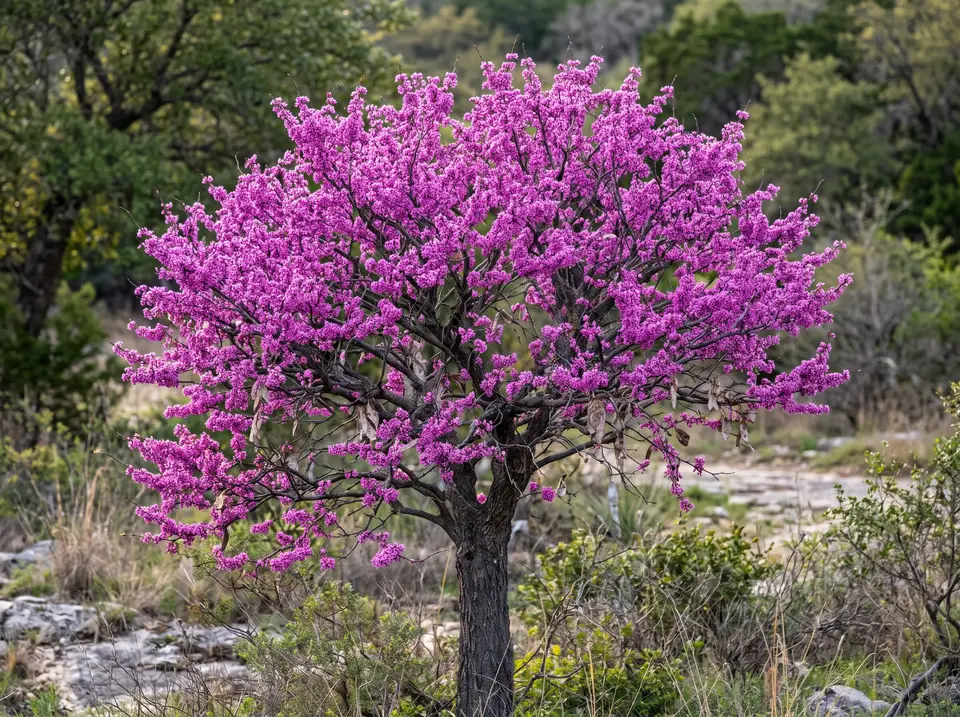
Texas Redbud
Cercis canadensis var. texensis
- Sun
- Full Sun, Part Shade
- Water
- Drought tolerant once established
- Mature size
- 15–20 ft tall x 15–20 ft wide
- Best for
- Ornamental Tree, Understory Tree, Pollinator Plant, Native ecosystem plant
Planting & care
- Growth habit
- Small, rounded, often multi-stem understory tree
- Typical bloom
- Mar
- Cold hardy to
- Zones 6–9
- Soil
- Well-drained soil; tolerates limestone and clay
Where to plant
Full sun to part shade in well-drained soil. Give it room away from walls so the crown can spread.
Watering
Water regularly the first summer. Once established it needs only occasional deep watering in long dry spells.
Pruning
Prune right after flowering. Remove dead or crossing branches and keep shaping light.
About Texas Redbud
Texas redbud is one of the first things to bloom in a Texas spring. In March the bare branches fill with magenta-pink pea flowers, often a few weeks before the leaves appear, and the tree becomes the brightest thing on the lawn.
The foliage is just as useful. The leaves are glossy and leathery with a slightly wavy edge, a form that handles heat and dry spells better than the eastern redbud, and flat seed pods hang on after the leaves are gone. Bees work the early flowers.
At 15 to 20 feet it is sized for a yard, an understory spot or the corner of a patio. It is a true Texas native that fits a smaller space and gives a big show for a few weeks every spring.
Where it's native
Texas Redbud occurs naturally in 4 Texas ecoregions — Blackland Prairies, Cross Timbers and Prairies, Edwards Plateau, Post Oak Savannah. Plants grown from local ecotypes are best adapted to our soils and climate here in the Blackland Prairies.
- 1Trans-Pecos
- 2High Plains
- 3Rolling Plains
- 4Edwards Plateau
- 5Cross Timbers and Prairies
- 6South Texas Plains
- 7Blackland Prairies
- 8Post Oak Savannah
- 9Gulf Prairies and Marshes
- 10Pineywoods
Plants it grows well with
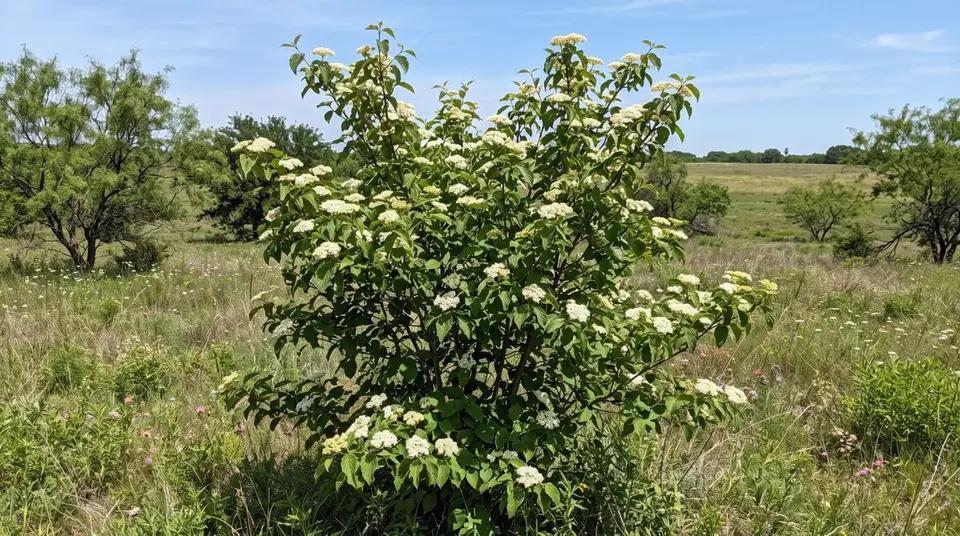
Roughleaf Dogwood
A fast-growing native shrub that forms a dense, bird-filled privacy screen with spring blooms and summer berries.
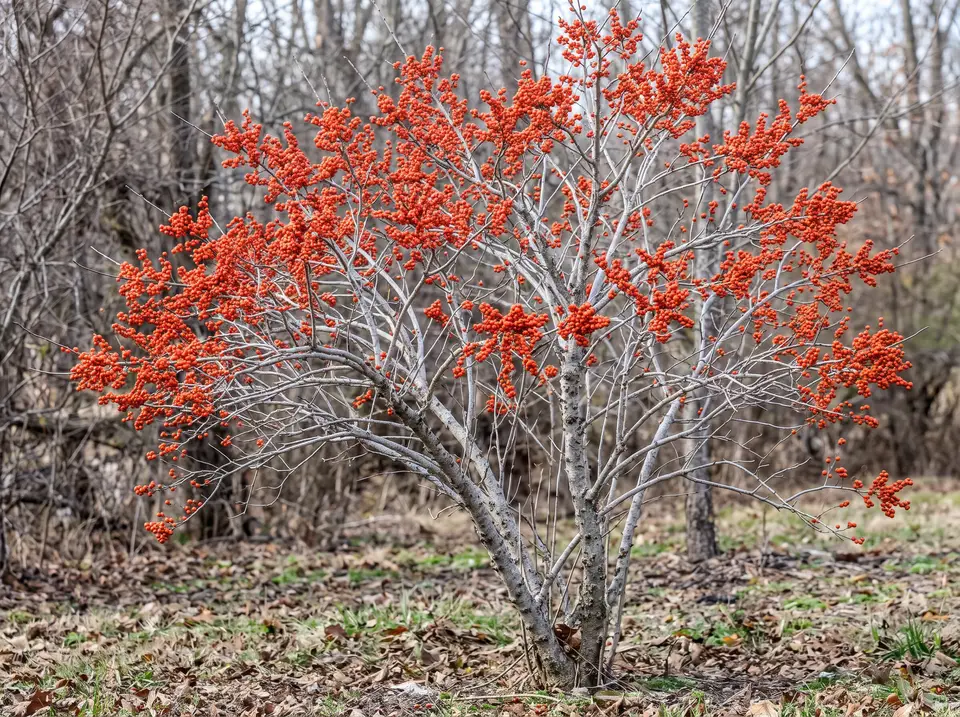
Possumhaw Holly
A native deciduous holly whose bare winter branches load up with bright red berries from fall through February.
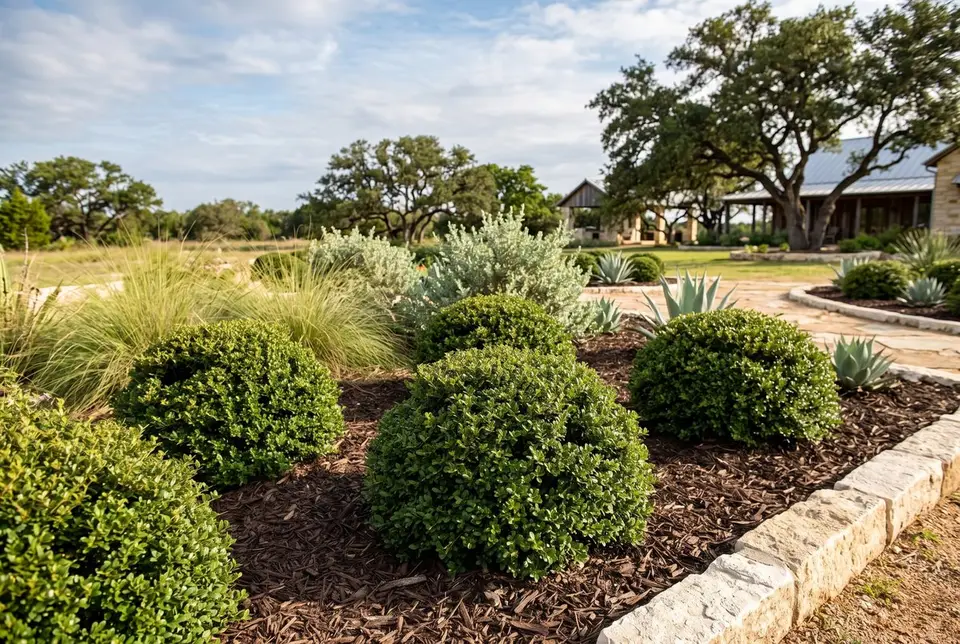
Dwarf Yaupon Holly
Dwarf Yaupon Holly is a compact, mounding evergreen shrub that reaches 3 to 5 feet tall with small, spineless, dark green leaves. It tolerates heat, drought, and clay soil and responds well to shearing for low hedges and borders.