Northern Sea Oats
Chasmanthium latifolium

- Sun
- Full Sun, Part Shade, Shade
- Water
- Prefers moist well drained soil, Moderate
- Mature size
- 2–4 ft tall, forming clumps 1.5–2 ft wide
- Best for
- Shade garden, Erosion Control, Wildlife cover / habitat, Groundcover
3 Gallon — $20 — only 2 left
About this size
- 3 Gallon
- A larger, more established plant — more size and root system from day one.
Pay at the nursery, plus 6.75% sales tax. Send your request and we'll confirm availability and your pickup time within 24 hours, then hold your plants. How it works
Planting & care
- Growth habit
- Clump-forming with short spreading rhizomes; upright, arching culms; spreads slowly by rhizome and more readily by self-seeding in moist, shaded sites
- Typical bloom
- Jul–Sep
- Cold hardy to
- Zones 4–9
- Soil
- Prefers rich, moist, well-drained loams but adapts to clay and average garden soils; tolerant of the range of conditions found in creek bottoms and shaded beds; tolerates brief flooding
Where to plant
Part shade to full shade is best; tolerates full sun only with consistent moisture. Prefers rich, moist, well-drained soil but adapts to clay and average garden conditions.
Watering
Medium to consistently moist. Tolerates occasional flooding and heavier soils better than most grasses.
Cutting back
Cut back to the basal rosette in late February, just before new growth begins. This removes tattered winter foliage and spent seed heads and keeps the clump looking fresh. Cut back seed heads before they fully ripen in fall if you want to limit self-seeding.
About Northern Sea Oats
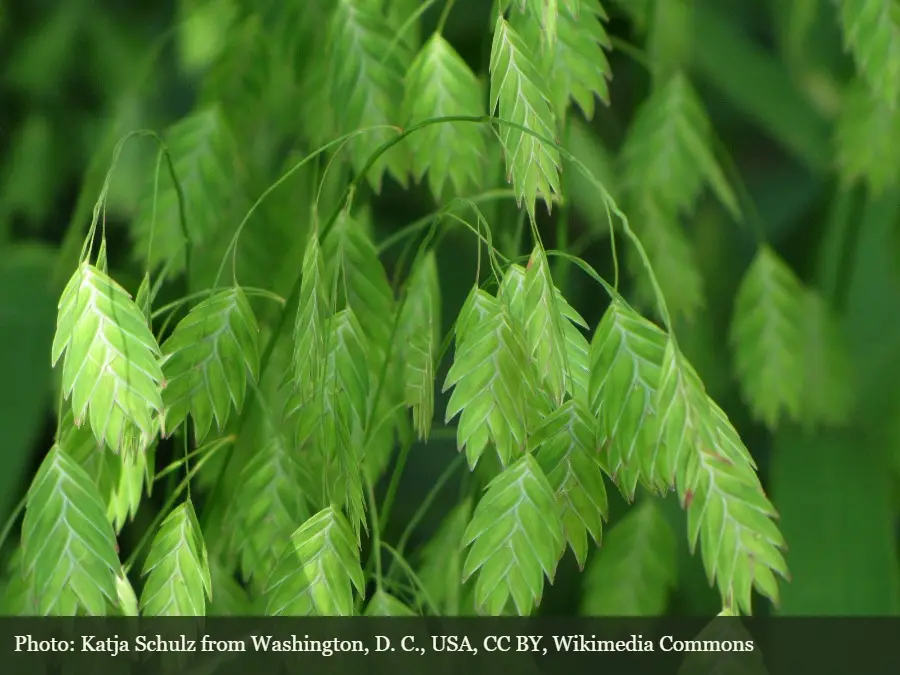
For a shady spot where nothing else seems to want to grow, Northern Sea Oats might be the answer. This native Texas grass thrives exactly where most ornamental grasses struggle — under trees, along a shaded fence line, or in a damp corner near a downspout. Its arching, bamboo-like leaves stay a soft blue-green through the growing season, and by mid-summer it sends up dangling, oat-like seed heads that catch the breeze and turn heads.
As the seasons shift, the show keeps going: seed heads ripen from pale green to ivory, then deepen into a rich bronze-purple that lasts well into winter, giving months of texture and movement in the landscape. It's a favorite for dried arrangements too. Once established, this grass asks for very little beyond consistent moisture and a yearly haircut in late winter, quietly spreading into a graceful, low-maintenance stand that gets better every year.
Northern Sea Oats is a plant for problem spots: shady, moist areas where other grasses give up. It solves that problem beautifully, and it does it as a true Texas native that supports local birds and butterflies along the way.
Where it's native
Northern Sea Oats occurs naturally in 5 Texas ecoregions — Pineywoods, Post Oak Savannah, Blackland Prairies, Cross Timbers and Prairies, Edwards Plateau. Plants grown from local ecotypes are best adapted to our soils and climate here in the Blackland Prairies.
- 1Trans-Pecos
- 2High Plains
- 3Rolling Plains
- 4Edwards Plateau
- 5Cross Timbers and Prairies
- 6South Texas Plains
- 7Blackland Prairies
- 8Post Oak Savannah
- 9Gulf Prairies and Marshes
- 10Pineywoods