Fragrant Sumac
Rhus aromatica

- Sun
- Full Sun, Part Shade
- Water
- Low, Drought tolerant once established
- Mature size
- 2-6 ft tall x 6-10 ft wide
- Best for
- Wildlife cover / habitat, Birds eat berries, Erosion Control, Natural hedge
Gallon — $14
About this size
- Gallon
- Our standard size: a 1-gallon nursery pot, about 6–7 inches across.
Pay at the nursery, plus 6.75% sales tax. Send your request and we'll confirm availability and your pickup time within 24 hours, then hold your plants. How it works
Planting & care
- Growth habit
- Low, spreading, colony-forming via underground suckers
- Typical bloom
- Feb–Mar
- Cold hardy to
- Zones 3–9
- Soil
- Highly adaptable; tolerates clay, poor soils, and slopes
Where to plant
Full sun to part shade — most compact and colorful in full sun. It's highly adaptable to clay, rocky, or poor soil, including slopes.
Watering
Low once established. Water regularly the first season to build deep roots; after that, it's extremely drought tolerant in native soils.
Cutting back
Optional. It can be cut back hard in late winter to refresh older plants or control spread, and responds well to rejuvenation pruning. Manage suckers if you want to keep it within a defined footprint.
About Fragrant Sumac
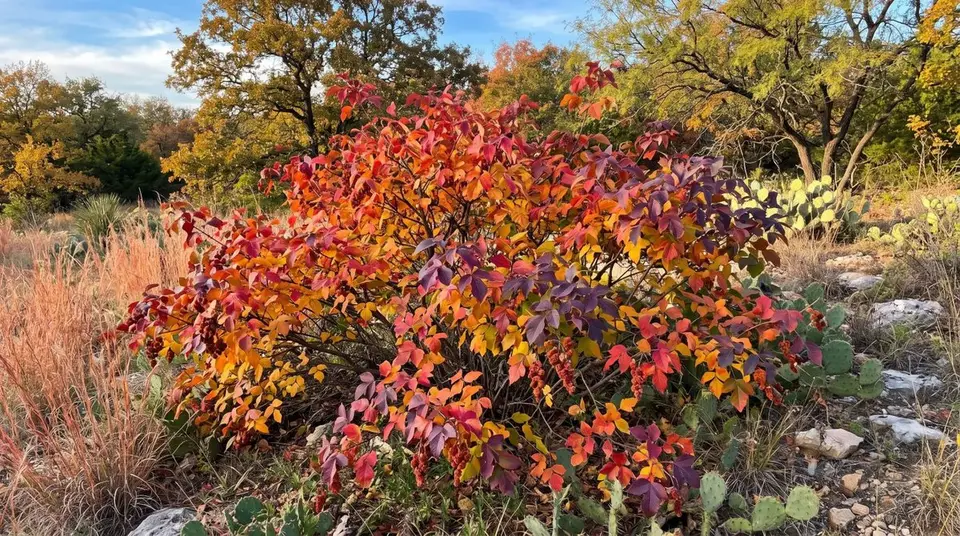
If you're looking for a tough, low-maintenance native shrub that earns its keep in every season, Fragrant Sumac is the one. This colony-forming deciduous shrub puts on a spectacular fall color show in reds, oranges, and purples, produces clusters of fuzzy red berries that birds can't resist through winter, and blooms with early pollen-rich catkins in February and March before most plants wake up.
Its three-leaflet compound leaves release a lemony, spicy scent when crushed — a distinctive identifying trait, and one that sets it apart from the poison ivy it can superficially resemble. It spreads via underground runners to form a dense, weed-suppressing groundcover that's nearly impossible to kill once established.
On slopes and difficult dry spots where little else survives, Fragrant Sumac thrives, built for heavy clay soils, dry summers, and the wide temperature swings that define North Texas weather. Once established, it asks for almost nothing.
Birds from bluebirds to cedar waxwings rely on its winter berries, and native bees count on the early catkins when almost nothing else is in bloom — a rare combination of brilliant fall color, real wildlife value, and genuine drought toughness in one native shrub.
Where it's native
Fragrant Sumac occurs naturally in 5 Texas ecoregions — Blackland Prairies, Cross Timbers and Prairies, Edwards Plateau, Post Oak Savannah, Rolling Plains. Plants grown from local ecotypes are best adapted to our soils and climate here in the Blackland Prairies.
- 1Trans-Pecos
- 2High Plains
- 3Rolling Plains
- 4Edwards Plateau
- 5Cross Timbers and Prairies
- 6South Texas Plains
- 7Blackland Prairies
- 8Post Oak Savannah
- 9Gulf Prairies and Marshes
- 10Pineywoods