Current stock
Buttonbush
Cephalanthus occidentalis
- Sun
- Full Sun, Part Shade
- Water
- Moderate, High, Prefers moist well drained soil
- Mature size
- 6–12 ft tall x 5–10 ft wide
- Best for
- Pollinator Plant, Wildlife cover / habitat
Planting & care
- Growth habit
- Rounded, upright, multi-stemmed shrub with dense branching and somewhat irregular natural form.
- Typical bloom
- May–Sep
- Cold hardy to
- Zones 5–9
- Soil
- Adaptable to clay, loam, sandy loam, and poorly drained soils. Performs best in organically rich soils with moderate fertility. Tolerates acidic to neutral pH well and handles heavy North Texas clay better than many shrubs.
Where to plant
Full sun to part shade, with at least 6 hours of sun for the best flowering. This is one of the few shrubs that thrives in consistently moist or even periodically flooded soil — a great fit for low spots, rain gardens, or pond edges.
Watering
Water regularly the first season while it establishes. It tolerates wet feet better than almost any other landscape shrub, and appreciates extra water during prolonged drought even once established.
Cutting back
Light shaping in late winter is enough for most plants. Older plants can be rejuvenated with a harder prune if needed. Note: all parts of the plant are considered toxic to humans and livestock if consumed in quantity.
About Buttonbush
If you have a low spot that stays wet, a drainage area, or a pond edge that nothing wants to grow in, Buttonbush was made for it. This native shrub doesn't just tolerate wet conditions — it prefers them, handling periodic flooding that would kill most landscape plants without missing a beat.
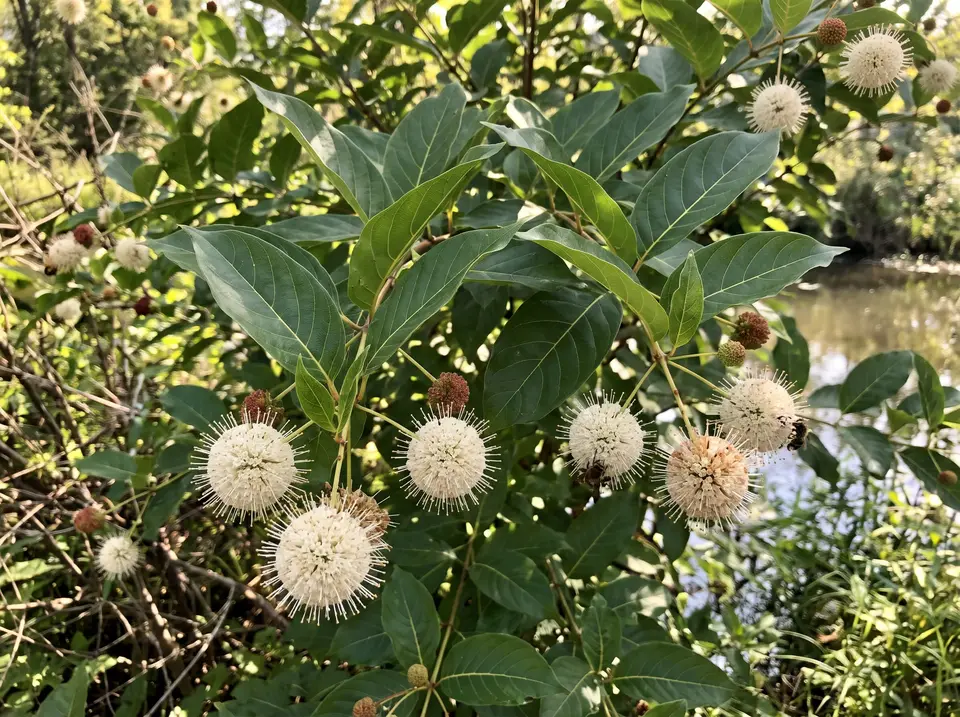
What it produces in return is one of the most distinctive flowers in the native plant world. The blooms are perfectly spherical, about the size of a ping-pong ball, creamy white, and densely packed with protruding stamens that give them a fireworks or pincushion look unlike anything else blooming in a Texas garden. When they open in summer, butterflies, bumblebees, native bees, moths, and hummingbirds all show up at once, drawn by the concentrated nectar in each globe.
The glossy, dark green leaves and rounded, multi-stemmed form give the shrub a full, lush presence through the growing season, and the round seed heads that follow the flowers add texture into fall and winter, when they're picked over by ducks and other waterfowl in wetter settings.
Native throughout East and Central Texas, it grows into a substantial, cold-hardy shrub that handles Texas heat well as long as moisture is available, and asks for very little once it's settled into the right spot — a plant that turns a problem area into one of the most wildlife-active corners of the yard.
Where it's native
Buttonbush occurs naturally in 6 Texas ecoregions — Pineywoods, Post Oak Savannah, Gulf Prairies and Marshes, Blackland Prairies, Cross Timbers and Prairies, Edwards Plateau. Plants grown from local ecotypes are best adapted to our soils and climate here in the Blackland Prairies.
- 1Trans-Pecos
- 2High Plains
- 3Rolling Plains
- 4Edwards Plateau
- 5Cross Timbers and Prairies
- 6South Texas Plains
- 7Blackland Prairies
- 8Post Oak Savannah
- 9Gulf Prairies and Marshes
- 10Pineywoods