Big Bluestem
Andropogon gerardii
- Sun
- Full Sun
- Water
- Drought tolerant once established
- Mature size
- 4–7 ft tall in bloom, 2–3 ft wide
- Best for
- Fall Color, Ornamental Grass, Wildlife cover / habitat, Native ecosystem plant
Planting & care
- Growth habit
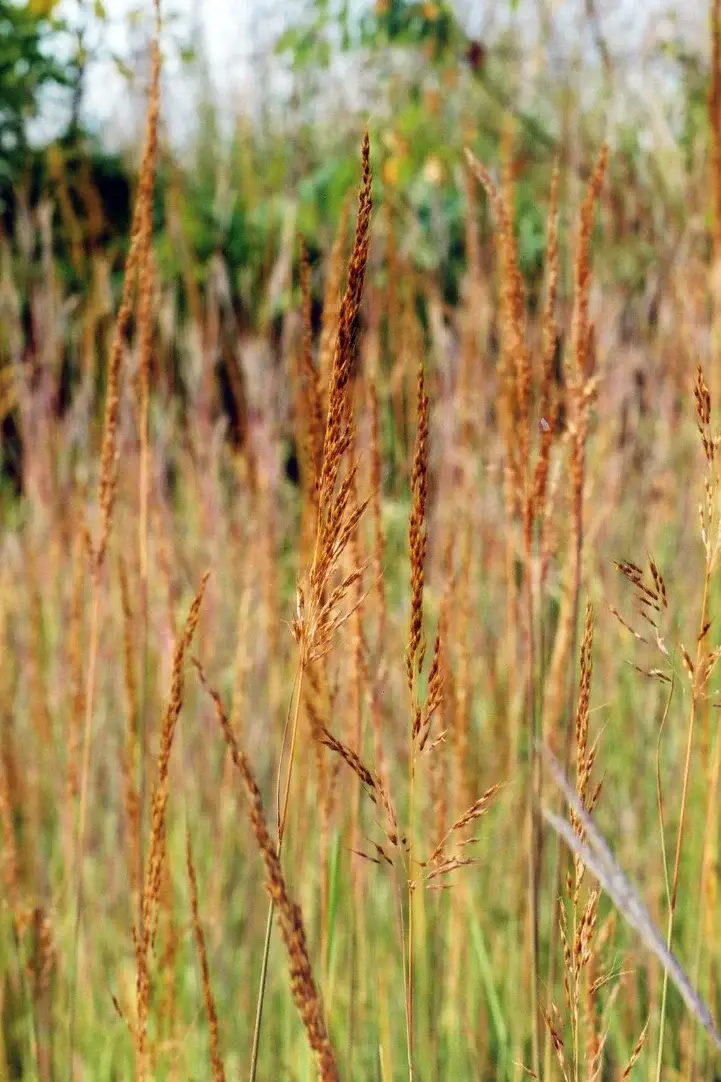
- Upright, clump-forming; tall arching blades; iconic 3-parted turkey-foot seed heads
- Typical bloom
- Jul–Sep
- Cold hardy to
- Zones 4–9
- Soil
- Adaptable — loam, clay, or rocky soils; limestone-tolerant; prefers well-drained sites but tolerates some clay compaction
Where to plant
Full sun — at least 6 hours of direct sun for the best form and bloom. Adaptable to clay, loam, or rocky soil; lean soil actually produces a more upright, attractive habit than rich soil.
Watering
Water regularly the first growing season to establish deep roots. After that, rainfall is generally enough — this is a genuinely drought-tolerant plant once established.
Cutting back
Cut to 4–6 inches in late February or early March, before new growth starts. Leave the tall dried stems and seed heads standing through winter — they hold up well and feed birds through the cold months.
About Big Bluestem
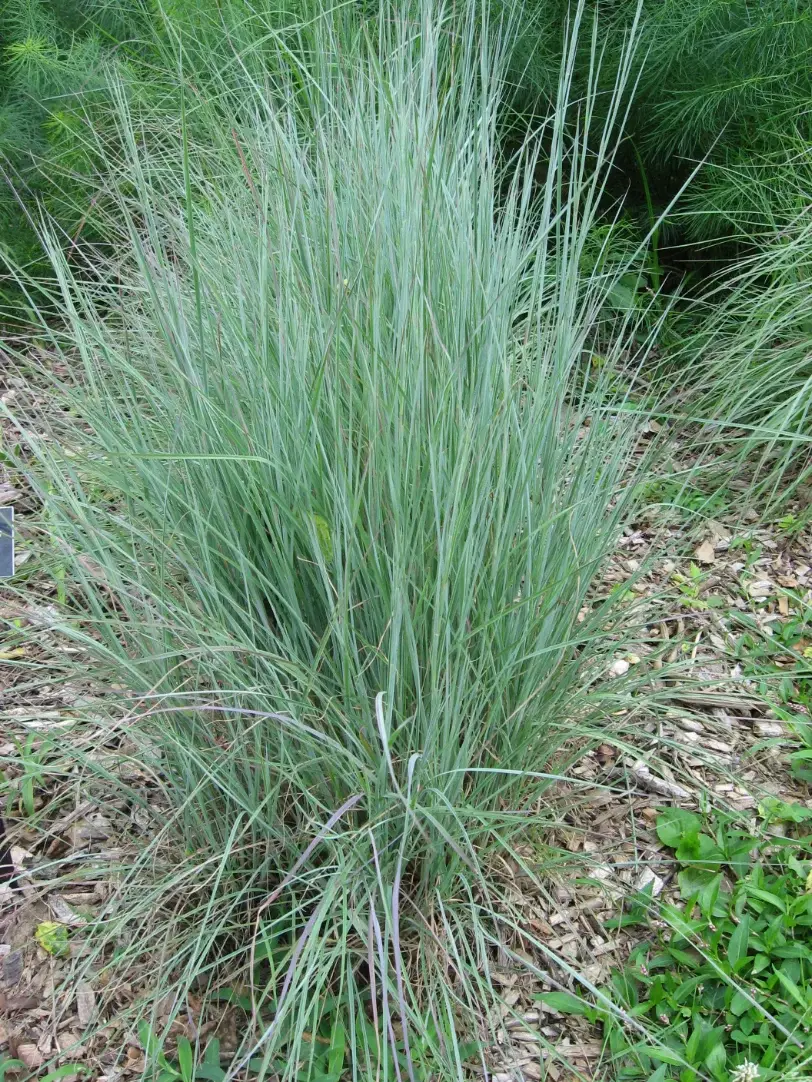
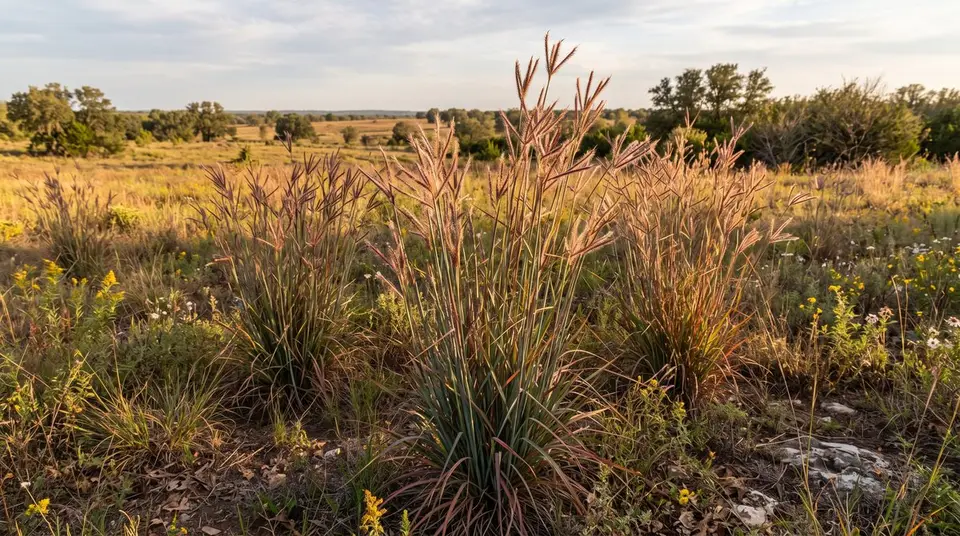
If you want to bring a piece of the Texas tallgrass prairie into the yard, Big Bluestem is where to start. This is the grass that once covered millions of acres across North Texas, the signature species of the blackland prairie, and it's every bit as commanding in a home landscape as it was on the open plain.
All summer it builds into a tall, graceful clump of blue-green foliage reaching four to seven feet, moving easily in the wind. Then in August, the turkey-foot seed heads emerge — three-pronged, purplish-bronze, held high above the plant. By October the whole clump has turned copper, orange, and deep burgundy-red, one of the best fall displays of any native grass, and the seed heads carry food for migrating sparrows and finches straight through winter.
It's built for exactly the conditions that define life here: heavy clay, summer heat, and unpredictable rainfall. Once established, it runs on rainfall alone, asks for nothing, and comes back taller and fuller every year.
For anyone who wants something dramatic, ecologically meaningful, and genuinely low-maintenance, Big Bluestem delivers on all three — structure through four full seasons and a story that resonates with anyone thinking about habitat and restoration.
Where it's native
Big Bluestem occurs naturally in 5 Texas ecoregions — Post Oak Savannah, Blackland Prairies, Cross Timbers and Prairies, Rolling Plains, High Plains. Plants grown from local ecotypes are best adapted to our soils and climate here in the Blackland Prairies.
- 1Trans-Pecos
- 2High Plains
- 3Rolling Plains
- 4Edwards Plateau
- 5Cross Timbers and Prairies
- 6South Texas Plains
- 7Blackland Prairies
- 8Post Oak Savannah
- 9Gulf Prairies and Marshes
- 10Pineywoods