Current stock
Mexican Plum
Prunus mexicana

- Sun
- Full Sun, Part Shade
- Water
- Low, Moderate, Drought tolerant once established
- Mature size
- 15–25 ft tall x 15–20 ft wide
- Best for
- Edible Fruit, Wildlife cover / habitat
Better with a pollination partner
Blooms well on its own, but sets far more plums with a second Mexican plum planted nearby.
Planting & care
- Growth habit
- Upright, rounded canopy; can sucker and form thickets if unmanaged
- Typical bloom
- Feb–Mar
- Cold hardy to
- Zones 6–8
- Soil
- Adaptable; prefers well-drained soils but tolerates clay
Where to plant
Full sun to part shade, with the best bloom density and fruit production in full sun. It's adaptable to clay, loam, or sandy soil; good drainage is essential.
Watering
Water regularly during the first two growing seasons to encourage deep roots. After that, supplemental irrigation is rarely needed. Avoid standing water or consistently wet soil.
Cutting back
Prune in summer to shape the tree, remove suckers from the base, and improve airflow through the canopy. It can be trained to a single trunk for a cleaner specimen look, or left to develop multi-stem for a more natural, thicket-like habit.
About Mexican Plum
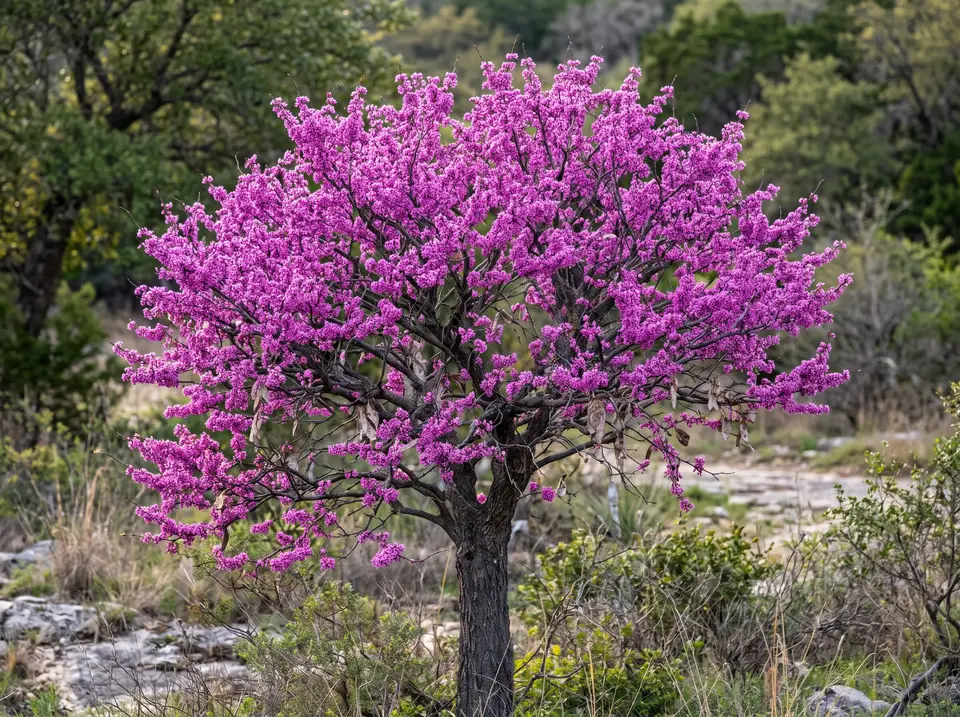
If you want a Texas native tree that stops traffic in late February, before your neighbors' ornamentals have even thought about waking up, Mexican Plum is it. When everything else is still brown and dormant, this tree erupts in clouds of fragrant white flowers, filling the winter air with a scent that signals spring before spring arrives. It's one of the earliest-blooming native trees in North Texas.
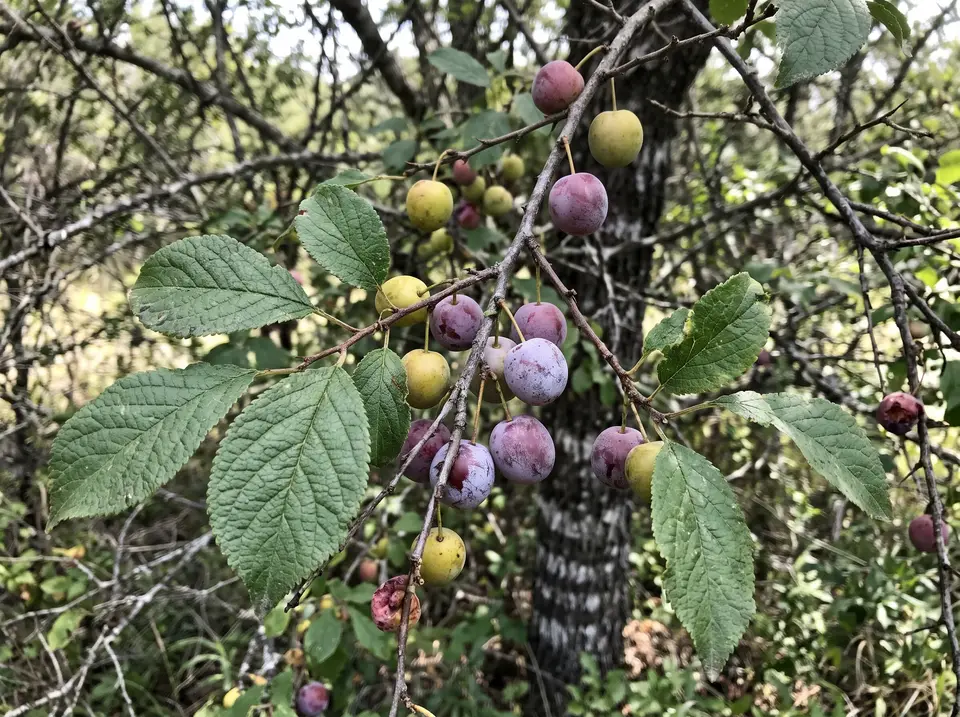
Simple, finely toothed leaves emerge after the flowers, and mature bark develops an attractive scaly, interlocking pattern that adds interest even in winter. The fruit that follows those early blooms ripens from green to red to deep purple by early summer — small, tart-sweet plums that wildlife goes after immediately.
A tough, adaptable small tree that tops out around 15 to 25 feet, it's big enough to make a real statement in the landscape and small enough to fit almost any yard. It tolerates clay soil, limestone, and summer heat without complaint, needing no irrigation or fertilizer once established.
Deer, foxes, birds, and a parade of early pollinators depend on this tree when almost nothing else is in flower or fruit — a genuine wildlife anchor that also happens to put on one of the best early spring shows of any native tree.
Where it's native
Mexican Plum occurs naturally in 5 Texas ecoregions — Blackland Prairies, Cross Timbers and Prairies, Post Oak Savannah, Pineywoods, Edwards Plateau. Plants grown from local ecotypes are best adapted to our soils and climate here in the Blackland Prairies.
- 1Trans-Pecos
- 2High Plains
- 3Rolling Plains
- 4Edwards Plateau
- 5Cross Timbers and Prairies
- 6South Texas Plains
- 7Blackland Prairies
- 8Post Oak Savannah
- 9Gulf Prairies and Marshes
- 10Pineywoods