Hardy Hibiscus
Hibiscus moscheutos (and hardy hybrid cultivars)
- Sun
- Full Sun
- Water
- High
- Mature size
- 3–5 ft tall, 3–4 ft wide (some cultivars reach 6–7 ft)
- Best for
- Pollinator Plant, Hummingbird attractor, Native ecosystem plant, Wildlife cover / habitat
7 Gallon — $60 — only 2 left
About this size
- 7 Gallon
- A larger, more established plant — more size and root system from day one.
Pay at the nursery, plus 6.75% sales tax. Send your request and we'll confirm availability and your pickup time within 24 hours, then hold your plants. How it works
Planting & care
- Growth habit
- Upright, multi-stemmed clump; dies completely to the ground each winter and re-emerges from a woody crown/root system in late spring
- Typical bloom
- Jun–Sep
- Cold hardy to
- Zones 4–9
- Soil
- Prefers consistently moist, rich soil; tolerates heavy clay and periodic standing water; adaptable to average garden soil with regular irrigation — poor choice for dry, fast-draining sites without supplemental water
Where to plant
Full sun for the best bloom production. This plant is native to wet, marshy ground and needs consistently moist, rich soil — best sited near a pond, low spot, or anywhere irrigation is easy.
Watering
High. Does not tolerate drought, especially while getting established.
Cutting back
Cut stems to 4–6 inches after the first hard frost blackens the foliage. Pinch tips in late spring, before buds set, to encourage a bushier habit with more bloom sites. It's normal for this plant to be one of the last in the bed to show green each spring.
About Hardy Hibiscus
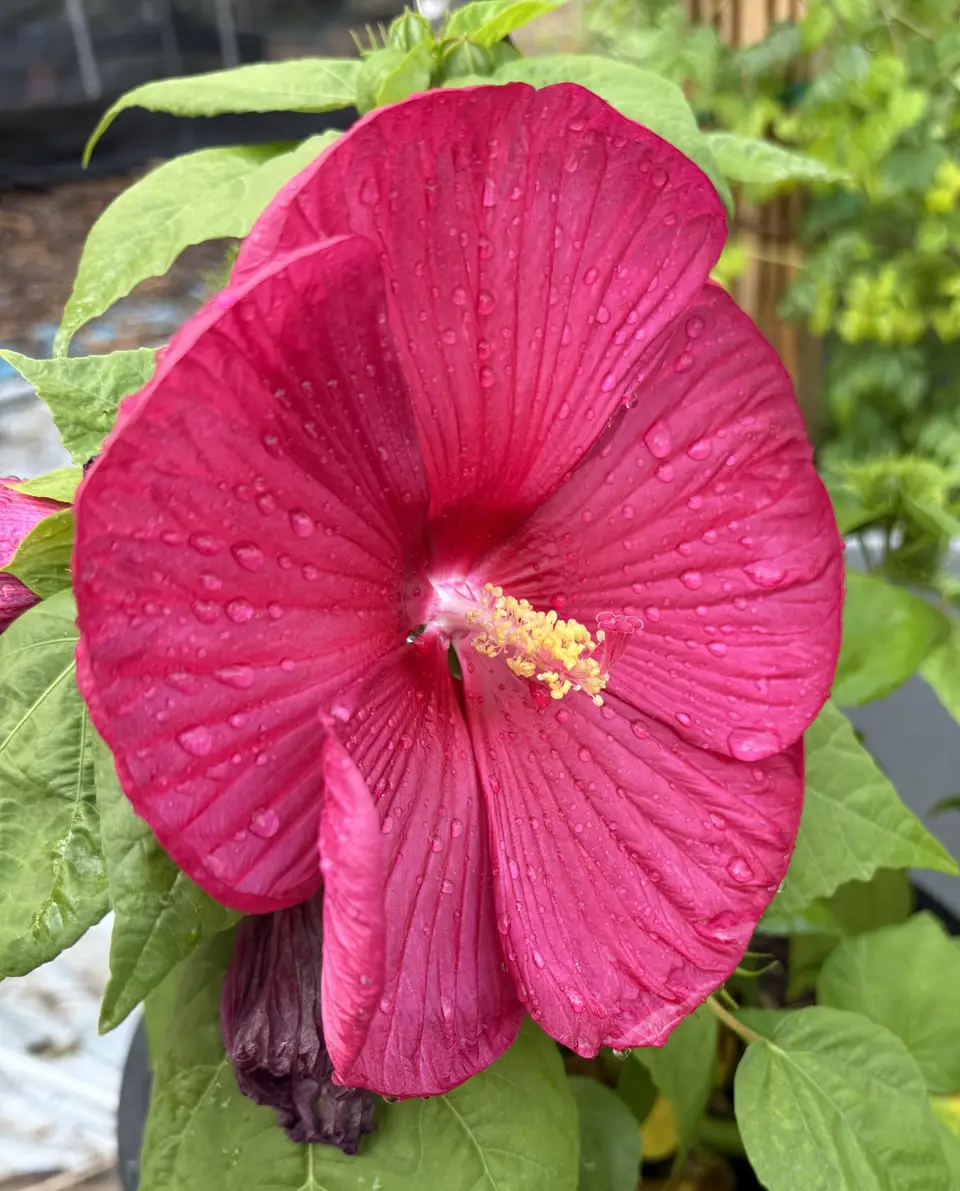
If you want the single biggest "wow" in the garden, Hardy Hibiscus delivers it — blooms sometimes over a foot across, in white, pink, red, or bicolor, opening fresh every single day from June through September. It's the plant that stops neighbors mid-walk.
Native to wet meadows and marsh edges across much of the eastern and central U.S., including parts of Texas, it's built for exactly the spots in a yard that stay a little too wet for other plants — pond edges, low corners, rain gardens. Give it consistent moisture and full sun and it rewards with fast, dramatic growth and nonstop color all summer.
Each fall it dies completely back to the ground, and it's genuinely one of the last plants to reappear in spring — it's normal for it to look dormant well into the season. Once it comes up, though, it comes up fast, often topping four to five feet by midsummer, packed with those enormous blooms that make it one of the most eye-catching perennials around.
For a dramatic focal point in a wet or low-lying spot, nothing else quite matches the scale of a Hardy Hibiscus in full bloom.
Where it's native
Hardy Hibiscus occurs naturally in 4 Texas ecoregions — Pineywoods, Post Oak Savannah, Gulf Prairies and Marshes, Blackland Prairies. Plants grown from local ecotypes are best adapted to our soils and climate here in the Blackland Prairies.
- 1Trans-Pecos
- 2High Plains
- 3Rolling Plains
- 4Edwards Plateau
- 5Cross Timbers and Prairies
- 6South Texas Plains
- 7Blackland Prairies
- 8Post Oak Savannah
- 9Gulf Prairies and Marshes
- 10Pineywoods