Current stock
Bluebonnet
Lupinus texensis
- Sun
- Full Sun
- Water
- Low, Moderate, Drought tolerant once established
- Mature size
- 12-24” tall x 8-16”wide
- Best for
- Pollinator Plant, Native ecosystem plant
Planting & care
- Growth habit
- Low rosette to upright flowering spike
- Typical bloom
- Mar–Apr
- Cold hardy to
- Zones 7–10
- Soil
- Well-drained, prefers sandy/loamy but tolerates clay if not waterlogged. Neutral to slightly alkaline
Where to plant
Full sun — at least 6 hours of direct sun daily. Well-drained soil is essential; sandy, loamy, or clay-loam soils all work as long as drainage is good, and limestone-based alkaline soil is ideal.
Watering
Water gently and consistently right after planting to help the taproot settle in. After the first few weeks, back off significantly — this is a dry-land plant, and overwatering in winter is the most common problem.
After bloom
Let the seed pods mature on the plant if you want it to return next year — they'll shatter and scatter seed in late spring. Leave some bare soil nearby for those seeds to land and germinate in fall. This is a true annual: each plant dies after setting seed, and new plants come from the dropped seed.
About Bluebonnet
There's a reason people pull over on the highway to take pictures in a Bluebonnet field. This is the Texas state flower, the defining image of a North Texas spring, and a plant that means something to people before they ever get interested in native gardening.
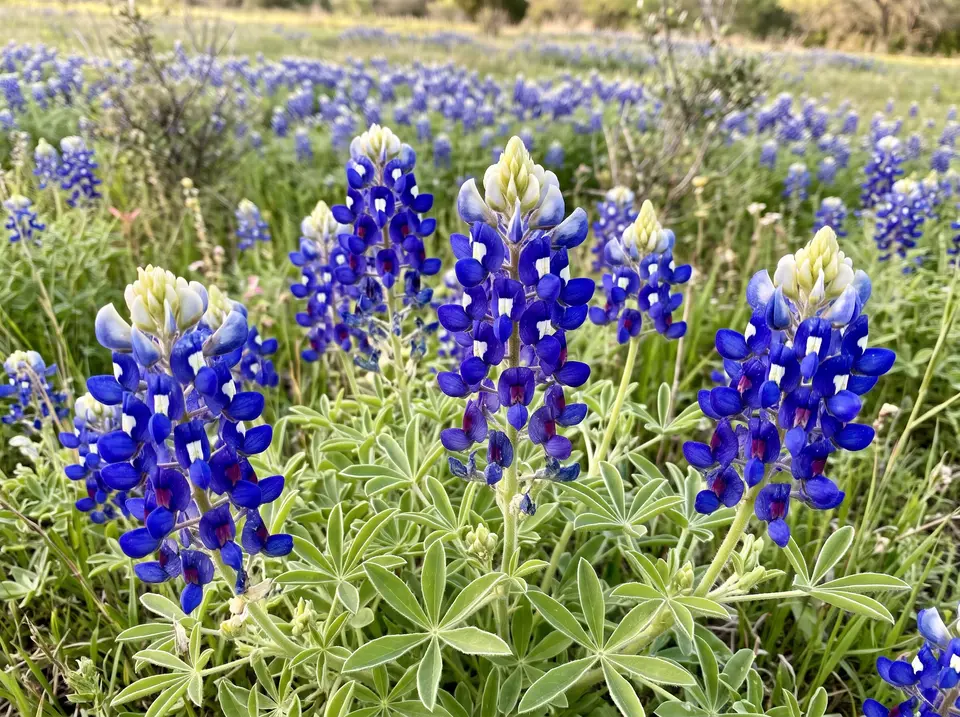
It's a cool-season native that spends winter as a low, silvery-green rosette of soft, hand-shaped leaves — attractive in its own right even before a single flower appears. Then, in March and April, it sends up its signature blue flower spike, densely packed with pea-shaped blooms that open from the bottom up over several weeks.
Look closely at an individual flower and you'll notice the white spot near the top turns reddish-purple after a bee visits it — an active signal to the next bee that the flower has already been pollinated, and a small but fascinating piece of natural behavior playing out right in the garden. The blooms carry a faint, pleasant honey scent as well.
Left in place to set seed, Bluebonnet reseeds itself and returns a little fuller every year, building toward the kind of dense, sweeping drift most people associate with roadside fields. It's an annual that rewards patience — plant it once in the right spot, and it becomes a returning feature of the landscape rather than a one-season display.
Where it's native
Bluebonnet occurs naturally in 6 Texas ecoregions — Blackland Prairies, Post Oak Savannah, Cross Timbers and Prairies, Edwards Plateau, South Texas Plains, Gulf Prairies and Marshes. Plants grown from local ecotypes are best adapted to our soils and climate here in the Blackland Prairies.
- 1Trans-Pecos
- 2High Plains
- 3Rolling Plains
- 4Edwards Plateau
- 5Cross Timbers and Prairies
- 6South Texas Plains
- 7Blackland Prairies
- 8Post Oak Savannah
- 9Gulf Prairies and Marshes
- 10Pineywoods