Current stock
Texas Persimmon
Diospyros texana
- Sun
- Full Sun
- Water
- Drought tolerant once established
- Mature size
- 15–25 ft tall x 10–20 ft wide
- Best for
- Ornamental Tree, Edible Fruit, Drought-tolerant Landscaping, Birds eat berries
Needs male and female plants
Trees are either male or female, and only females bear the small black fruit, with a male nearby. Seedlings can't be sexed until they bloom, so plant two or three if you want fruit.
Planting & care
- Growth habit
- Small, slow-growing multi-stem or single-trunk tree with fine, intricate branching
- Typical bloom
- Mar–Apr
- Cold hardy to
- Zones 7–9
- Soil
- Well-drained soil; thrives on limestone and alkaline ground
Where to plant
Full sun in well-drained soil. It does well on limestone and alkaline ground and dislikes soggy spots.
Watering
Water regularly through the first summer to establish roots. After that it needs only occasional deep watering in drought.
Pruning
Keep pruning light. Remove dead or crossing branches in winter and let the natural form and bark show.
About Texas Persimmon
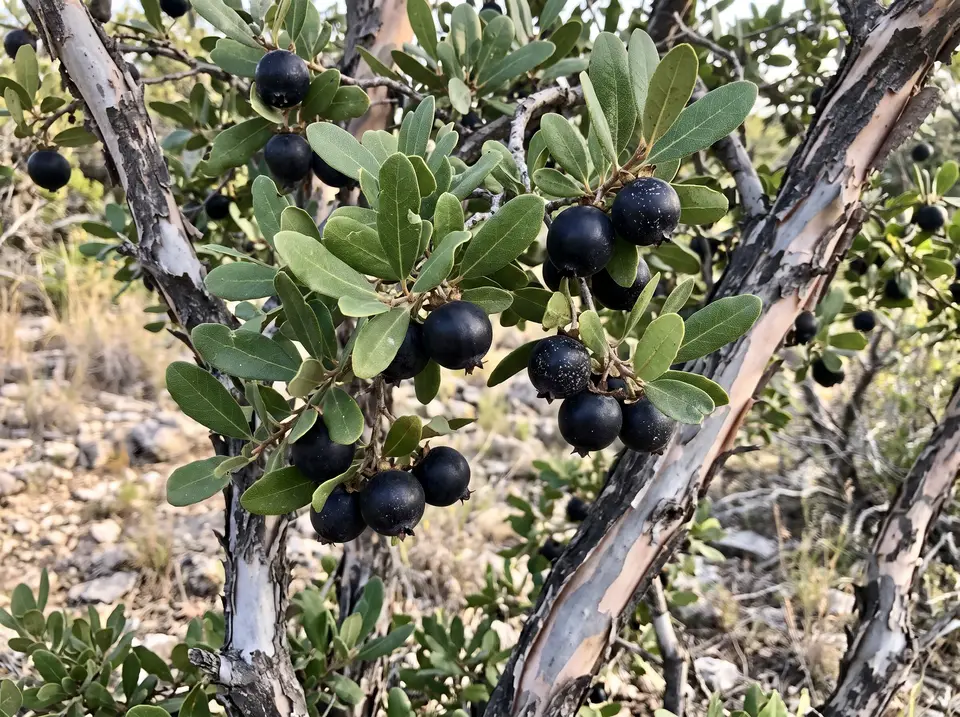
Texas persimmon is grown first for its bark. As the tree matures, the trunk peels in thin flakes to reveal a smooth patchwork of white, gray and pink, and the fine, twisting branches are worth looking at all winter.
It is also a fruit tree for wildlife. Trees are either male or female, and the female trees carry round black fruit in summer that is sweet when fully ripe and eaten by birds and other animals. The small white flowers in spring are fragrant and popular with bees.
At 15 to 25 feet it suits a courtyard, a patio edge or a spot near the house where its bark can be seen up close. It is slow, tough and drought-proof, a good fit for anyone who wants a small native tree with real character.
Where it's native
Texas Persimmon occurs naturally in 5 Texas ecoregions — Edwards Plateau, South Texas Plains, Trans-Pecos, Cross Timbers and Prairies, Rolling Plains. Plants grown from local ecotypes are best adapted to our soils and climate here in the blackland prairie and post oak savannah.
- 1Trans-Pecos
- 2High Plains
- 3Rolling Plains
- 4Edwards Plateau
- 5Cross Timbers and Prairies
- 6South Texas Plains
- 7Blackland Prairies
- 8Post Oak Savannah
- 9Gulf Prairies and Marshes
- 10Pineywoods