Switch Grass
Panicum virgatum
- Sun
- Full Sun, Part Shade
- Mature size
- 3-6 ft tall x 2-3 ft wide
Planting & care
- Growth habit
- Upright, clump-forming; arching leaf blades; loose open panicles held well above foliage
- Soil
- Adaptable — clay, loam, sand; tolerates wet conditions better than most native grasses; limestone-tolerant
Where to plant
Full sun preferred; tolerates partial shade but may flop open. Adaptable to clay, loam, or sandy soil — one of the best native grasses for wet or heavy clay sites.
Watering
Moderate and adaptable. Tolerates both wet sites and dry spells once established. Water regularly the first growing season.
Cutting back
Cut back to 4–6 inches in late February or early March, before new growth emerges. Leave dried stems and seed heads standing through winter — they're ornamental and feed birds. Do not cut back in fall.
About Switch Grass
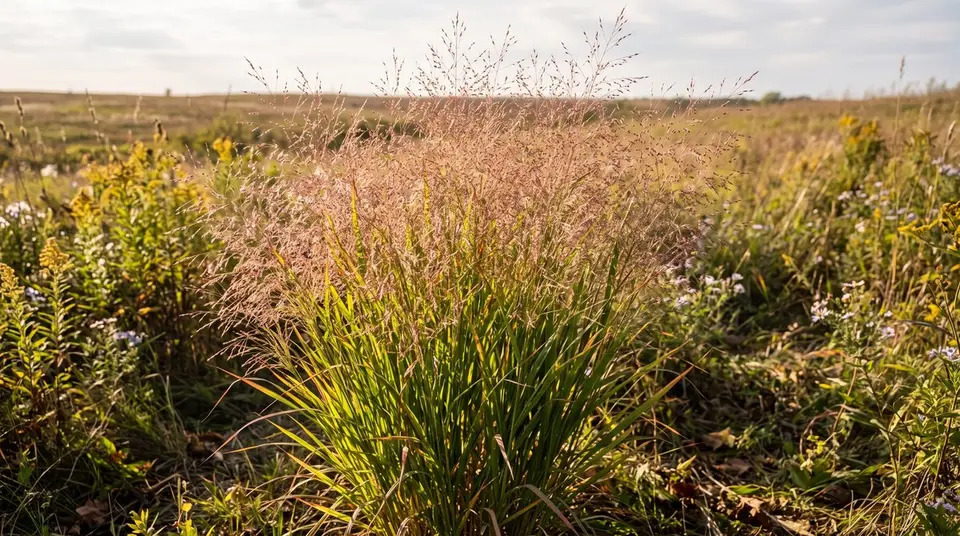
Switch Grass is the tall, moving backbone of a native planting. In summer it forms an upright clump of blue-green blades that sway in the slightest breeze, topped with airy, cloud-like panicles that open pink and deepen to burgundy. In fall the whole plant turns gold, orange and red, and the seed heads glow in low afternoon light.
Its best work comes after the color fades. The dried stems stay standing through winter, golden and architectural, while sparrows, juncos and other grassland birds feed on the seed. Dense clumps shelter ground-nesting birds and small mammals, and skipper butterflies use the foliage as a host. In a mixed planting, its height and texture give structure to showier neighbors.
Native across Texas, it is at home in the heavy clay and wet spots that frustrate most ornamental plantings, yet it handles dry spells once rooted. For rain gardens, pond edges, screens and habitat plantings, it is one of the most dependable and good-looking natives available.
Where it's native
Switch Grass occurs naturally in 7 Texas ecoregions — Pineywoods, Post Oak Savannah, Blackland Prairies, Cross Timbers and Prairies, Gulf Prairies and Marshes, Rolling Plains, South Texas Plains. Plants grown from local ecotypes are best adapted to our soils and climate here in the Blackland Prairies.
- 1Trans-Pecos
- 2High Plains
- 3Rolling Plains
- 4Edwards Plateau
- 5Cross Timbers and Prairies
- 6South Texas Plains
- 7Blackland Prairies
- 8Post Oak Savannah
- 9Gulf Prairies and Marshes
- 10Pineywoods