Redbud
Cercis canadensis
- Sun
- Full Sun, Part Shade, Shade
- Water
- Moderate, Drought tolerant once established
- Mature size
- 15–25 ft tall × 15–25 ft wide
- Best for
- Understory Tree, Patio Tree, Pollinator Plant
Gallon — $15 — only 5 left
About this size
- Gallon
- Our standard size: a 1-gallon nursery pot, about 6–7 inches across.
Pay at the nursery, plus 6.75% sales tax. Send your request and we'll confirm availability and your pickup time within 24 hours, then hold your plants. How it works
Planting & care
- Growth habit
- Multi-trunk small tree or large shrub; naturally spreading canopy
- Typical bloom
- Mar
- Cold hardy to
- Zones 6–9
- Soil
- Adaptable; prefers well-drained soils but tolerates clay (important for your market)
Where to plant
Full sun to part shade — best flowering and most compact form comes with full sun, though it tolerates shade with fewer blooms. It's adaptable to clay, loam, or rocky soil as long as it isn't waterlogged.
Watering
Water regularly the first year or two while it establishes a deep root system. Once established, normal rainfall is usually enough across most of North Texas.
Cutting back
Prune young trees in their first two to three years to establish strong branch structure, ideally right after flowering. Established trees need very little pruning beyond removing crossing or damaged branches.
About Redbud
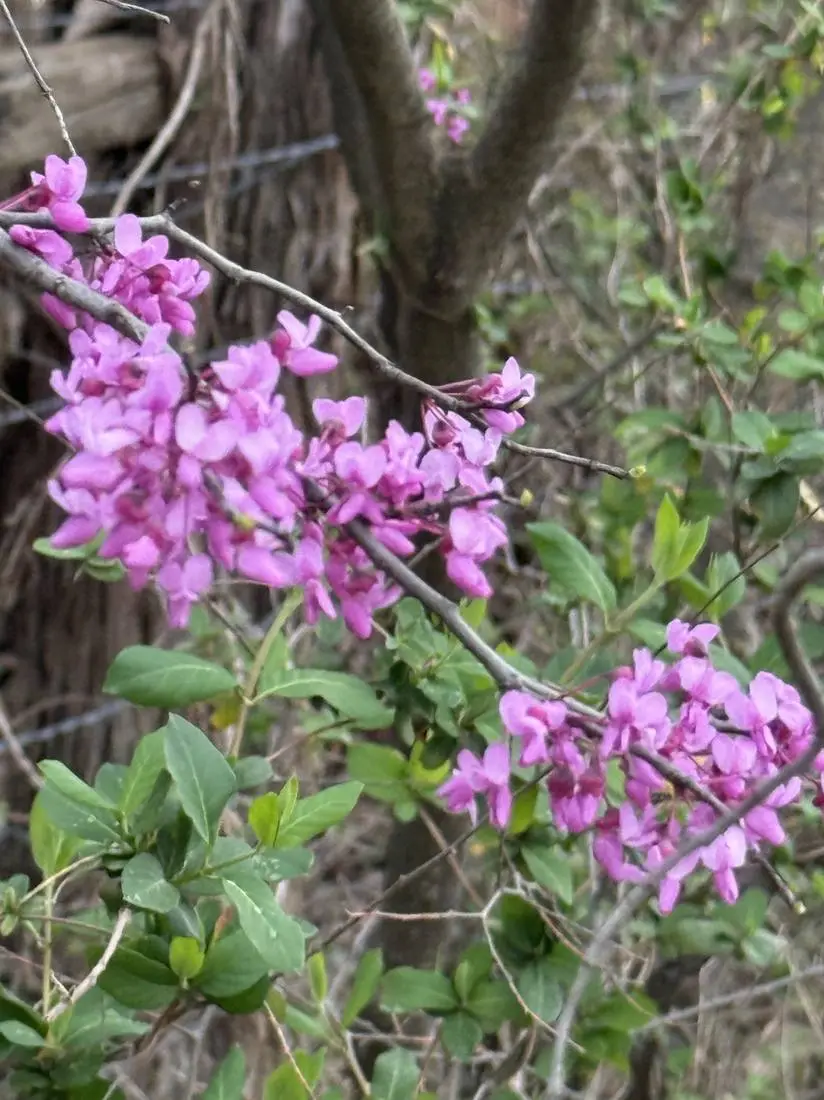
Redbud is one of the first native trees to announce spring, erupting in dense clusters of bright pink to magenta flowers directly along its bare branches and trunk — before a single leaf has appeared. For two to three weeks in late February and March, it's one of the most eye-catching trees in any North Texas landscape, and it happens like clockwork every year.
Once the flowers fade, heart-shaped leaves unfurl into a lush canopy that gives the tree a soft, layered look through summer. In fall the foliage turns a consistent gold, and through winter the flat, papery seed pods persist on the branches, adding structure to the bare landscape. It's a tree that earns its keep in every season, not just its showiest one.
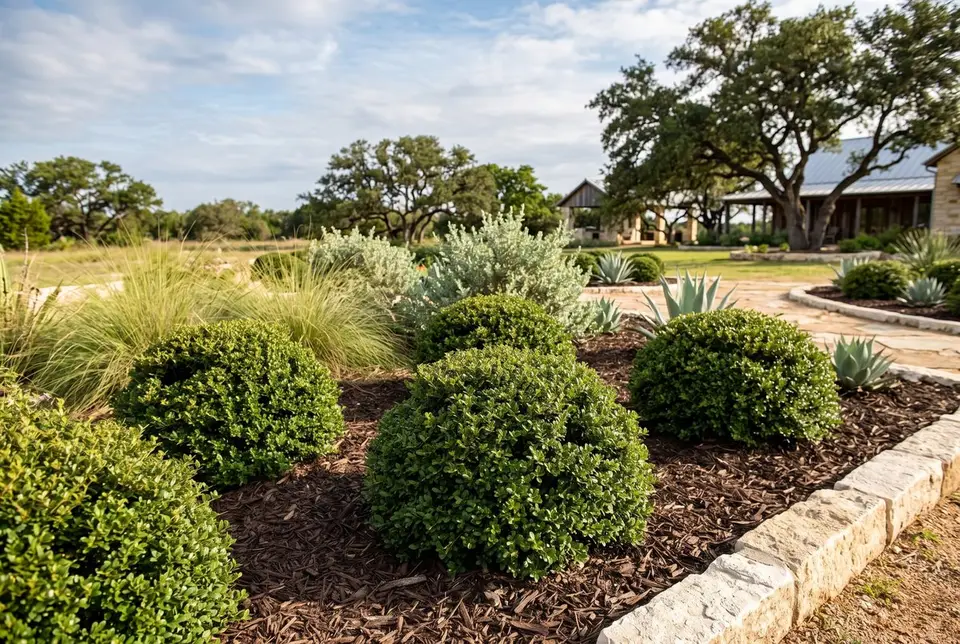
Redbud naturally grows as a multi-trunk small tree or large shrub with a graceful, spreading canopy, making it equally at home as a specimen tree, an understory planting beneath larger oaks, or a patio tree offering light shade without overwhelming a smaller yard. Its manageable size and shape mean it rarely needs the aggressive pruning larger shade trees demand.
Beyond its beauty, Redbud does real ecological work — its early blooms are a critical nectar source for native bees at a time when little else is flowering, and its seed pods feed birds through winter. For a tree that delivers spectacular spring color, wildlife value, and a naturally elegant form, it's hard to beat.
Where it's native
Redbud occurs naturally in 6 Texas ecoregions — Pineywoods, Post Oak Savannah, Blackland Prairies, Cross Timbers and Prairies, Edwards Plateau, South Texas Plains. Plants grown from local ecotypes are best adapted to our soils and climate here in the Blackland Prairies.
- 1Trans-Pecos
- 2High Plains
- 3Rolling Plains
- 4Edwards Plateau
- 5Cross Timbers and Prairies
- 6South Texas Plains
- 7Blackland Prairies
- 8Post Oak Savannah
- 9Gulf Prairies and Marshes
- 10Pineywoods