
Current stock
Redbud - Merlot
Cercis canadensis 'Merlot'

- Sun
- Full Sun, Part Shade
- Water
- Drought tolerant once established
- Mature size
- 15–20 ft tall x 15–20 ft wide
- Best for
- Ornamental Tree, Understory Tree, Pollinator Plant
Planting & care
- Growth habit
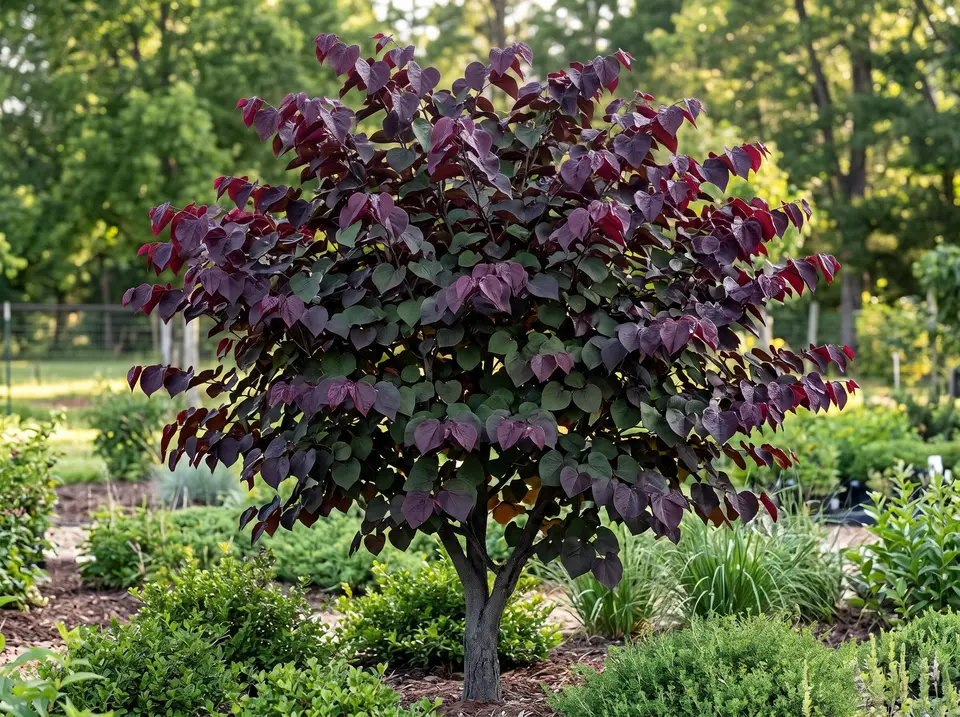
- Small, rounded understory tree with dark, glossy foliage
- Typical bloom
- Mar
- Cold hardy to
- Zones 4–8
- Soil
- Well-drained soil; tolerates limestone and clay
Where to plant
Full sun to part shade in well-drained soil. Afternoon shade helps keep the dark leaves from scorching in the hottest part of summer.
Watering
Water regularly the first summer. Once established it needs only occasional deep watering in long dry spells.
Pruning
Prune right after flowering. Keep the graft union area clear of mowers and string trimmers.
About Redbud - Merlot
Merlot redbud takes everything people like about a redbud and adds color that lasts. In March the bare branches fill with magenta-pink flowers, and then the leaves open as a dark, glossy burgundy that gives the tree presence all summer.
That dark foliage works as a backdrop. Silver, gray or chartreuse plants glow next to it, and the tree holds its own as a specimen in a bed or by the front door.
It stays compact at 15 to 20 feet, which makes it easy to place. It is a redbud for gardeners who want the spring bloom and a good-looking tree the rest of the year.
Where it's native
Redbud - Merlot occurs naturally in 4 Texas ecoregions — Blackland Prairies, Cross Timbers and Prairies, Edwards Plateau, Post Oak Savannah. Plants grown from local ecotypes are best adapted to our soils and climate here in the Blackland Prairies.
- 1Trans-Pecos
- 2High Plains
- 3Rolling Plains
- 4Edwards Plateau
- 5Cross Timbers and Prairies
- 6South Texas Plains
- 7Blackland Prairies
- 8Post Oak Savannah
- 9Gulf Prairies and Marshes
- 10Pineywoods